
Quick Answer
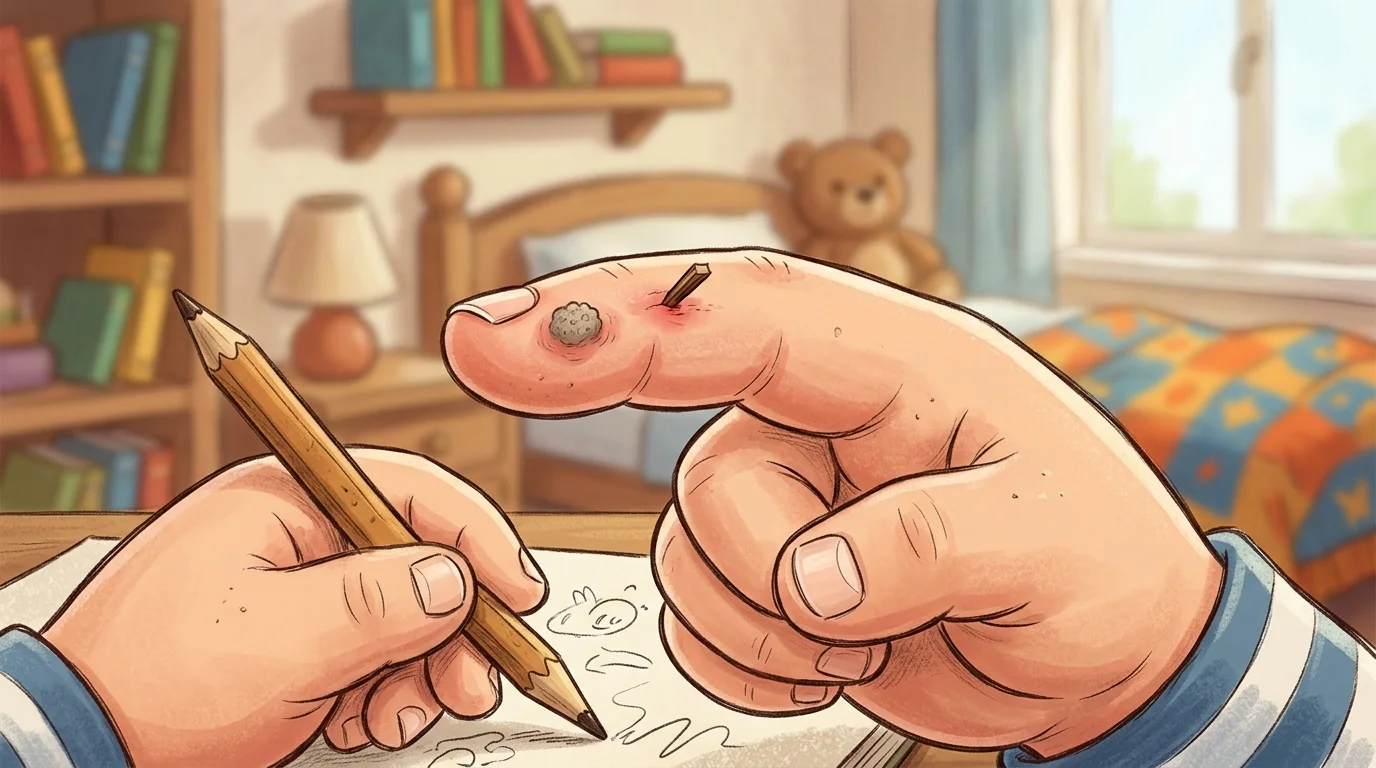
A splinter is a small piece of foreign material stuck in the skin, while a wart is a viral skin growth caused by HPV infection. Splinters are usually temporary and removable, while warts are persistent and may require treatment.
Wart (Meaning and Causes)
What it is
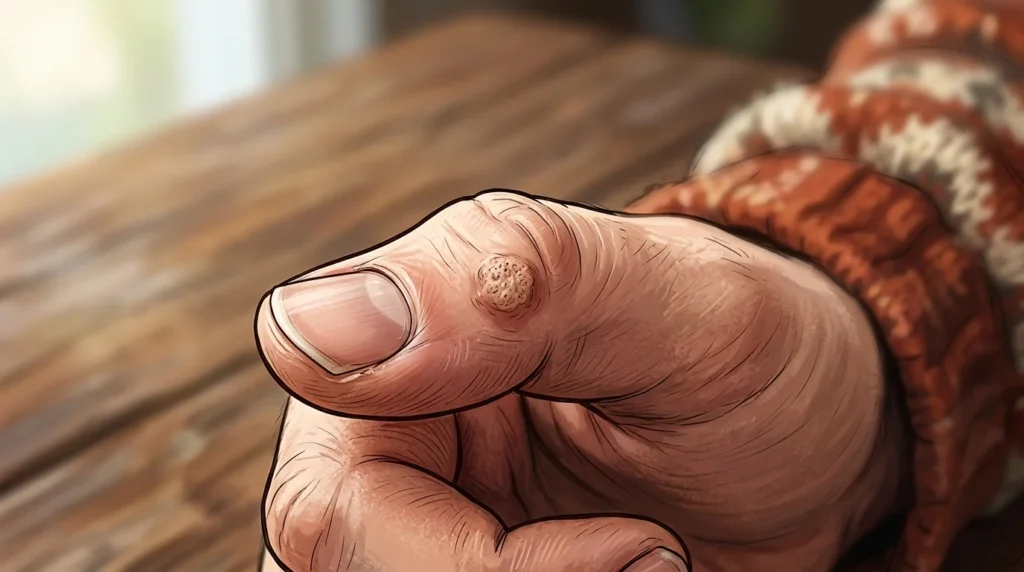
A wart is a small, rough skin growth caused by the human papillomavirus (HPV).
How it forms
The virus enters through tiny cuts in the skin and causes rapid skin cell growth.
Common signs
- Rough, grainy surface
- Flesh-colored or slightly darker bump
- May have black dots (clotted blood vessels)
- Can spread to other areas
Common types
- Common warts (hands)
- Plantar warts (feet)
- Flat warts (face or arms)
Key point
Warts are contagious skin infections, not foreign objects.
Splinter (Meaning and Causes)
What it is
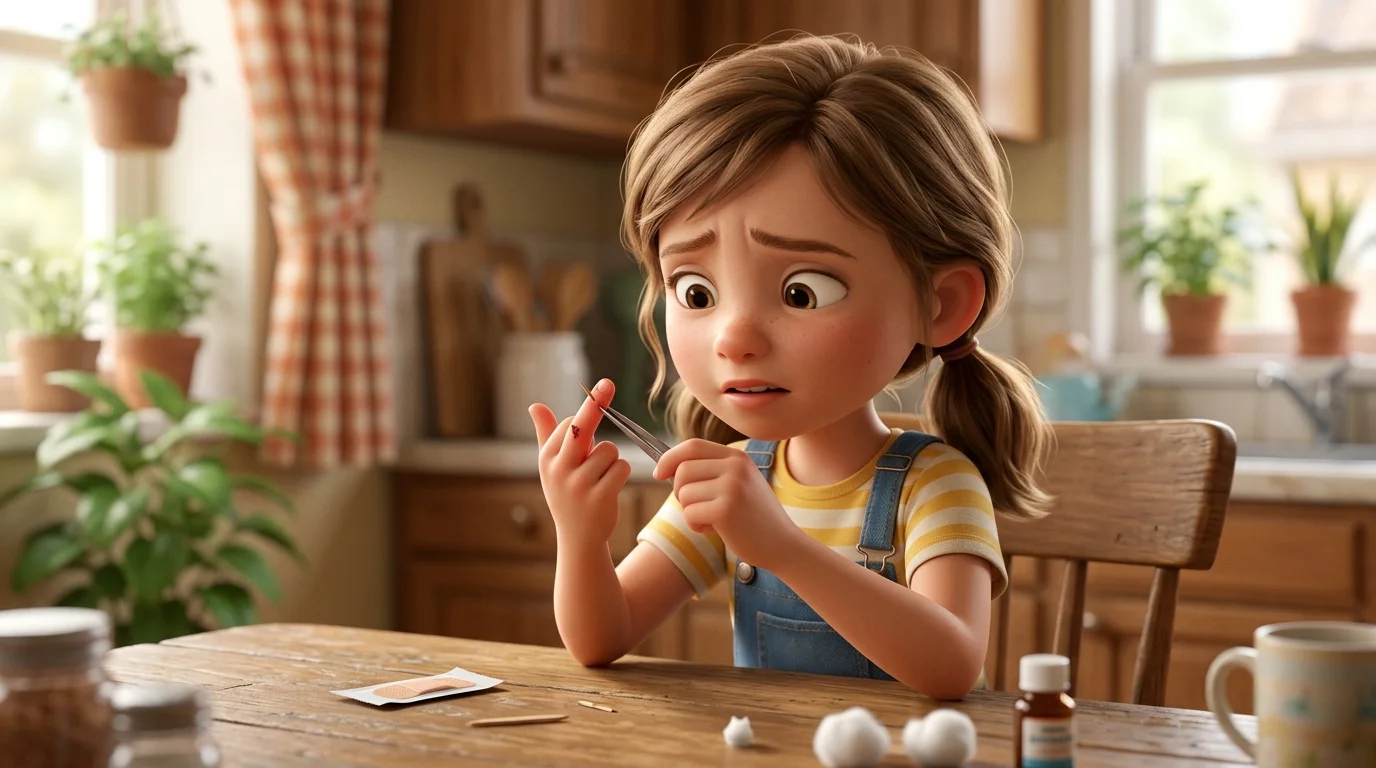
A splinter is a small piece of wood, glass, metal, or plastic stuck inside the skin.
How it happens
It enters the skin through accidental contact or injury.
Common signs
- Sharp pain at one spot
- Visible tiny object under skin
- Redness or swelling around entry point
- Pain when touched
Key point
A splinter is a physical foreign object, not a skin disease.
Wart vs Splinter (Key Differences)
Main Differences
- Cause: Virus vs foreign object
- Pain: Mild/itchy vs sharp/localized pain
- Appearance: Rough growth vs embedded object
- Spread: Can spread vs does not spread
- Duration: Long-term vs removable
Comparison Table
| Feature | Wart | Splinter |
|---|---|---|
| Cause | HPV virus | Foreign material |
| Type | Skin growth | Embedded object |
| Pain | Mild/itchy | Sharp pain |
| Spread | Can spread | Does not spread |
| Surface | Rough, grainy | Thin object visible |
| Treatment | Medical/chemical removal | Physical removal |
Real-World Scenarios
Scenario 1
Person: “I see a small bump on my finger, is it a splinter?”
Doctor: “It’s rough and spreading slightly — likely a wart.”
🎯 Lesson: Texture and spread matter more than appearance.
Scenario 2
Person: “Something poked my foot and it hurts in one spot.”
Answer: That’s likely a splinter.
🎯 Lesson: Sharp localized pain = foreign object.
Scenario 3
Person: “I tried pulling it but it keeps coming back.”
Answer: That suggests a wart, not a splinter.
🎯 Lesson: Recurrence = viral growth.
Scenario 4
Person: “I see a black line under skin after wood injury.”
Answer: That’s a splinter.
🎯 Lesson: Visible object = foreign material.
Common Mistakes
- Treating a wart like a splinter (picking at it)
- Thinking all bumps are infections
- Trying to dig out warts (can worsen spread)
- Ignoring persistent skin changes
- Assuming pain always means splinter
Why it happens: People rely on appearance, not cause.
Memory Tricks
- Wart = “Virus growth” (spreads, rough)
- Splinter = “Something stuck” (sharp pain, visible object)
- Wart = long-term
- Splinter = immediate irritation
Expert Insight
Warts are caused by HPV infection of skin cells, leading to abnormal keratin growth. This is why they can persist and spread over time if not treated.
Splinters, on the other hand, are mechanical injuries where foreign material triggers a localized inflammatory response. The body may sometimes push them out naturally, but deeper splinters may require removal.
The key distinction is simple: one is biological, the other is physical. wart or splinter.