
Quick Answer
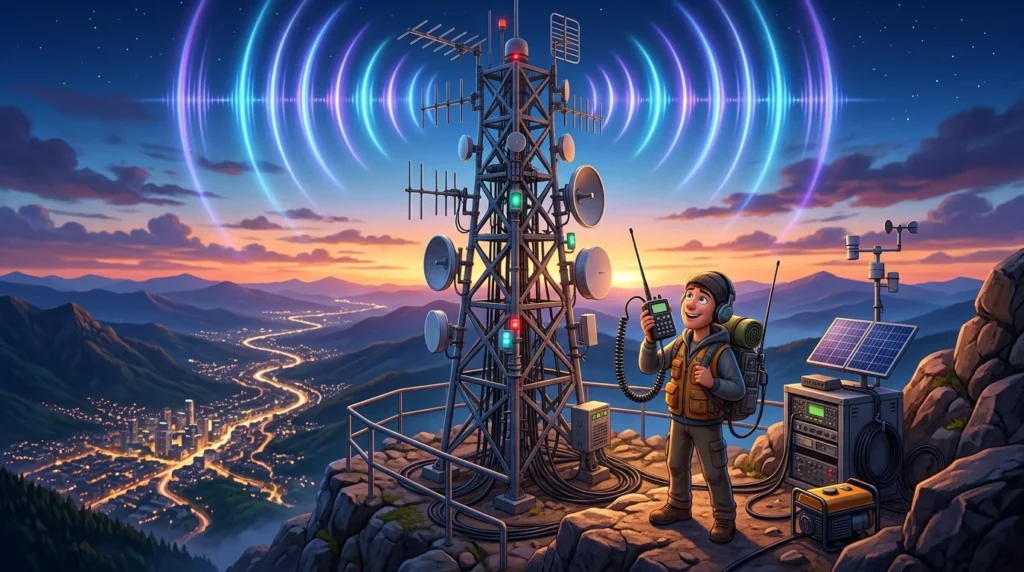
VHF (Very High Frequency) generally works best for long-distance communication in open outdoor areas with few obstacles.
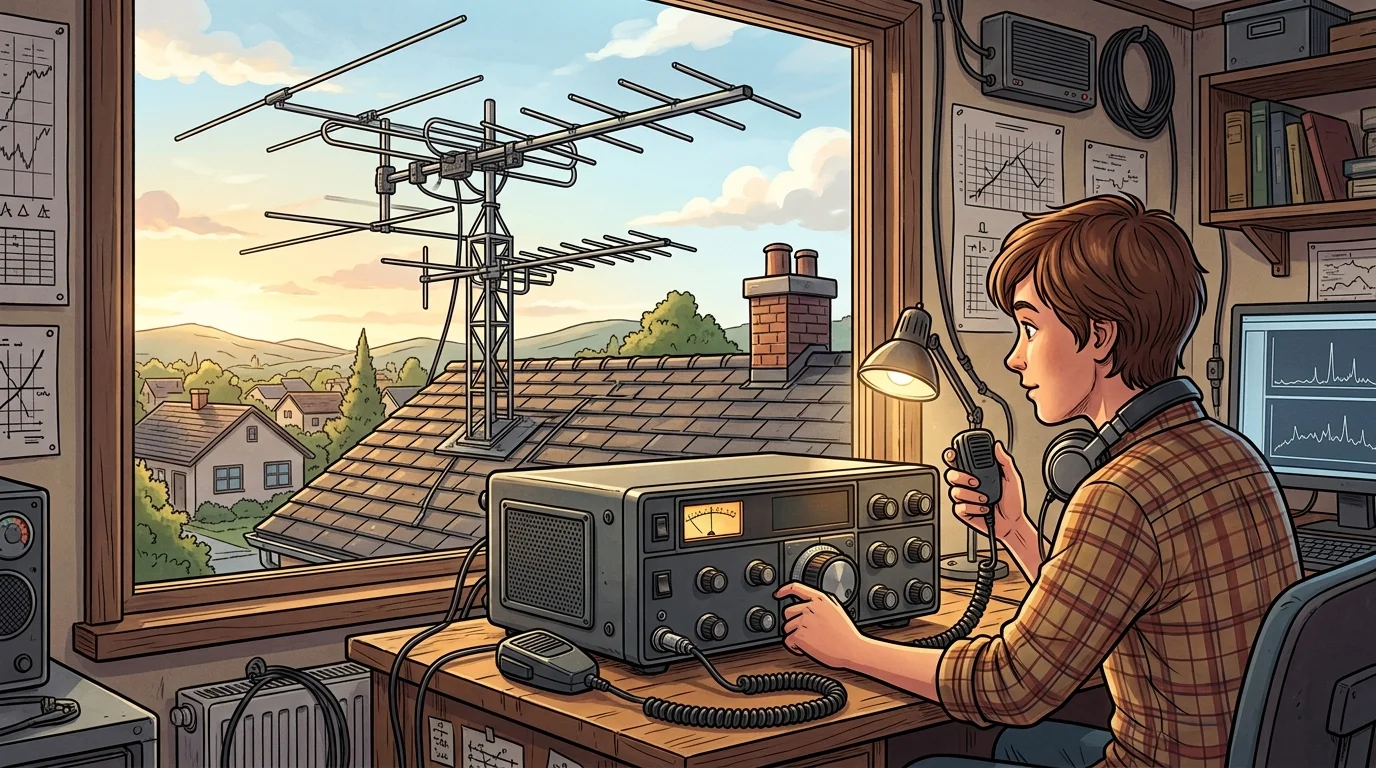
UHF (Ultra High Frequency) performs better in cities, indoors, forests, and places with buildings or walls because its signals penetrate obstacles more effectively.
In simple terms:
- Choose VHF for open spaces.
- Choose UHF for built-up environments and indoor communication.

What Is VHF?
Definition
VHF stands for Very High Frequency. It covers radio frequencies from 30 MHz to 300 MHz.
Because of its longer wavelengths, VHF signals can travel farther across open land and water with relatively little signal loss.
How VHF Works
VHF signals travel primarily by line of sight but benefit from their longer wavelength, allowing them to cover greater distances in unobstructed environments.
They perform especially well when there are:
- Open fields
- Farms
- Lakes
- Oceans
- Mountains with clear visibility
Common Uses of VHF
VHF is commonly used for:
- Marine radios
- Aviation communications
- Amateur (ham) radio
- Weather broadcasts
- Rural public safety
- Agricultural communication
- Outdoor event coordination
Advantages of VHF
- Excellent long-distance outdoor coverage
- Better performance over water
- Lower signal loss in open terrain
- Requires less power for similar outdoor distances
Limitations
- Doesn’t penetrate buildings well
- Performance decreases in dense cities
- More affected by hills and urban obstacles
Examples
Example 1
A fishing boat communicates with another boat several miles away using a VHF marine radio.
Why it works: Water provides an excellent open path for VHF signals.
Example 2
Farm workers coordinate across large fields using VHF handheld radios.
Why it works: Few obstacles block the signal.
Example 3
Pilots communicate with air traffic control using VHF frequencies.
Why it works: Aircraft usually have clear line-of-sight communication.
What Is UHF?
Definition
UHF stands for Ultra High Frequency. It covers frequencies from 300 MHz to 3 GHz.
Its shorter wavelengths make it better suited for penetrating buildings, walls, and other obstacles.
How UHF Works
Although UHF signals generally don’t travel as far in open areas as VHF, they perform much better where obstacles are present.
They reflect and penetrate structures more effectively than VHF.
Common Uses of UHF
UHF is widely used for:
- Business radios
- Security teams
- Warehouses
- Hospitals
- Hotels
- Shopping malls
- Schools
- Construction sites
- Television broadcasting
- Wireless microphones
- Mobile phones
- Wi-Fi
- Bluetooth
- GPS
Advantages of UHF
- Better indoor coverage
- Superior performance in cities
- Better wall penetration
- Smaller antennas
- Less affected by building interference
Limitations
- Shorter outdoor range
- Higher frequencies lose strength faster over long distances
- More repeaters may be needed for wide-area coverage
Examples
Example 1
Security guards communicate throughout a shopping mall.
Why it works: UHF passes through walls more effectively.
Example 2
Warehouse employees stay connected despite metal shelving.
Why it works: UHF handles indoor obstacles better.
Example 3
Hotel staff communicate across multiple floors.
Why it works: Building penetration is stronger than VHF.
VHF or UHF: Complete Comparison
Key Differences
- Meaning
- VHF = Very High Frequency
- UHF = Ultra High Frequency
- Frequency Range
- VHF: 30–300 MHz
- UHF: 300 MHz–3 GHz
- Best Environment
- VHF: Open outdoor spaces
- UHF: Buildings and cities
- Signal Behavior
- VHF travels farther outdoors.
- UHF handles obstacles better.
- Typical Users
- VHF: Marine, aviation, agriculture
- UHF: Business, retail, construction, security
- Antenna Size
- VHF antennas are generally longer.
- UHF antennas are usually shorter.
Comparison Table
| Feature | VHF | UHF |
|---|---|---|
| Meaning | Very High Frequency | Ultra High Frequency |
| Frequency Range | 30–300 MHz | 300 MHz–3 GHz |
| Outdoor Range | Excellent | Good |
| Indoor Performance | Fair | Excellent |
| Building Penetration | Limited | Strong |
| Best Environment | Rural, open land, water | Cities, offices, warehouses |
| Antenna Size | Larger | Smaller |
| Common Uses | Marine, aviation, farming | Security, business, TV, wireless devices |
| Signal Through Walls | Weak | Strong |
| Typical Communication | Long-distance outdoor | Indoor and urban |
Which Is Better: VHF or UHF?
Choose VHF If You Need
- Long outdoor communication
- Marine operations
- Farm communication
- Hiking in open terrain
- Aviation
- Large rural properties
Choose UHF If You Need
- Indoor communication
- Warehouses
- Office buildings
- Schools
- Shopping centers
- Hospitals
- Construction sites
- Urban communication
Real-World Usage Scenarios
Scenario 1: Hiking
Person A: “We’re hiking across open mountains.”
Person B: “Should we use UHF radios?”
Correction: VHF is usually the better choice because there are few buildings or obstacles.
🎯 Lesson: Open terrain generally favors VHF.
Scenario 2: Shopping Mall
Manager: “Our radios keep losing signal.”
Technician: “Switch to UHF.”
🎯 Lesson: Buildings and walls favor UHF.
Scenario 3: Warehouse
Employee: “The signal drops behind metal shelves.”
Supervisor: “Use UHF radios.”
🎯 Lesson: UHF performs better around indoor obstacles.
Scenario 4: Boating
Captain: “Which radio should we install?”
Crew Member: “A VHF marine radio.”
🎯 Lesson: Marine communication relies on VHF because it offers excellent over-water coverage.
Scenario 5: Hotel Operations
Front Desk: “Housekeeping isn’t responding.”
Manager: “Use the UHF channel.”
🎯 Lesson: Multi-floor buildings typically benefit from UHF.
Common Mistakes People Make
Mistake 1: Assuming Higher Frequency Always Means Better
Many people believe UHF is automatically superior because it uses higher frequencies.
Correction: The best choice depends on the environment.
Why it happens: People confuse newer technology with better performance.
Mistake 2: Using VHF Inside Large Buildings
VHF often struggles inside concrete structures.
Correction: UHF usually provides better indoor reliability.
Mistake 3: Using UHF Across Open Farmland
While UHF works, VHF often provides greater coverage with fewer repeaters.
Mistake 4: Ignoring Antenna Selection
Even the correct frequency band performs poorly with an unsuitable antenna.
Mistake 5: Forgetting Line-of-Sight Limitations
Neither VHF nor UHF completely ignores physical obstacles. Elevation, terrain, and structures all affect performance.
Memory Tricks
Trick 1
VHF = Vast Fields
Think of wide-open farms, lakes, and countryside.
Trick 2
UHF = Urban Helper
Think of offices, buildings, warehouses, and cities.
Trick 3
Remember:
- VHF → Vertical distance outdoors
- UHF → Urban environments
Expert Insight
Although both VHF and UHF operate within the radio spectrum, their different wavelengths strongly influence how they behave. Longer VHF wavelengths generally propagate farther in open areas, while shorter UHF wavelengths are more effective at entering buildings and navigating complex indoor environments. Neither band is universally better; the optimal choice depends on terrain, obstacles, antenna design, transmitter power, and the communication system’s intended use.
For example, many public safety agencies have transitioned to UHF or even higher frequencies for urban coverage, while marine and aviation services continue to rely heavily on VHF because of its dependable performance over water and in open airspace. vhf or uhf.