
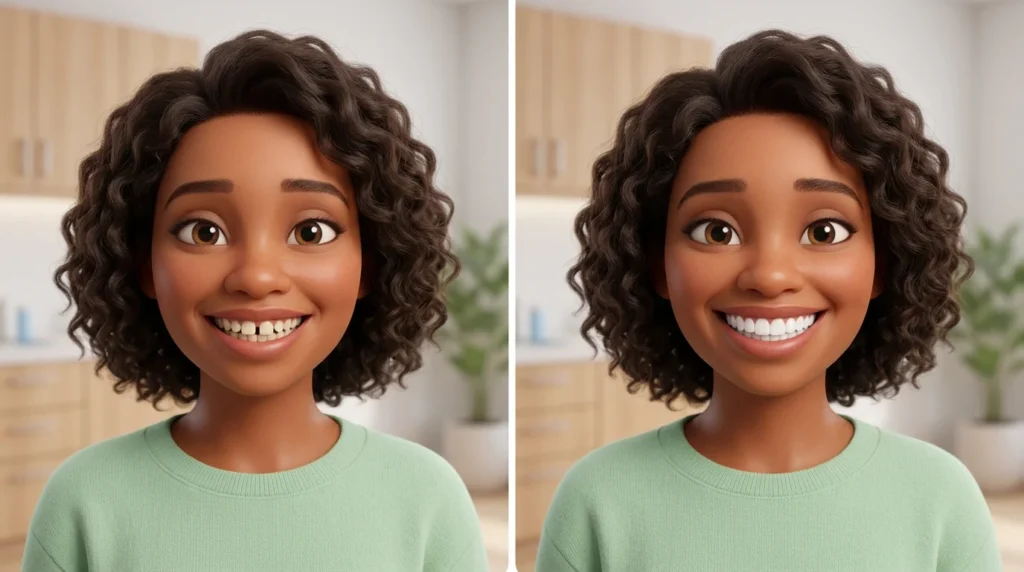
Quick Answer
Veneers are thin custom-made shells permanently attached to the front of teeth for a dramatic, long-lasting smile transformation.
Bonding uses tooth-colored composite resin applied directly to the tooth to repair minor cosmetic flaws quickly and affordably.
Choose veneers for durability and premium aesthetics. Choose bonding for lower cost and conservative treatment.

What Are Veneers?
Dental veneers are ultra-thin shells typically made from porcelain or ceramic.
They are custom-designed to cover the visible front surface of teeth and improve appearance.
How Veneers Work
A dentist removes a small amount of enamel before attaching custom veneers to the tooth surface.
The result is a natural-looking, highly aesthetic smile makeover.
Common Reasons for Veneers
- Severely stained teeth
- Uneven teeth
- Worn enamel
- Minor gaps
- Chipped teeth
- Smile makeovers
Advantages of Veneers
- Highly natural appearance
- Excellent stain resistance
- Long lifespan
- Customized shape and color
- Dramatic cosmetic improvement
Real Examples
- Closing visible gaps between front teeth
- Correcting permanent discoloration
- Creating a complete Hollywood-style smile makeover
Key Insight
Veneers are often considered the premium cosmetic dentistry solution because they combine aesthetics, durability, and longevity.

What Is Dental Bonding?
Dental bonding uses a tooth-colored composite resin material.
The dentist shapes and sculpts the resin directly onto the tooth before hardening it with a special curing light.
How Bonding Works
The material bonds directly to the tooth surface, making treatment minimally invasive.
In many cases, little or no enamel removal is required.
Common Reasons for Bonding
- Small chips
- Minor cracks
- Tiny gaps
- Slight discoloration
- Tooth reshaping
Advantages of Bonding
- Lower cost
- Fast treatment
- Usually completed in one visit
- Minimal enamel removal
- Easy repairs
Real Examples
- Fixing a chipped front tooth
- Repairing minor cosmetic damage
- Filling small gaps between teeth
Key Insight
Bonding is ideal for minor cosmetic improvements when affordability and simplicity are priorities.
Veneers vs Bonding: Key Differences
Meaning
- Veneers cover the entire front surface of a tooth.
- Bonding adds resin only where correction is needed.
Function
- Veneers create a complete cosmetic transformation.
- Bonding repairs localized imperfections.
Durability
- Veneers generally last longer.
- Bonding typically requires more maintenance.
Cost
- Veneers are more expensive.
- Bonding is significantly more affordable.
Appearance
- Veneers provide superior stain resistance and aesthetics.
- Bonding looks natural but may discolor over time.
Common Use Cases
- Veneers: full smile enhancement.
- Bonding: minor cosmetic repairs.
Comparison Table
| Feature | Veneers | Bonding |
|---|---|---|
| Material | Porcelain or ceramic | Composite resin |
| Cost | Higher | Lower |
| Longevity | Longer-lasting | Shorter lifespan |
| Stain Resistance | Excellent | Moderate |
| Appearance | Premium aesthetics | Natural appearance |
| Procedure Time | Multiple appointments often required | Usually one visit |
| Enamel Removal | Usually required | Minimal or none |
| Repairability | Replacement often needed | Easily repaired |
| Best For | Full smile makeovers | Minor cosmetic fixes |
Real-World Usage Scenarios
Scenario 1: Chipped Front Tooth
Patient: “I chipped one tooth while playing sports.”
Dentist: “Bonding may be the simplest and most affordable solution.”
🎯 Lesson: Small isolated damage often favors bonding.
Scenario 2: Deep Tooth Discoloration
Patient: “Whitening treatments aren’t working.”
Dentist: “Porcelain veneers may provide a better long-term cosmetic result.”
🎯 Lesson: Severe discoloration often favors veneers.
Scenario 3: Smile Makeover
Patient: “I want a completely new smile.”
Dentist: “Veneers can transform shape, color, and symmetry simultaneously.”
🎯 Lesson: Comprehensive smile enhancements usually favor veneers.
Scenario 4: Budget-Conscious Patient
Patient: “I want cosmetic improvement without a major investment.”
Dentist: “Bonding can significantly improve appearance at a lower cost.”
🎯 Lesson: Bonding offers strong value for minor corrections.
Scenario 5: Long-Term Cosmetic Goals
Patient: “I want results that last many years.”
Dentist: “Veneers generally provide better long-term durability.”
🎯 Lesson: Longevity often makes veneers the preferred choice.
Common Mistakes People Make
Mistake 1
Assuming veneers and bonding are the same treatment.
Correction
Both improve appearance, but they use different materials and techniques.
Mistake 2
Choosing based only on price.
Correction
Consider durability, maintenance, and long-term value.
Mistake 3
Expecting bonding to last as long as veneers.
Correction
Bonding generally requires more touch-ups and repairs over time.
Mistake 4
Thinking veneers are reversible.
Correction
Most veneer procedures involve enamel removal, making them a long-term commitment. veneers or bonding.
Memory Tricks
Trick #1
Veneers = Full Cover
Think of veneers as a decorative cover placed over the front of the tooth.
Trick #2
Bonding = Build-Up
Bonding adds material where improvement is needed. veneers or bonding.
Trick #3
Premium vs Practical
- Veneers = Premium transformation
- Bonding = Practical repair
Expert Insight
The decision between veneers and bonding is not simply about aesthetics. veneers or bonding.
Cosmetic dentists evaluate:
- Tooth structure
- Bite alignment
- Enamel condition
- Budget
- Desired longevity
- Maintenance expectations
Bonding preserves more natural tooth structure and offers affordability. Veneers require a greater investment but often deliver superior aesthetics, stain resistance, and durability. veneers or bonding.
For patients seeking a complete smile redesign, veneers typically provide the strongest long-term cosmetic outcome. For localized imperfections, bonding often delivers excellent results with less cost and less alteration of natural teeth. veneers or bonding.