
Quick Answer
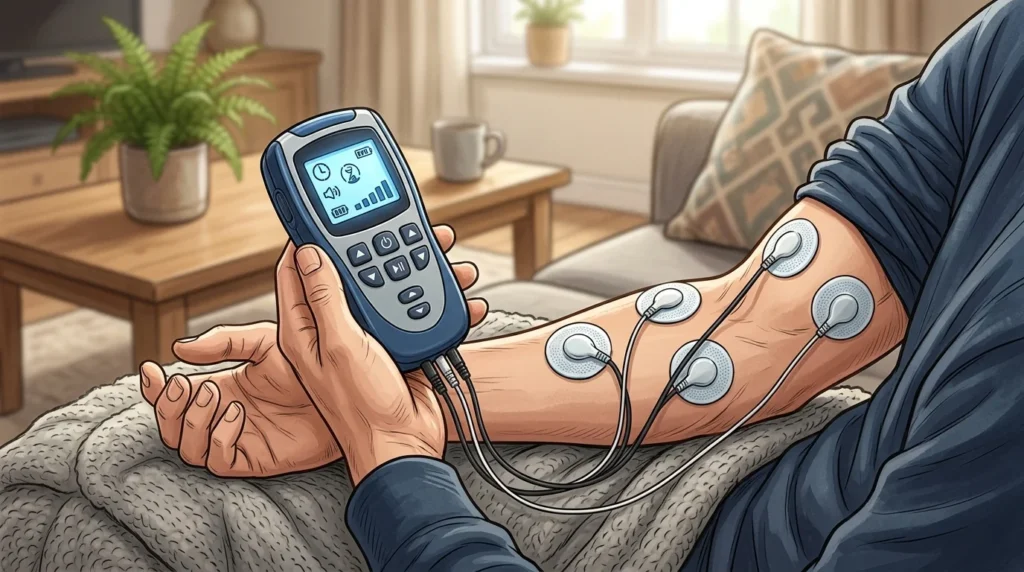
TENS stands for Transcutaneous Electrical Nerve Stimulation and is mainly associated with pain relief.
EMS stands for Electrical Muscle Stimulation and is designed to stimulate muscles, producing contractions.
Quick clue: TENS targets pain-related nerve signals; EMS stimulates muscle activity.
What Is TENS?
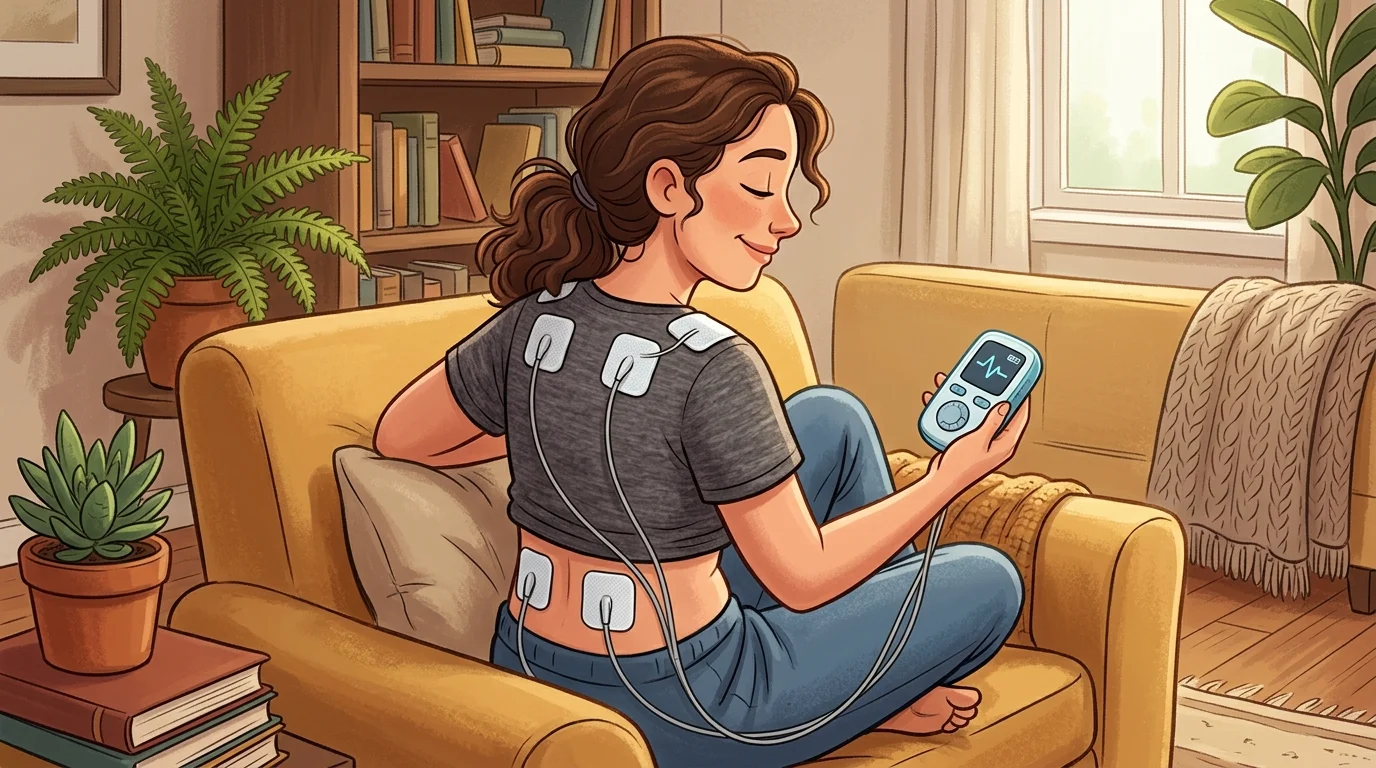
TENS means Transcutaneous Electrical Nerve Stimulation.
It is a form of electrical stimulation that delivers low-voltage electrical current through electrodes placed on the skin.
Its main purpose is pain management.
What Does TENS Do?
TENS may help change how a person perceives pain.
According to Cleveland Clinic, TENS uses low-voltage electrical current to block pain or alter pain perception.
TENS is commonly discussed in connection with:
- Pain management
- Sore or aching muscles
- Certain chronic pain situations
- Post-injury discomfort
- Temporary symptom relief
The exact medical indication can depend on the specific device and its regulatory clearance.
Does TENS Contract Muscles?
TENS is not primarily designed to produce strong muscle contractions.
Its central purpose is nerve stimulation related to pain relief.
This is one of the easiest ways to separate TENS from muscle-focused electrical stimulation.
Real Examples of TENS Usage
Example 1: A healthcare professional discusses TENS as one option for managing pain.
Example 2: A TENS device delivers electrical impulses through pads placed on the skin.
Example 3: A patient asks whether TENS could provide temporary relief for a specific pain problem.
Key insight: TENS is primarily connected with nerves and pain management.

What Is EMS?
EMS commonly means Electrical Muscle Stimulation in this context.
EMS devices use electrical stimulation to activate muscles and produce contractions.
The U.S. Food and Drug Administration describes electronic muscle stimulators as devices that may temporarily strengthen, tone, or firm a muscle, while warning that cleared EMS devices should not be treated as weight-loss or “rock hard abs” solutions.
What Does EMS Do?
EMS focuses on muscle stimulation.
Depending on the specific medical device and clinical purpose, electrical muscle stimulation may be associated with muscle activation or certain rehabilitation uses.
The electrical impulses interact with motor pathways to create muscle activity.
Does EMS Cause Muscle Contractions?
Yes. Visible or noticeable muscle contraction is a defining feature of muscle-focused electrical stimulation.
This is a major difference between EMS and TENS.
However, intensity, purpose, and device settings vary. Medical electrical stimulation should be used according to the device instructions and professional guidance when relevant.
Real Examples of EMS Usage
Example 1: A rehabilitation professional uses electrical stimulation as part of a muscle activation program.
Example 2: EMS produces controlled muscle contractions during a therapeutic session.
Example 3: A person asks whether an electrical stimulation device is designed for muscles rather than pain-focused nerve stimulation.
Key insight: EMS focuses on stimulating muscle activity and contraction.
TENS or EMS: Key Differences Explained
The simplest way to understand TENS vs EMS is to identify the primary target and purpose.
Main Differences Between TENS and EMS
- Meaning: TENS means Transcutaneous Electrical Nerve Stimulation; EMS means Electrical Muscle Stimulation.
- Primary target: TENS focuses on nerve stimulation; EMS focuses on muscles.
- Purpose: TENS is primarily used for pain management; EMS stimulates muscle activity.
- Contraction: Strong muscle contraction is not the main goal of TENS; EMS is designed to cause muscle contraction.
- Context: TENS commonly appears in pain-management discussions; EMS appears in muscle stimulation and rehabilitation contexts.
- Sensation: Both use electrical stimulation, but their intended effects differ.
- Common mistake: People assume every electrode-based stimulation device works the same way.
TENS vs EMS Comparison Table
| Feature | TENS | EMS |
|---|---|---|
| Meaning | Transcutaneous Electrical Nerve Stimulation | Electrical Muscle Stimulation |
| Primary Target | Nerves | Muscles |
| Main Purpose | Pain management | Muscle stimulation |
| Muscle Contraction | Not the primary goal | Intended effect |
| Context | Pain-related therapy | Muscle activation or rehabilitation |
| Electrical Stimulation | Yes | Yes |
| Example | Pain-focused nerve stimulation | Controlled muscle contraction |
The clearest difference is simple: TENS is pain-focused, while EMS is muscle-focused.
Real-World TENS or EMS Usage Scenarios
Understanding the purpose behind the stimulation makes the difference easier to identify.
Scenario 1: Pain Management
Sam: I heard electrical stimulation being discussed for pain relief. Is that EMS?
Alex: Pain-focused electrical nerve stimulation is generally associated with TENS.
🎯 Lesson: Pain management points toward TENS.
Scenario 2: Muscle Contraction
Mia: The stimulation is intentionally making the muscle contract.
Noah: That sounds more consistent with muscle-focused electrical stimulation such as EMS.
🎯 Lesson: Muscle contraction points toward EMS.
Scenario 3: Similar-Looking Devices
Ben: Both devices have electrode pads, so they must do the same thing.
Emma: No. Similar hardware does not mean identical therapeutic purposes.
🎯 Lesson: Always check the intended mode and purpose.
Scenario 4: Rehabilitation Context
Jack: A therapist is trying to activate a muscle during rehabilitation.
Liam: Muscle-focused stimulation may be used in certain rehabilitation contexts.
🎯 Lesson: Muscle activation is associated with EMS-type stimulation.
Scenario 5: A Combination Device
Ella: My device mentions both TENS and EMS. Is that a mistake?
Ryan: Not necessarily. Some cleared devices include separate TENS and EMS functions with different intended uses.
🎯 Lesson: A combination device can contain different stimulation modes.
Common TENS or EMS Mistakes
The similarity between these technologies creates several common misconceptions.
Mistake 1: Thinking TENS and EMS Are the Same
They both use electrical stimulation, but their primary purposes differ.
Why it happens: Both may use wires, electrode pads, and electrical impulses.
Correction: Remember the target: nerves for TENS, muscles for EMS.
Mistake 2: Assuming TENS Builds Muscle
TENS is primarily a pain-management therapy.
Why it happens: People feel electrical sensations and assume the muscles are being trained.
Correction: Do not confuse nerve-focused pain stimulation with muscle-focused stimulation.
Mistake 3: Assuming EMS Is a Weight-Loss Shortcut
The FDA specifically states that cleared EMS devices have not been established for weight loss, girth reduction, or obtaining “rock hard” abdominal muscles.
Why it happens: Marketing claims can exaggerate what electrical muscle stimulation does.
Correction: Separate legitimate device indications from unrealistic fitness advertising.
Mistake 4: Choosing a Mode Based Only on Sensation
A stronger feeling does not automatically mean a better or more appropriate treatment.
Why it happens: Users may associate intensity with effectiveness.
Correction: The intended purpose and device instructions matter more than chasing stronger stimulation.
Mistake 5: Treating Every Device as Identical
TENS and EMS devices can have different intended uses, specifications, and regulatory statuses.
Why it happens: The products may look nearly identical.
Correction: Check the device’s official labeling and intended use.
Easy Memory Tricks for TENS or EMS
Simple mental shortcuts make the difference easier to remember.
Remember “TENS = Tame Pain Signals”
Think:
TENS → Nerves → Pain management
The phrase is only a memory shortcut, but it helps connect TENS with its main purpose.
Remember “EMS = Engage Muscles”
Think:
EMS → Engage → Muscles
EMS stimulates muscles and produces contractions.
Use the Target Test
Ask:
“Is the main goal pain management or muscle stimulation?”
Pain management → TENS
Muscle stimulation → EMS
Remember Nerves vs Muscles
TENS = nerve-focused
EMS = muscle-focused
This is the fastest way to separate the two terms.
Expert Insight
TENS and EMS belong to the broader field of electrical stimulation, which explains their visual and technical similarities.
Both can use electrodes placed on the skin. Both deliver electrical impulses. Some modern devices even combine TENS and EMS functions in a single unit; FDA records include cleared combination devices with distinct TENS and EMS indications.
The physiological target is the key distinction.
TENS is primarily associated with sensory nerve stimulation and pain perception. Muscle-focused electrical stimulation acts on motor pathways to trigger muscle contraction.
This difference affects the purpose of treatment, electrode positioning, stimulation parameters, and clinical context. tens or ems.