
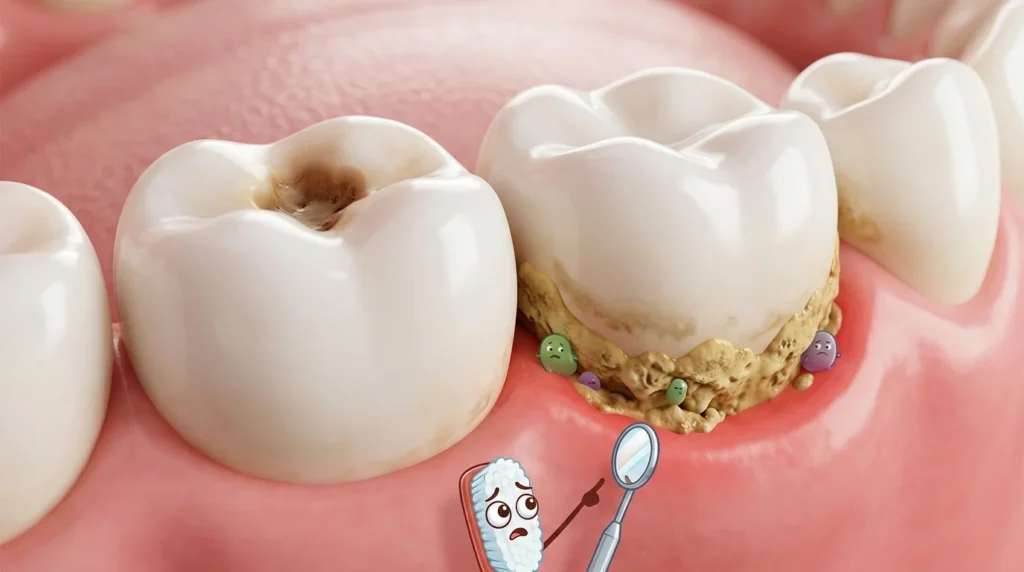
Quick Answer: Tartar or Cavity?
- Tartar is hardened dental plaque that sticks to your teeth and can only be removed by a dental professional.
- A cavity is a permanently damaged area of a tooth caused by decay, usually requiring a filling or other dental treatment.
Simple rule:
- Tartar = Hardened buildup on the tooth
- Cavity = Hole caused by tooth decay
Tartar Explained
What Is Tartar?
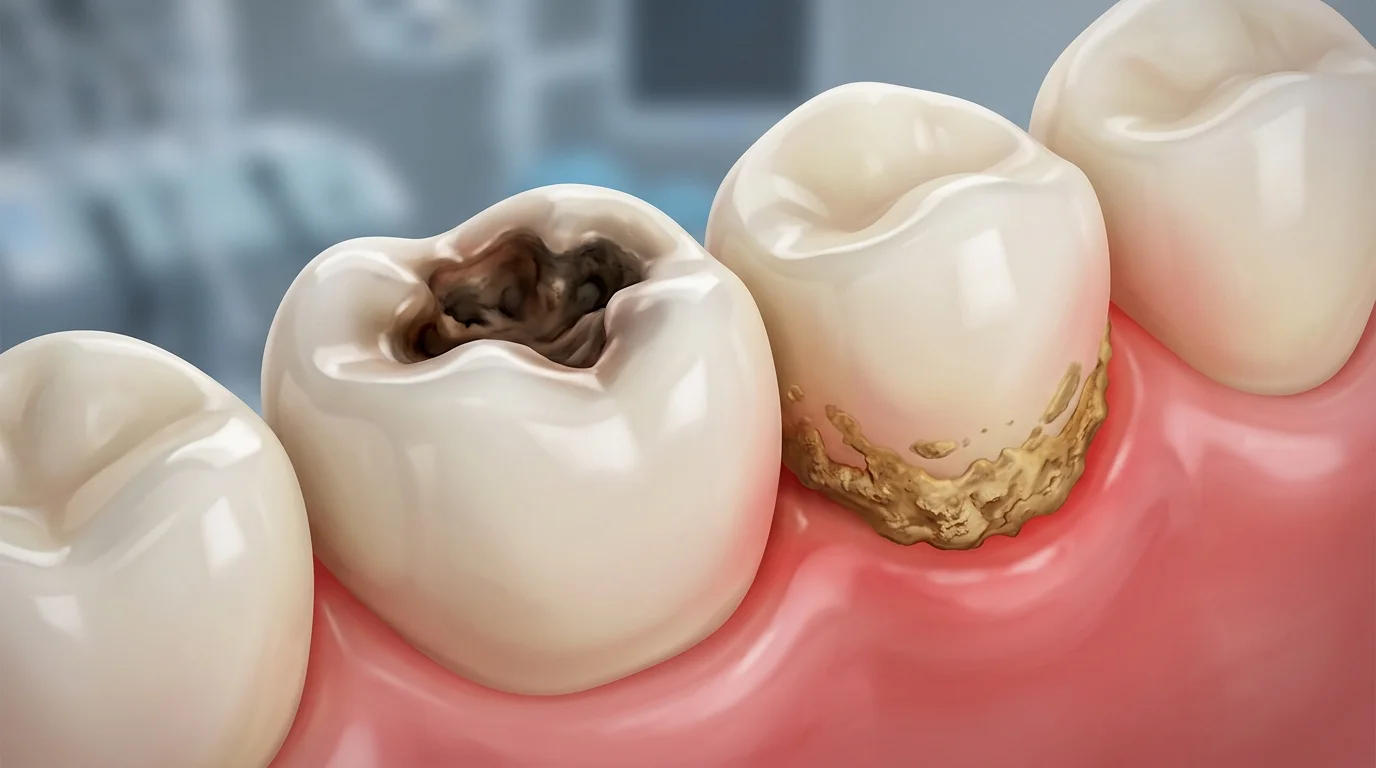
Tartar, also called dental calculus, forms when plaque is not removed through regular brushing and flossing. Minerals in your saliva harden the plaque, creating a rough deposit that firmly attaches to the tooth.
Unlike plaque, tartar cannot usually be removed with a toothbrush alone.
What Causes Tartar?
Common causes include:
- Inadequate brushing
- Infrequent flossing
- Plaque buildup
- Smoking or tobacco use
- Dry mouth
- High mineral content in saliva
- Skipping regular dental cleanings
Symptoms
Signs of tartar may include:
- Yellow or brown deposits on teeth
- Rough feeling along the gumline
- Persistent bad breath
- Gum irritation
- Bleeding gums
- Swollen gums
Treatment
Dentists and dental hygienists typically remove tartar using:
- Professional scaling
- Ultrasonic cleaning tools
- Deep cleaning (when needed)
Examples
Example 1
A yellow deposit forms behind the lower front teeth despite regular brushing.
Example 2
A dentist removes hardened tartar during a routine cleaning.
Example 3
Heavy tartar buildup contributes to gum inflammation.
Key Insight
Once plaque hardens into tartar, professional dental cleaning is usually needed to remove it.
Cavity Explained
What Is a Cavity?
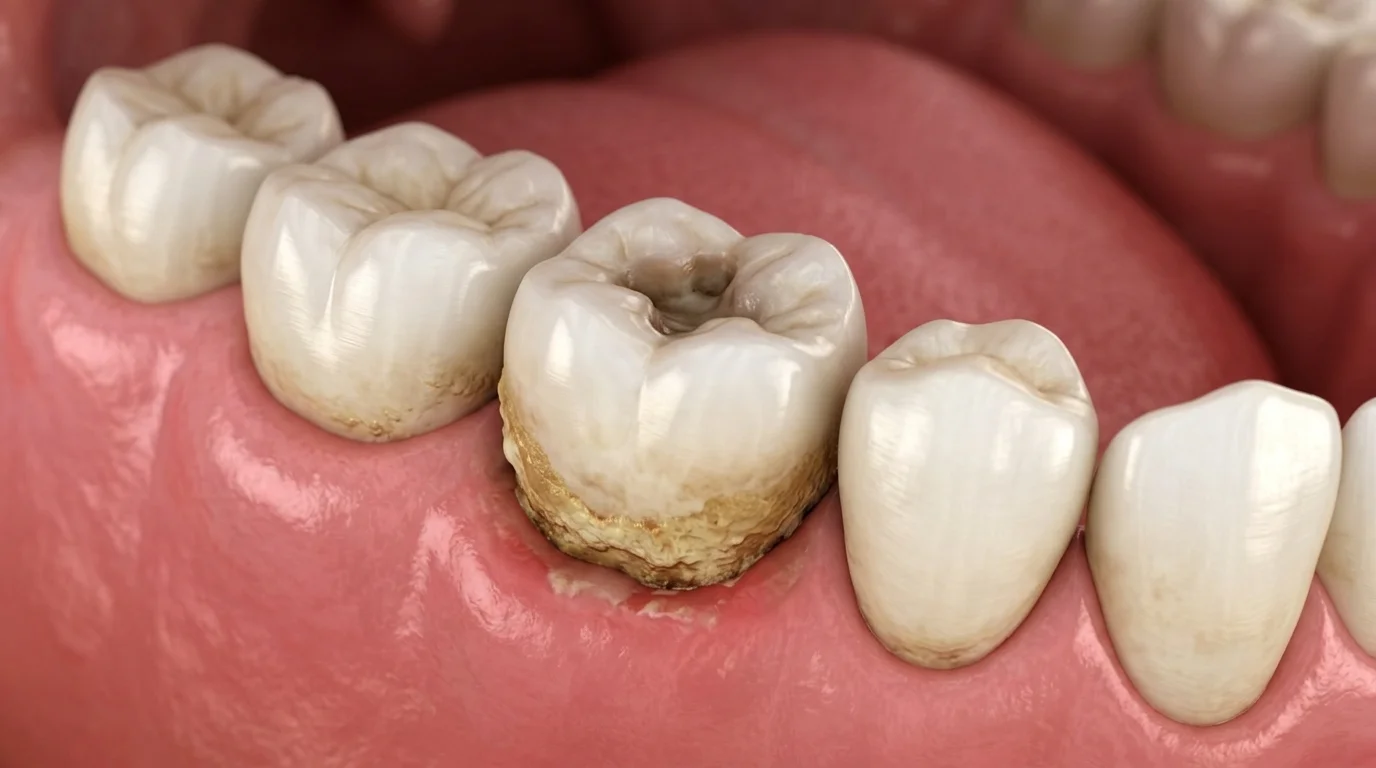
A cavity is an area of tooth decay where acids produced by bacteria have damaged the tooth enamel and, in some cases, the deeper layers of the tooth.
Without treatment, cavities usually become larger over time.
What Causes Cavities?
Cavities develop when:
- Plaque bacteria feed on sugars
- Acids are produced
- Tooth enamel weakens
- The enamel breaks down
- A hole forms in the tooth
Symptoms
Common signs include:
- Toothache
- Sensitivity to hot or cold
- Pain when eating sweets
- Visible holes
- Dark spots on teeth
- Pain when biting
Treatment
Treatment depends on severity and may include:
- Fluoride treatment (very early decay)
- Dental filling
- Crown
- Root canal treatment
- Tooth extraction in severe cases
Examples
Example 1
A child develops a small cavity after frequent sugary snacks.
Example 2
An adult experiences sharp pain when drinking cold water.
Example 3
A dentist identifies a cavity during an X-ray examination.
Key Insight
A cavity is damaged tooth structure—not simply a surface deposit.
Tartar or Cavity: Key Differences
Main Differences
- Nature
- Tartar: Hardened plaque
- Cavity: Tooth decay
- Location
- Tartar: Surface of the tooth
- Cavity: Inside the tooth structure
- Cause
- Tartar: Mineralized plaque
- Cavity: Acid damage from bacteria
- Pain
- Tartar: Usually painless initially
- Cavity: Often painful as it progresses
- Treatment
- Tartar: Professional cleaning
- Cavity: Filling or restorative treatment
Comparison Table
| Feature | Tartar | Cavity |
|---|---|---|
| What It Is | Hardened plaque | Tooth decay |
| Forms On | Tooth surface | Inside tooth structure |
| Main Cause | Mineralized plaque | Bacterial acid attack |
| Can Brushing Remove It? | No | No |
| Professional Treatment | Scaling | Filling, crown, or other restorative care |
| Pain | Usually minimal at first | Often increases with progression |
| Prevention | Good oral hygiene | Good oral hygiene and limiting sugar |
Can Tartar Cause Cavities?
The Connection
Tartar itself is not a cavity, but it creates conditions that can increase the risk of tooth decay.
Tartar:
- Traps bacteria
- Makes cleaning more difficult
- Encourages plaque accumulation
- Can contribute to gum disease
The bacteria living in plaque and around tartar produce acids that may eventually lead to cavities if not controlled.
Real-World Usage Scenarios
Scenario 1
Patient: “My teeth feel rough near the gums.”
Dentist: “That’s likely tartar buildup.”
🎯 Lesson: Rough deposits often indicate tartar.
Scenario 2
Patient: “I feel pain when eating ice cream.”
Dentist: “We’ll check for a cavity.”
🎯 Lesson: Temperature sensitivity is a common sign of tooth decay.
Scenario 3
Patient: “Can I brush tartar away?”
Dentist: “Once it hardens, it usually requires professional cleaning.”
🎯 Lesson: Daily brushing prevents tartar but doesn’t typically remove established tartar.
Scenario 4
Patient: “I don’t have pain, so my teeth must be healthy.”
Dentist: “Early cavities and tartar often cause few or no symptoms.”
🎯 Lesson: Regular dental checkups can detect problems before they become painful.
Scenario 5
Parent: “My child’s tooth has a small dark hole.”
Dentist: “That’s likely a cavity that should be treated promptly.”
🎯 Lesson: Visible holes are a common sign of tooth decay.
Common Mistakes
Mistake 1
Thinking tartar is the same as plaque.
Correction: Plaque is soft and removable at home; tartar is hardened plaque that generally requires professional removal.
Why it happens: The terms are often used interchangeably.
Mistake 2
Believing tartar is a cavity.
Correction: Tartar is buildup on the tooth, while a cavity is damage within the tooth.
Why it happens: Both affect oral health.
Mistake 3
Waiting until pain appears.
Correction: Both tartar and early cavities may be painless.
Why it happens: Pain usually develops later.
Mistake 4
Assuming mouthwash alone prevents cavities.
Correction: Brushing with fluoride toothpaste, flossing, a balanced diet, and regular dental visits are all important.
Why it happens: Oral health depends on multiple habits.
Mistake 5
Ignoring routine cleanings.
Correction: Professional cleanings help remove tartar and allow dentists to detect early decay.
Why it happens: Many people only visit the dentist when something hurts.
Memory Tricks
Remember Tartar
Think:
Tartar = Tough buildup.
It sticks to the outside of your teeth.
Remember Cavity
Think:
Cavity = Cavity means a hole.
It’s damage inside the tooth.
Easy Shortcut
- Tartar = Hardened plaque
- Cavity = Tooth decay
Expert Insight
Although tartar and cavities are different dental conditions, they are closely connected through plaque, the sticky film of bacteria that constantly forms on teeth. If plaque isn’t removed, it can harden into tartar. At the same time, bacteria within plaque produce acids that weaken tooth enamel, eventually leading to cavities.
Because tartar provides a rough surface where more plaque can accumulate, it can indirectly increase the risk of both tooth decay and gum disease. The most effective prevention strategy combines twice-daily brushing with fluoride toothpaste, daily flossing or other interdental cleaning, limiting sugary foods and drinks, and regular dental examinations and professional cleanings. tartar or cavity.