
Quick Answer
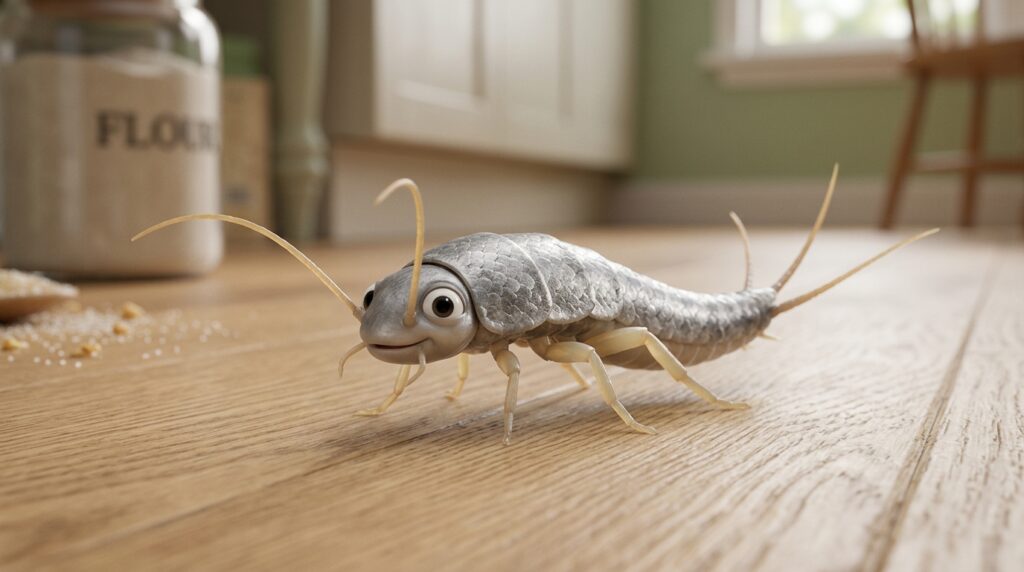
Silverfish are wingless insects that feed on paper, glue, fabrics, and starchy materials.
Centipedes are fast-moving predators that hunt other insects and pests.
If you see a long, silver-colored insect with three tail-like appendages, it’s likely a silverfish. If it has numerous long legs and moves extremely quickly, it’s a centipede.
What Is a Silverfish?
Definition
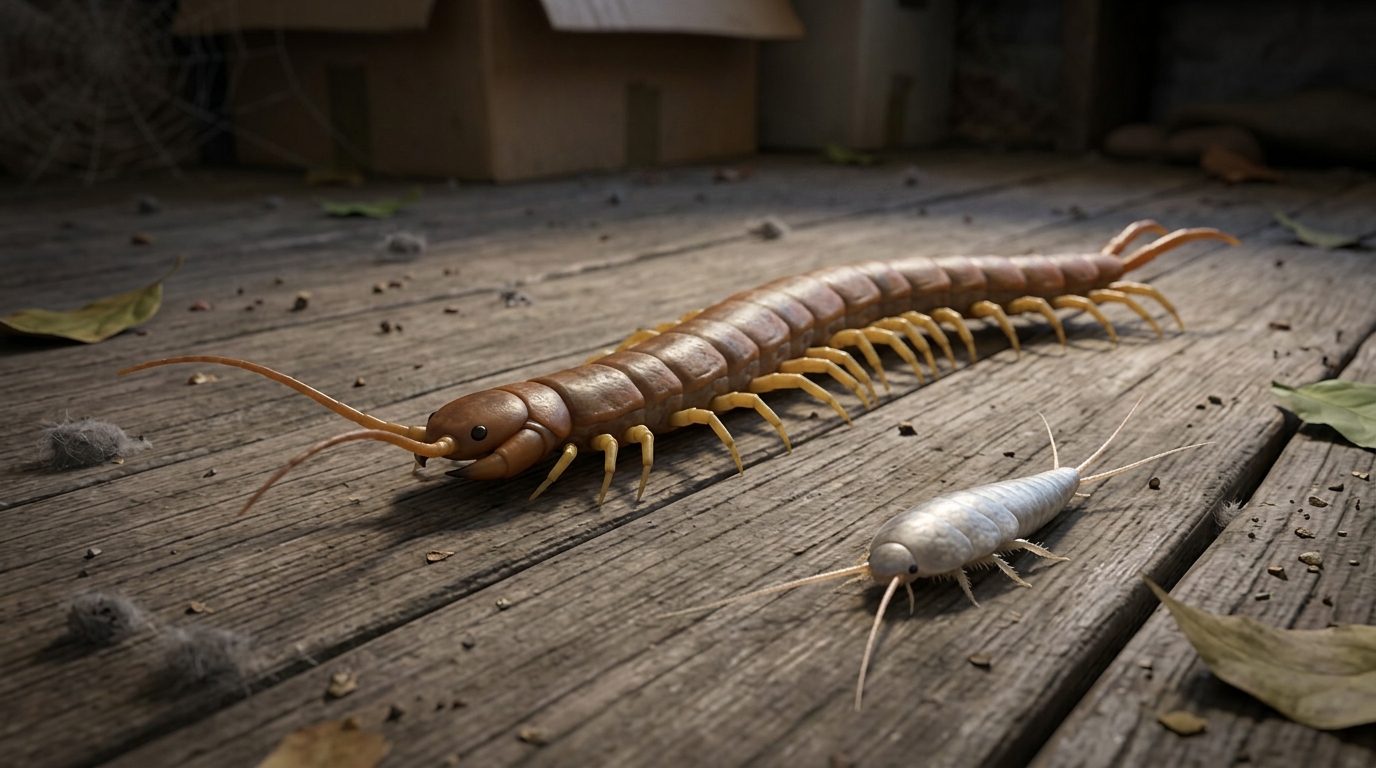
A silverfish is a small, wingless insect known for its silvery appearance, fish-like movements, and preference for humid environments.
Physical Characteristics
- Silver or gray color
- Teardrop-shaped body
- No wings
- Three tail-like bristles
- Usually ½ to 1 inch long
Habitat
Silverfish commonly hide in:
- Bathrooms
- Basements
- Attics
- Closets
- Storage boxes
- Bookshelves
Diet
They feed on:
- Paper
- Books
- Wallpaper glue
- Cardboard
- Fabrics
- Starches
- Dry food products
Examples
- Silverfish may damage old books stored in a basement.
- They often appear near sinks or bathtubs.
- Homeowners frequently discover them inside cardboard boxes.
Key Insight
Silverfish rarely harm people but can damage personal belongings and household materials.
What Is a Centipede?
Definition
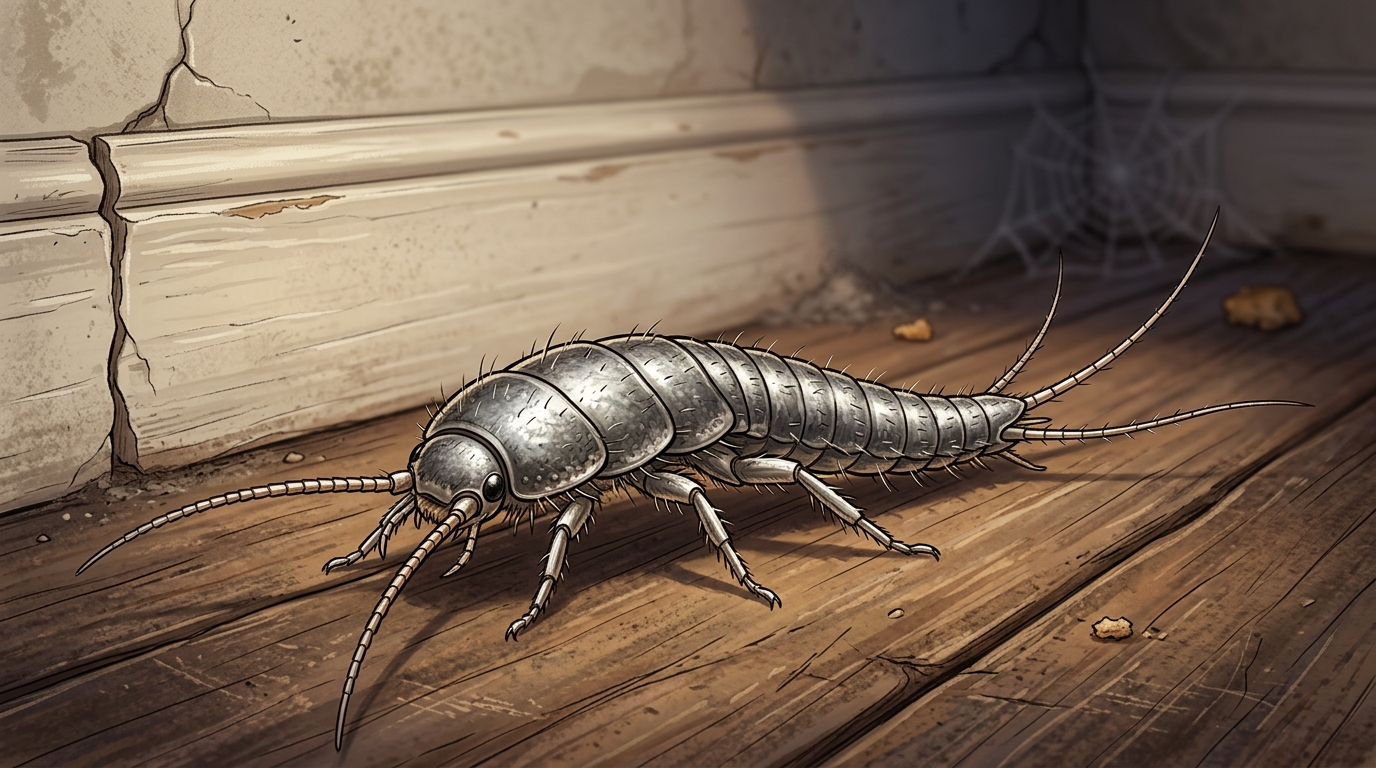
A centipede is a predatory arthropod that hunts insects, spiders, and other small pests.
Physical Characteristics
- Long segmented body
- Multiple pairs of legs
- Fast movement
- Yellow, brown, or reddish coloration
- Visible antennae
Habitat
Centipedes often live in:
- Basements
- Bathrooms
- Crawl spaces
- Garages
- Under rocks
- Damp outdoor areas
Diet
They feed on:
- Spiders
- Cockroaches
- Ants
- Silverfish
- Small insects
Examples
- A house centipede may run across a basement floor at night.
- Centipedes often appear where other insects are present.
- They help reduce pest populations by hunting prey.
Key Insight
Centipedes are natural predators and often indicate the presence of other insects in the home.
Silverfish vs Centipede: Key Differences
Major Differences
- Silverfish are insects; centipedes are arthropods.
- Silverfish eat materials and starches.
- Centipedes hunt living insects.
- Silverfish have six legs.
- Centipedes have many legs.
- Silverfish move with a fish-like wiggle.
- Centipedes run rapidly using multiple legs.
- Silverfish can damage belongings.
- Centipedes help control other pests.
Comparison Table
| Feature | Silverfish | Centipede |
|---|---|---|
| Type | Insect | Arthropod |
| Appearance | Silver, teardrop-shaped | Long body with many legs |
| Number of Legs | Six | Multiple pairs |
| Diet | Paper, glue, starches | Insects and spiders |
| Speed | Fast | Very fast |
| Property Damage | Possible | None |
| Pest Control Benefit | No | Yes |
| Common Habitat | Humid indoor spaces | Damp areas indoors and outdoors |
| Threat to Humans | Very low | Very low |
Real-World Usage Scenarios
Scenario 1: Finding a Bug in the Bathroom
Homeowner: I found a silver bug near the sink.
Pest Expert: If it has three tail-like appendages and six legs, it’s probably a silverfish.
🎯 Lesson: Tail bristles are a key silverfish identifier. silverfish or centipede.
Scenario 2: Fast Runner in the Basement
Homeowner: Something with lots of legs ran across the floor.
Pest Expert: That’s likely a house centipede.
🎯 Lesson: Numerous long legs point to a centipede.
Scenario 3: Damaged Books
Homeowner: My old books have unusual damage.
Inspector: Silverfish may be feeding on the paper.
🎯 Lesson: Silverfish commonly damage paper products.
Scenario 4: Seeing Fewer Spiders
Homeowner: I noticed fewer spiders recently.
Expert: Centipedes may be helping control them.
🎯 Lesson: Centipedes are beneficial predators.
Scenario 5: Damp Basement Problems
Homeowner: Why am I seeing both silverfish and centipedes?
Specialist: Moisture attracts silverfish, and centipedes follow because they hunt them.
🎯 Lesson: Moisture often supports both pests.
Common Mistakes
Mistake 1: Assuming They Are the Same Pest
Why it happens:
Both appear in humid locations.
Correction:
Check leg count, body shape, and movement style.
Mistake 2: Treating Only the Visible Pest
Why it happens:
Homeowners focus on the bug they see.
Correction:
Address moisture issues and hidden pest populations.
Mistake 3: Thinking Centipedes Damage Property
Why it happens:
Their appearance can be alarming.
Correction:
Centipedes generally do not damage household materials.
Mistake 4: Ignoring Humidity Problems
Why it happens:
People focus solely on extermination.
Correction:
Reducing moisture often solves the root cause.
Memory Tricks
Trick #1
Think:
Silverfish = Silver + Fish-Like Movement
The name matches its appearance and motion.
Trick #2
Think:
Centipede = Countless Legs
The many legs make identification easy.
Trick #3
Ask Yourself:
Does it eat paper?
→ Silverfish
Does it hunt insects?
→ Centipede
Expert Insight
From a pest management perspective, silverfish and centipedes occupy very different roles.
Silverfish are considered nuisance pests because they consume household materials and may damage valuable items over time. Their presence often signals excessive humidity and hidden moisture issues.
Centipedes, especially house centipedes, are predators that help reduce populations of other insects. In many cases, their appearance indicates an existing pest problem rather than creating one.
Professional pest control experts typically focus first on moisture reduction because controlling humidity helps eliminate the conditions that attract both pests. silverfish or centipede.