
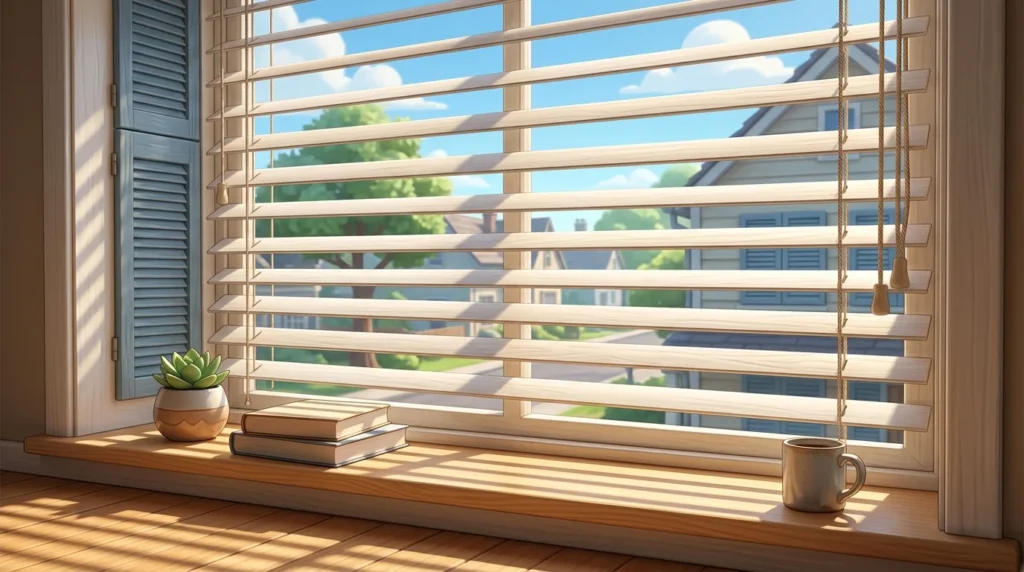
Quick Answer
Shutters are fixed, durable window coverings built into the window frame. They offer strong insulation, high durability, and a premium look.
Blinds are adjustable slatted coverings that are cheaper, flexible, and easier to install but less durable.
If you want long-term value and aesthetics → choose shutters.
If you want affordability and flexibility → choose blinds.
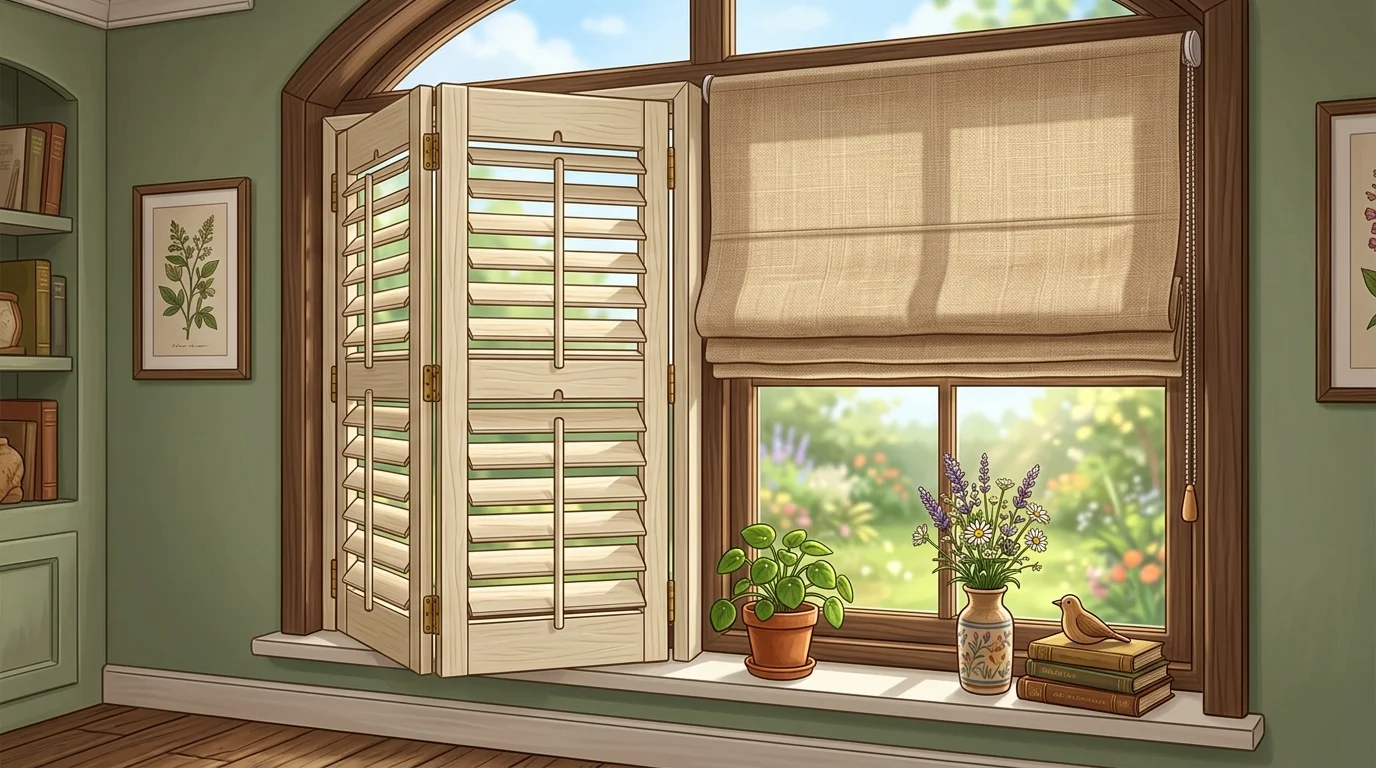
What Are Shutters?
Definition
Shutters are solid window coverings made of hinged panels fitted inside or outside the window frame. They are typically made from wood, vinyl, or composite materials.
How They Work
Shutters open and close like doors. Inside the panels are louvers (slats) that can be adjusted for light and airflow.
Key Features
- Built into window structure
- Strong insulation properties
- Long lifespan (often decades)
- High-end aesthetic appeal
- Excellent privacy control
Real Examples
Example 1: A homeowner installs plantation shutters in a living room for a clean, luxury look.
Example 2: A coastal house uses vinyl shutters to resist humidity.
Example 3: A bedroom uses shutters to fully block morning sunlight.
Key Insight
Shutters are a permanent upgrade, not just a decoration.
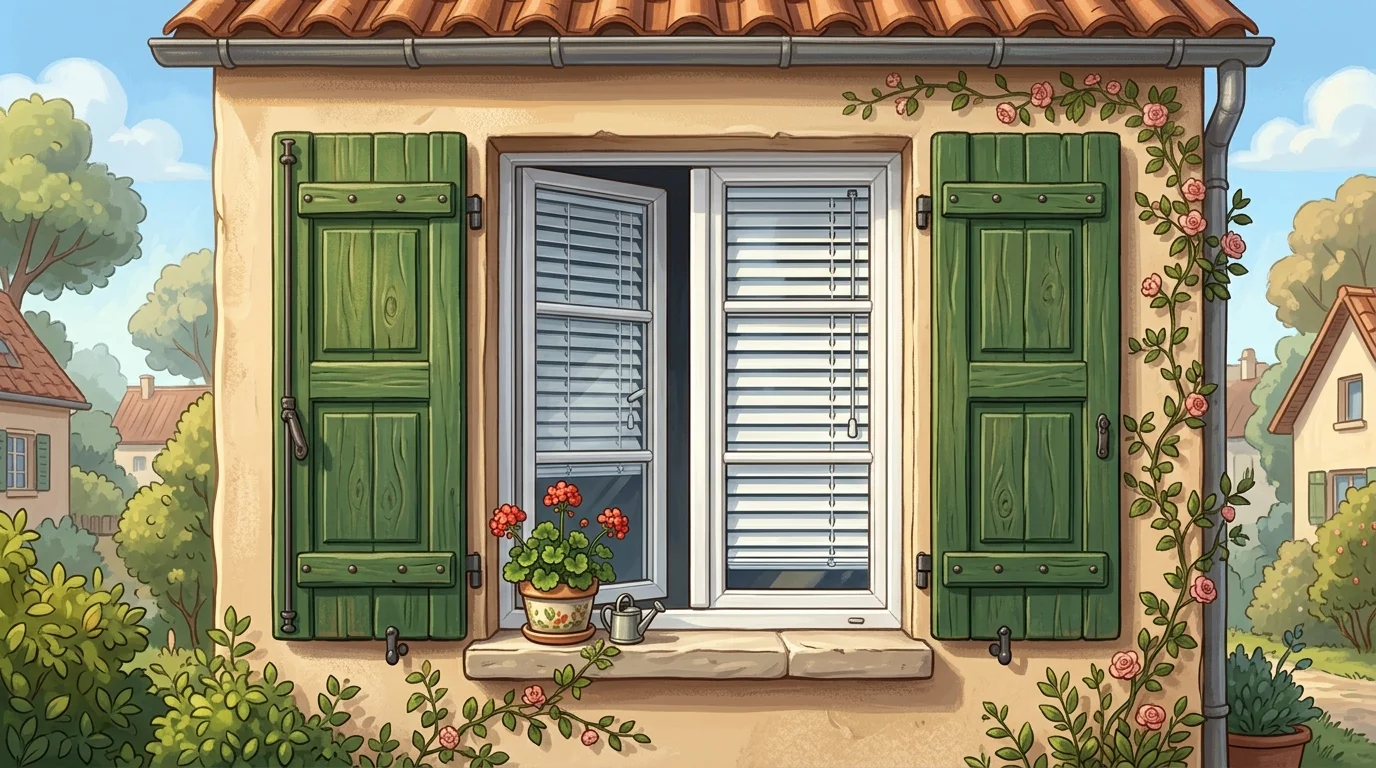
What Are Blinds?
Definition
Blinds are window coverings made of horizontal or vertical slats connected by cords or chains that allow adjustment for light control.
How They Work
Blinds can be raised, lowered, tilted, or fully closed depending on privacy and lighting needs.
Key Features
- Affordable and widely available
- Easy to install and replace
- Lightweight design
- Wide material variety (aluminum, wood, faux wood, fabric)
- Flexible light control
Real Examples
Example 1: Office windows use aluminum blinds for cost-effective light control.
Example 2: A student room uses roller blinds for privacy and simplicity.
Example 3: A kitchen uses moisture-resistant faux wood blinds.
Key Insight
Blinds are functional and budget-friendly, not long-term architectural upgrades.
Shutters vs Blinds: Key Differences
Quick Differences
- Shutters are fixed structures; blinds are movable systems
- Shutters cost more; blinds are cheaper
- Shutters last longer; blinds wear out faster
- Shutters improve home value; blinds usually don’t
- Blinds offer more variety and flexibility
- Shutters offer better insulation and durability
Comparison Table
| Feature | Shutters | Blinds |
|---|---|---|
| Cost | High | Low to medium |
| Durability | 15–30+ years | 3–10 years |
| Appearance | Premium, built-in | Simple, functional |
| Light Control | Good | Excellent (more adjustable) |
| Privacy | Excellent | Good |
| Insulation | Strong | Moderate |
| Maintenance | Low | Medium |
| Installation | Professional | DIY possible |
| Home Value Impact | Increases value | Minimal impact |
Real-World Usage Scenarios
Scenario 1
Homeowner: “I want my house to look more expensive.”
Answer: Shutters are better.
🎯 Lesson: Shutters add architectural value.
Scenario 2
Tenant: “I need something cheap and removable.”
Answer: Blinds are better.
🎯 Lesson: Blinds suit temporary living situations.
Scenario 3
Family: “We want better temperature control in summer.”
Answer: Shutters help more.
🎯 Lesson: Shutters provide stronger insulation.
Scenario 4
Office manager: “We need adjustable lighting during work hours.”
Answer: Blinds are ideal.
🎯 Lesson: Blinds give finer light control.
Scenario 5
Homeowner: “I don’t want to replace window coverings often.”
Answer: Shutters are the long-term choice.
🎯 Lesson: Shutters last significantly longer.
Common Mistakes
Mistake 1: Choosing Based Only on Price
Why it happens: Blinds look cheaper upfront.
Correction: Shutters often save money long-term due to durability.
Mistake 2: Thinking Blinds Are Always Ugly
Why it happens: Old-style blinds gave them a bad reputation.
Correction: Modern blinds can look sleek and minimal.
Mistake 3: Using Blinds in High-Moisture Areas Without Care
Why it happens: People ignore material type.
Correction: Bathrooms and kitchens need moisture-resistant blinds or shutters.
Mistake 4: Expecting Shutters to Be Flexible
Why it happens: Misunderstanding design purpose.
Correction: Shutters are not meant for frequent adjustment like blinds.
Memory Tricks
Remember Shutters
S = Solid Structure
Think: Built-in, permanent, strong.
Remember Blinds
B = Bend and Adjust
Think: Flexible, movable, changeable.
Expert Insight
Shutters and blinds serve different architectural roles rather than being direct competitors.
Shutters function as part of the window structure, improving insulation, security perception, and property value. That’s why they are common in higher-end residential design.
Blinds, on the other hand, are utility-focused solutions. Their strength lies in affordability, adaptability, and ease of replacement.
From a design efficiency perspective, shutters are a long-term investment, while blinds are a short-cycle functional solution. shutters or blinds.
Most high-end homes actually combine both: shutters in main living areas and blinds in secondary rooms or rental spaces. shutters or blinds.