
Quick Answer
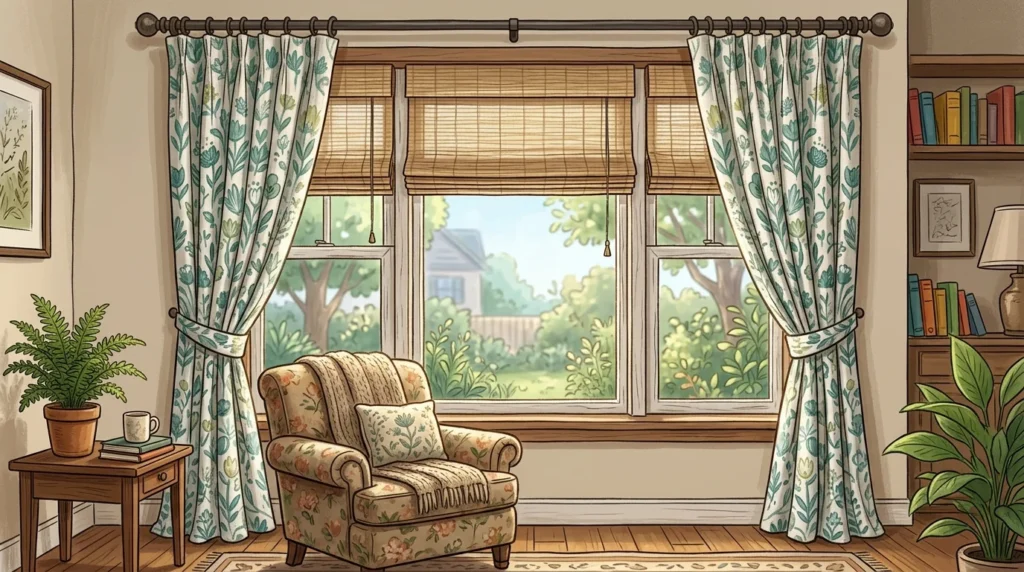
If you want a simple answer, shades are best for precise light control, energy efficiency, and a modern appearance, while curtains are ideal for softness, decoration, insulation, and creating a cozy atmosphere.
Many interior designers recommend using both together to maximize privacy, light control, and visual appeal.
What Are Shades?
Shades are window coverings made from a single continuous piece of fabric or other material. Instead of sliding sideways, they raise and lower vertically.
Unlike blinds, shades don’t have adjustable slats. The entire material moves as one piece.
How Shades Work
Shades roll, fold, or stack upward depending on their design. They can be operated manually or with cordless, motorized, or smart-home systems.
Common Types of Shades
- Roller shades
- Roman shades
- Cellular (Honeycomb) shades
- Solar shades
- Woven wood shades
- Pleated shades
- Blackout shades
Advantages of Shades
- Excellent light control
- Minimalist appearance
- Space-saving design
- Available with blackout fabrics
- Better energy efficiency, especially cellular shades
- Easy to automate with smart controls
Disadvantages of Shades
- Offer less decorative impact than curtains
- Some fabrics require professional cleaning
- Limited design flexibility compared to layered curtains
Real Examples
Example 1
A home office uses solar shades to reduce screen glare while preserving the outdoor view.
Example 2
A bedroom installs blackout roller shades to block early morning sunlight for better sleep.
Example 3
Cellular shades are installed in a cold climate to improve insulation and reduce heating costs.
Key Insight
If your priority is functionality, modern aesthetics, and efficient light management, shades are often the better investment.

What Are Curtains?
Curtains are fabric panels that hang from a rod above the window. They can be opened by pulling them to the sides or closed to cover the window completely.
They are available in countless fabrics, lengths, colors, and styles.
Common Curtain Types
- Sheer curtains
- Blackout curtains
- Linen curtains
- Velvet curtains
- Cotton curtains
- Thermal curtains
- Grommet curtains
- Pinch pleat curtains
Advantages of Curtains
- Add warmth and texture
- Huge variety of colors and patterns
- Better decorative impact
- Excellent for layering
- Improve room acoustics
- Help reduce drafts when properly lined
Disadvantages of Curtains
- Require more space
- Need regular washing or dry cleaning
- May collect dust over time
- Usually provide less precise light control
Real Examples
Example 1
Floor-length linen curtains soften the appearance of a modern living room.
Example 2
Heavy blackout curtains help create a dark, comfortable bedroom.
Example 3
Sheer curtains provide daytime privacy while allowing natural light inside.
Key Insight
Curtains are often chosen as much for their decorative value as their practical function.
Shades vs Curtains: What’s the Difference?
Although both cover windows, they differ in construction, appearance, operation, and functionality.
Quick Differences
- Shades move up and down.
- Curtains slide side to side.
- Shades create a cleaner, modern look.
- Curtains create a softer, more traditional appearance.
- Shades fit inside or outside the window frame.
- Curtains usually extend beyond the window frame.
- Shades offer more precise light control.
- Curtains offer greater decorative flexibility.
- Shades are generally easier to automate.
- Curtains provide better opportunities for layering and styling.
Comparison Table
| Feature | Shades | Curtains |
|---|---|---|
| Meaning | Single-piece window covering | Fabric panels hanging from a rod |
| Operation | Raise and lower | Open and close sideways |
| Appearance | Modern and streamlined | Soft and decorative |
| Light Control | Excellent | Good, depending on fabric |
| Privacy | Excellent | Excellent with proper fabric |
| Energy Efficiency | High, especially cellular shades | Good with thermal lining |
| Maintenance | Simple dusting or spot cleaning | Regular washing or dry cleaning |
| Smart Home Compatibility | Excellent | Limited |
| Best For | Modern homes, offices, kitchens | Bedrooms, living rooms, dining rooms |
| Example | Roller shade | Linen curtain |
When Should You Choose Shades?
Shades are typically the better choice if you want:
- Modern interior design
- Maximum light control
- Better insulation
- Smaller rooms
- Smart-home automation
- Clean architectural lines
- Minimal maintenance
They’re especially popular in:
- Home offices
- Kitchens
- Bathrooms
- Apartments
- Contemporary homes
When Should You Choose Curtains?
Curtains work best if you want:
- Cozy interiors
- Decorative impact
- Layered window treatments
- Traditional or farmhouse styles
- Better sound absorption
- Luxurious appearance
They’re commonly used in:
- Living rooms
- Bedrooms
- Formal dining rooms
- Hotels
- Luxury interiors
Can You Use Shades and Curtains Together?
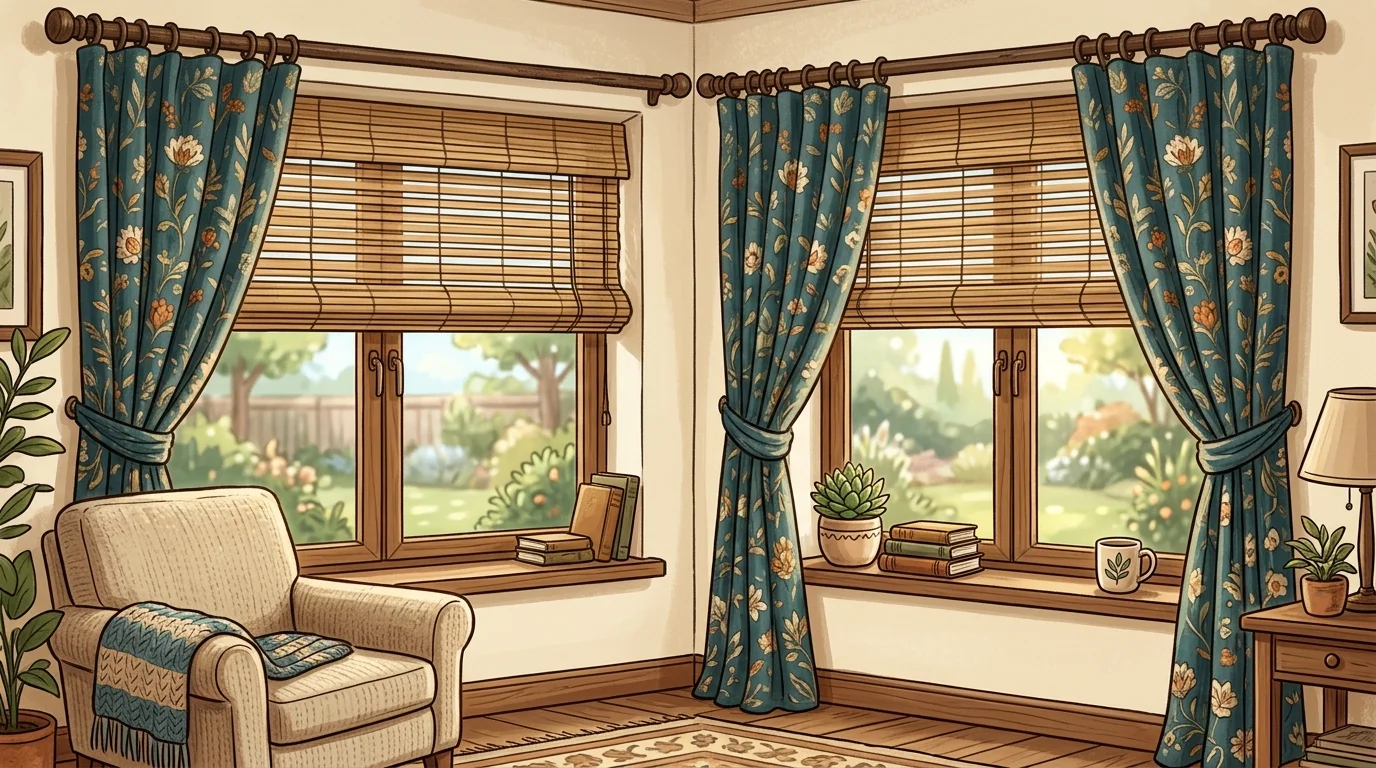
Yes. In fact, many interior designers recommend combining them.
Pairing shades with curtains offers several benefits:
- Better insulation
- Improved privacy
- More flexible light control
- Greater design depth
- Higher-end appearance
For example, install blackout roller shades behind linen curtains to enjoy complete darkness at night while maintaining an elegant look during the day.
Real-World Usage Scenarios
Scenario 1
Homeowner: “The afternoon sun makes my office too bright.”
Designer: “Install solar shades instead of heavy curtains.”
🎯 Lesson: Shades reduce glare while preserving outside views.
Scenario 2
Homeowner: “My bedroom never gets dark enough.”
Designer: “Use blackout shades or blackout curtains.”
🎯 Lesson: Both can darken a room, but blackout shades often provide more consistent coverage.
Scenario 3
Homeowner: “My living room feels plain.”
Designer: “Add full-length curtains for warmth and texture.”
🎯 Lesson: Curtains dramatically improve visual appeal.
Scenario 4
Homeowner: “I want smart home controls.”
Designer: “Motorized shades integrate more easily with smart systems.”
🎯 Lesson: Shades usually outperform curtains in home automation.
Scenario 5
Homeowner: “I want the best of both worlds.”
Designer: “Layer shades behind decorative curtains.”
🎯 Lesson: Combining both provides superior functionality and style.
Common Mistakes
Choosing Only Based on Appearance
Beautiful curtains may not provide the light control you need.
Why it happens: Buyers often prioritize style over functionality.
Ignoring Energy Efficiency
Some people overlook insulated shades that could lower heating and cooling costs.
Why it happens: Energy performance isn’t always obvious during shopping.
Using Curtains in High-Moisture Areas
Bathrooms and kitchens may be better suited to moisture-resistant shades.
Why it happens: Fabric curtains can absorb moisture and odors.
Buying the Wrong Size
Improper measurements can make either option look awkward.
Why it happens: Window dimensions are often measured incorrectly.
Memory Tricks
- Shades “shade” the window by moving up and down.
- Curtains “curtain” the room with hanging fabric panels.
- Think “modern = shades.”
- Think “decorative = curtains.”
- Need automation? Choose shades.
- Need softness? Choose curtains.
Expert Insight
Shades and curtains are not competitors as much as complementary products.
Interior designers increasingly layer both because each solves different problems. Shades excel at managing sunlight, privacy, and energy efficiency, while curtains enhance visual warmth, soften hard architectural lines, improve acoustics, and create a finished look.
Current design trends also favor motorized shades paired with decorative curtain panels, offering homeowners the convenience of smart technology without sacrificing style. Instead of asking whether shades or curtains are universally better, professionals evaluate the room’s purpose, desired ambiance, and performance requirements before making a recommendation. shades or curtains.