
Quick Answer
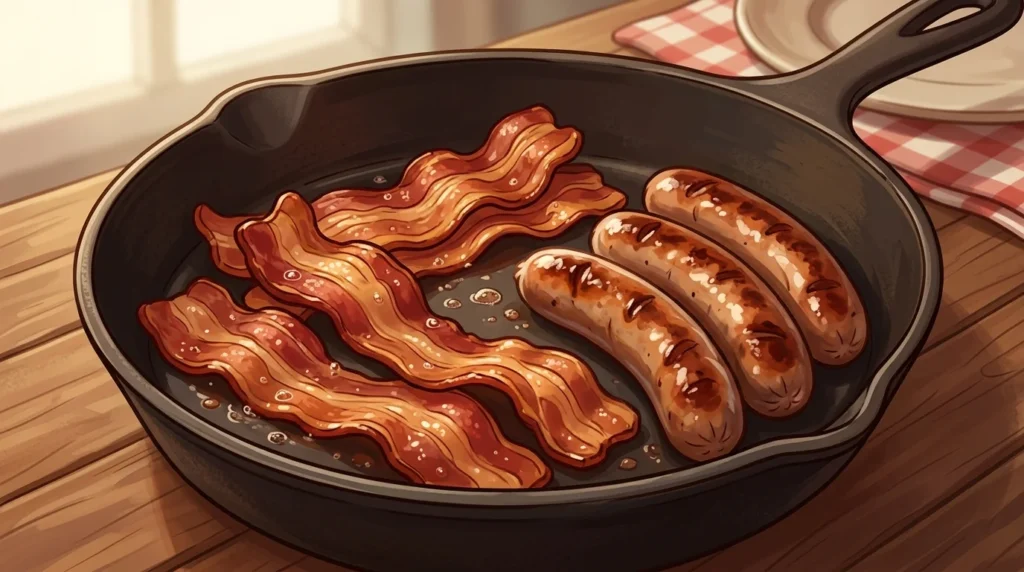
The difference between sausage and bacon comes down to how they’re made.
- Bacon is typically cured and sliced pork, known for its smoky flavor and crispy texture.
- Sausage is ground meat mixed with herbs, spices, and seasonings, then formed into links, patties, or other shapes.
Choose bacon if you prefer a crispy, smoky breakfast meat. Choose sausage if you enjoy a juicy, savory option with a variety of flavors.
What Is Sausage?
Definition
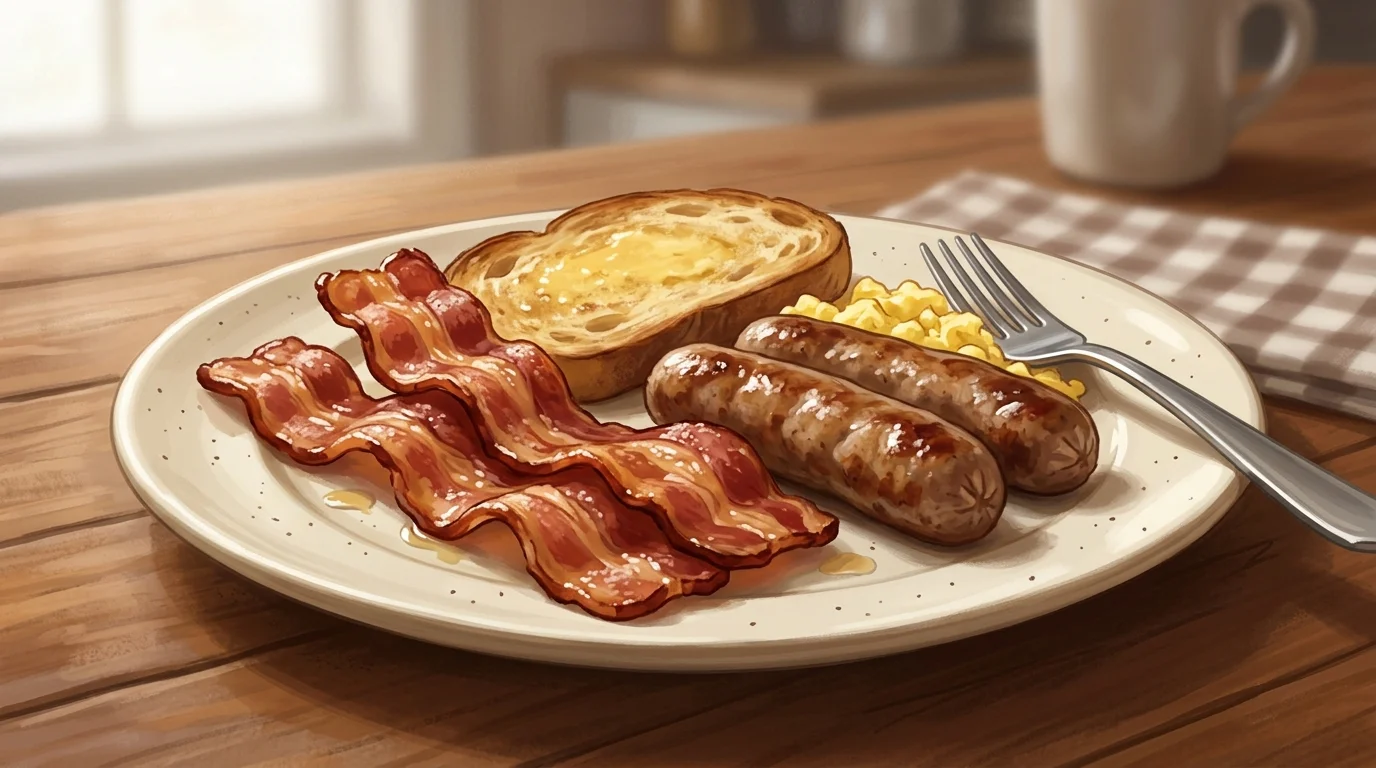
Sausage is a meat product made by grinding meat—commonly pork, beef, chicken, turkey, or a combination—and mixing it with herbs, spices, salt, and other seasonings. It is then shaped into links, patties, or rolls, and may be fresh, smoked, cooked, or cured.
Different countries have hundreds of sausage varieties, each with unique flavors and ingredients.
Common Types of Sausage
- Breakfast sausage
- Italian sausage
- Bratwurst
- Chorizo
- Andouille
- Chicken sausage
- Turkey sausage
- Smoked sausage
Flavor Profile
Sausage is typically:
- Juicy
- Savory
- Well-seasoned
- Rich
- Available in mild or spicy varieties
Nutritional Highlights
Depending on the type, sausage often contains:
- High protein
- Moderate to high fat
- Sodium from seasoning
- Vitamins and minerals from meat
Nutritional values vary widely based on ingredients and preparation.
Pros
- Available in many flavors
- High in protein
- Versatile for breakfast, lunch, and dinner
- Easy to cook
- Available in pork, beef, chicken, and turkey options
Cons
- Often high in sodium
- Can contain added preservatives
- Fat content varies significantly
- Processed varieties may be less suitable for frequent consumption
Examples
Example 1
A breakfast sandwich includes a seasoned sausage patty.
Result: It provides a hearty and savory flavor.
Example 2
Italian sausage is added to pasta sauce.
Result: The spices enhance the dish with rich flavor.
Key Insight
Sausage offers greater variety because recipes differ by region, ingredients, and seasoning blends.
What Is Bacon?
Definition
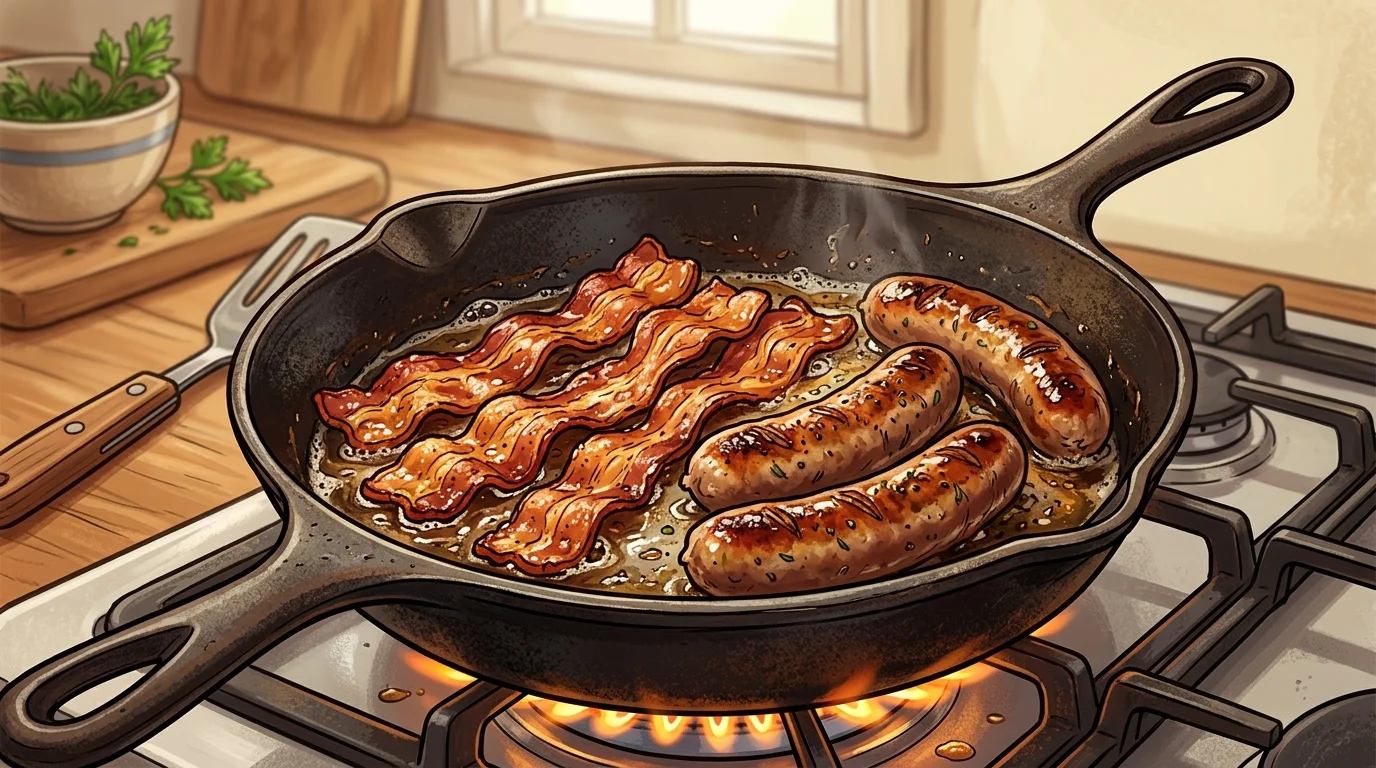
Bacon is a cured meat product traditionally made from pork belly, although it can also come from other cuts or meats such as turkey or beef. It is cured with salt and often smoked before being sliced.
Cooking bacon renders fat and creates its signature crispy texture.
Common Types of Bacon
- Streaky bacon
- Back bacon
- Canadian bacon
- Turkey bacon
- Beef bacon
- Smoked bacon
- Unsmoked bacon
Flavor Profile
Bacon is known for its:
- Smoky taste
- Crispy texture
- Salty flavor
- Rich aroma
Nutritional Highlights
Bacon generally contains:
- Protein
- Fat
- Sodium from curing
- B vitamins
- Iron
Like sausage, nutritional values vary by cut and preparation.
Pros
- Crispy texture
- Distinct smoky flavor
- Quick cooking time
- Popular breakfast ingredient
- Versatile in many recipes
Cons
- Can be high in sodium
- Higher fat in many varieties
- Shrinks during cooking
- Easy to overcook
Examples
Example 1
Bacon is served alongside eggs and toast.
Result: It adds crunch and smoky flavor.
Example 2
Crispy bacon is crumbled over a salad.
Result: It enhances texture and taste.
Key Insight
Bacon is prized for its unique balance of crispiness, saltiness, and smoky flavor.
Sausage or Bacon: Key Differences
Main Differences
- Sausage is made from ground seasoned meat, while bacon is sliced cured meat.
- Bacon is usually crisp after cooking, whereas sausage remains juicy.
- Sausage comes in many spice blends and recipes.
- Bacon has a naturally smoky flavor from curing and smoking.
- Sausage can be made from several meats, while bacon is traditionally pork.
- Both are commonly served at breakfast but are used in many other dishes.
- Both provide protein but are often high in sodium and fat, depending on the variety.
Comparison Table
| Feature | Sausage | Bacon |
|---|---|---|
| Main Ingredient | Ground seasoned meat | Cured sliced meat |
| Traditional Meat | Pork (also beef, chicken, turkey) | Pork belly (also turkey or beef) |
| Texture | Juicy and tender | Crispy or chewy |
| Flavor | Savory and seasoned | Smoky and salty |
| Preparation | Ground and seasoned | Cured and sliced |
| Cooking Time | Moderate | Usually quick |
| Variety | Very high | Moderate |
| Common Forms | Links, patties, rolls | Thin or thick slices |
| Breakfast Popularity | Excellent | Excellent |
Real-World Usage Scenarios
Scenario 1: Classic Breakfast
Person: “I want a crispy breakfast meat.”
Recommendation: Bacon.
🎯 Lesson: Bacon is the better choice if texture is your priority.
Scenario 2: Filling Breakfast Sandwich
Person: “I want something hearty.”
Recommendation: Sausage.
🎯 Lesson: Sausage patties often create a more filling sandwich.
Scenario 3: Pasta Dinner
Cook: “Which meat adds bold seasoning?”
Recommendation: Sausage.
🎯 Lesson: Sausage blends well with pasta, soups, and casseroles.
Scenario 4: Burger Topping
Cook: “I want extra crunch.”
Recommendation: Bacon.
🎯 Lesson: Crispy bacon adds texture and smoky flavor to burgers.
Scenario 5: Meal Variety
Family: “We like trying different flavors.”
Recommendation: Sausage.
🎯 Lesson: Sausage offers far more regional and seasoning variations.
Common Mistakes
Assuming Bacon and Sausage Are Made the Same Way
Many people think they’re simply different cuts of meat.
Correction: Bacon is cured and sliced, while sausage is ground, seasoned, and formed into various shapes.
Believing One Is Always Healthier
Neither food is automatically healthier than the other.
Why it happens: Nutritional content depends on the meat, fat level, sodium, serving size, and preparation.
Correction: Compare nutrition labels rather than relying on the product name alone.
Ignoring Portion Sizes
Both bacon and sausage can be calorie-dense.
Correction: Enjoy them in moderation as part of a balanced diet.
Overcooking Bacon or Sausage
Excessive cooking can reduce moisture, affect texture, and create an unpleasant taste.
Correction: Cook to the recommended internal temperature and avoid burning.
Memory Tricks
Remember “S” for Sausage
S = Seasoned
Sausage is ground meat mixed with spices and herbs.
Remember “B” for Bacon
B = Belly
Traditional bacon comes from pork belly and is cured before slicing.
Easy Shortcut
- Seasoned and juicy = Sausage
- Smoky and crispy = Bacon
Expert Insight
Although both sausage and bacon are processed meat products in many forms, they represent different culinary traditions. Sausage recipes have existed for thousands of years and vary widely across cultures, incorporating local meats, herbs, and spices. Bacon, by contrast, developed primarily as a method of preserving pork through curing and smoking.
From a cooking perspective, sausage contributes rich seasoning and moisture, making it suitable for dishes like pasta sauces, casseroles, pizzas, and soups. Bacon is valued for its crispy texture and smoky flavor, often serving as a topping or ingredient that adds contrast rather than acting as the main component of a meal.
When choosing between the two, consider not only taste but also serving size, cooking method, and overall dietary pattern rather than assuming one is inherently healthier. sausage or bacon.