
Quick Answer
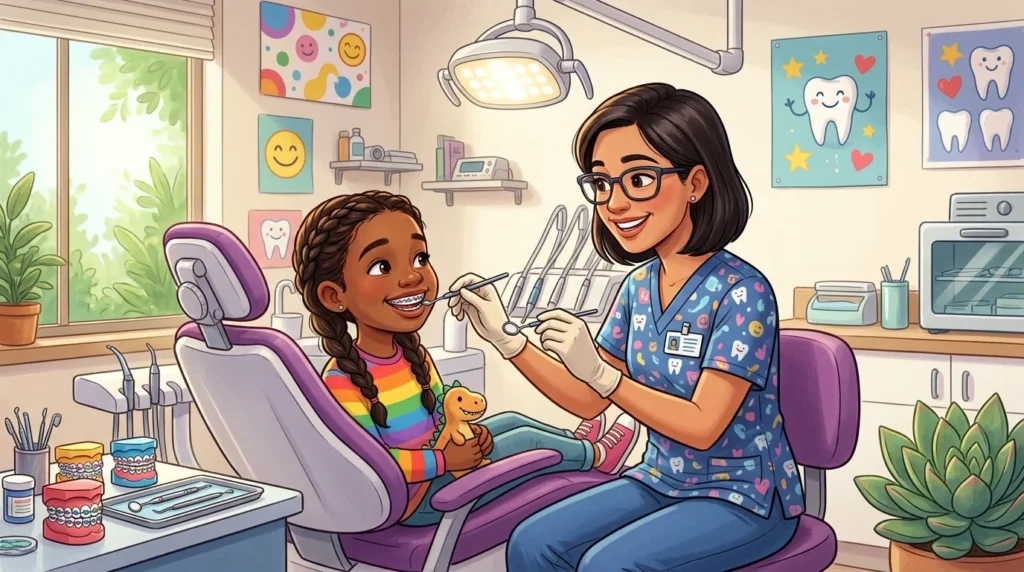
A dentist handles general oral health, including teeth cleaning, cavities, fillings, and basic dental care.
An orthodontist is a specialist who focuses on correcting teeth alignment and jaw position using braces, aligners, and related treatments.
If you need general care → go to a dentist.
If you need teeth straightening → go to an orthodontist.

What Is a Dentist?
Definition
A dentist is a medical professional who diagnoses, treats, and prevents general oral health problems involving teeth, gums, and mouth.
Role and Responsibilities
Dentists handle:
- Teeth cleaning
- Cavities and fillings
- Tooth extraction
- Gum disease treatment
- Root canals
- General oral exams
Common Treatments
- Fillings for tooth decay
- Scaling and polishing
- Crowns and bridges
- Tooth removal (extraction)
- Preventive dental care
Real Examples
Example 1: A patient visits a dentist for a painful cavity.
Example 2: Someone gets a routine cleaning every six months.
Example 3: A dentist treats gum inflammation caused by plaque buildup.
Key Insight
Dentists are your first line of defense for all general oral health issues.

What Is an Orthodontist?
Definition
An orthodontist is a dental specialist who focuses on diagnosing and correcting misaligned teeth and jaw irregularities.
Role and Responsibilities
Orthodontists handle:
- Crooked teeth
- Overbite and underbite
- Gaps between teeth
- Jaw alignment issues
- Bite correction
Common Treatments
- Braces (metal or ceramic)
- Clear aligners
- Retainers
- Space correction devices
- Jaw alignment treatments
Real Examples
Example 1: A teenager gets braces to fix crooked teeth.
Example 2: An adult uses clear aligners for subtle teeth straightening.
Example 3: A patient receives treatment for an overbite affecting chewing.
Key Insight
Orthodontists focus on structure and alignment, not general dental health.
Dentist vs Orthodontist: Key Differences
Quick Differences
- Dentists treat general oral health
- Orthodontists specialize in alignment
- Dentists handle cavities and gums
- Orthodontists handle braces and bite correction
- Dentists are generalists
- Orthodontists are specialists
Comparison Table
| Feature | Dentist | Orthodontist |
|---|---|---|
| Focus | General oral health | Teeth and jaw alignment |
| Training | Dental degree | Additional orthodontic specialization |
| Treatments | Fillings, cleaning, extraction | Braces, aligners, bite correction |
| Patient Type | All ages | Mostly alignment cases |
| Frequency of Visit | Regular checkups | Periodic treatment sessions |
| Tools | Basic dental tools | Specialized alignment devices |
Real-World Usage Scenarios
Scenario 1
Patient: “I have tooth pain.”
Answer: Dentist
🎯 Lesson: Pain and decay are general dental issues.
Scenario 2
Patient: “My teeth are crooked.”
Answer: Orthodontist
🎯 Lesson: Alignment problems need specialization.
Scenario 3
Patient: “I want a cleaning and checkup.”
Answer: Dentist
🎯 Lesson: Preventive care belongs to dentists.
Scenario 4
Patient: “I want braces.”
Answer: Orthodontist
🎯 Lesson: Braces are orthodontic treatment.
Scenario 5
Patient: “My child has bite issues.”
Answer: Orthodontist
🎯 Lesson: Jaw development concerns require alignment expertise.
Common Mistakes
Mistake 1: Going Straight to an Orthodontist First
Why it happens: People assume all dental issues are alignment issues.
Correction: Dentists usually evaluate first and refer if needed.
Mistake 2: Thinking Dentists and Orthodontists Are the Same
Why it happens: Both work on teeth.
Correction: Orthodontists have additional specialized training.
Mistake 3: Delaying Treatment for Crooked Teeth
Why it happens: Underestimating alignment problems.
Correction: Early orthodontic care often prevents bigger issues later.
Mistake 4: Assuming Braces Are Only for Kids
Why it happens: Old perception.
Correction: Adults also commonly receive orthodontic treatment.
Memory Tricks
Remember Dentist
D = Daily dental care
Think: cleaning, cavities, general problems.
Remember Orthodontist
O = Order teeth alignment
Think: straightening, braces, bite correction.
Expert Insight
Dentists and orthodontists are part of the same medical ecosystem but operate at different levels of specialization.
Dentistry focuses on overall oral health maintenance, similar to general medicine. Orthodontics is a surgical-level specialization within dentistry focused specifically on craniofacial development and alignment mechanics.
Orthodontic treatment often begins after a dentist identifies alignment issues during routine exams. This referral system ensures patients receive appropriate care without unnecessary specialization visits. orthodontist or dentist.
Modern orthodontics also increasingly overlaps with cosmetic dentistry, especially with clear aligners, but the underlying goal remains functional alignment rather than just appearance. orthodontist or dentist.