

Quick Answer
Nearsightedness (myopia) means you can see nearby objects clearly but distant objects appear blurry.
Farsightedness (hyperopia) means distant objects are usually clearer than nearby objects, although moderate to severe hyperopia can blur vision at multiple distances.
Understanding Nearsightedness
What Is Nearsightedness?
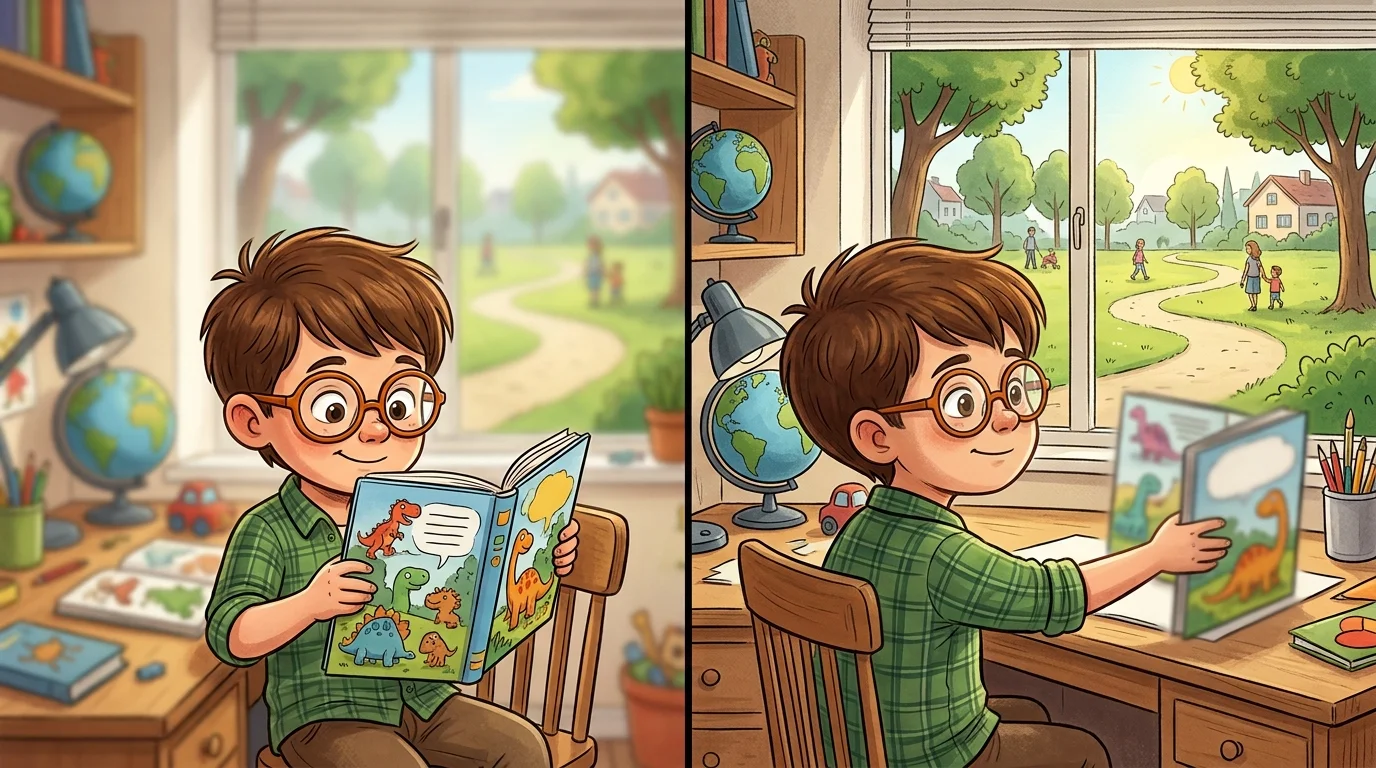
Nearsightedness, medically known as myopia, is a refractive error in which light focuses in front of the retina instead of directly on it.
As a result:
- Close objects appear clear.
- Distant objects appear blurry.
Myopia often develops during childhood and may progress as a child grows.
Common Symptoms
- Blurry distance vision
- Squinting to see far away
- Difficulty reading road signs
- Trouble seeing classroom boards
- Eyestrain
- Headaches after focusing on distant objects
Common Causes
Myopia usually occurs because:
- The eyeball is too long.
- The cornea is too curved.
- Genetics increase the risk.
- Environmental factors, such as prolonged near work and limited time outdoors, may contribute to its development.
Real-Life Examples
- Reading a book is easy.
- Watching television from across the room is blurry.
- Driving at night becomes more difficult because distant signs are hard to read.
Key Insight: Myopia is one of the most common vision conditions worldwide and is increasing in prevalence.
Understanding Farsightedness
What Is Farsightedness?
Farsightedness, or hyperopia, is another refractive error. In this condition, light focuses behind the retina, making it harder to focus on nearby objects.
Many people with mild hyperopia can still see well because their eyes naturally compensate, especially when they are younger.
Common Symptoms
- Blurry near vision
- Eye fatigue while reading
- Headaches after close work
- Difficulty focusing on small print
- Eye strain during computer use
Common Causes
Hyperopia typically occurs because:
- The eyeball is too short.
- The cornea is flatter than average.
- Genetics play an important role.
Real-Life Examples
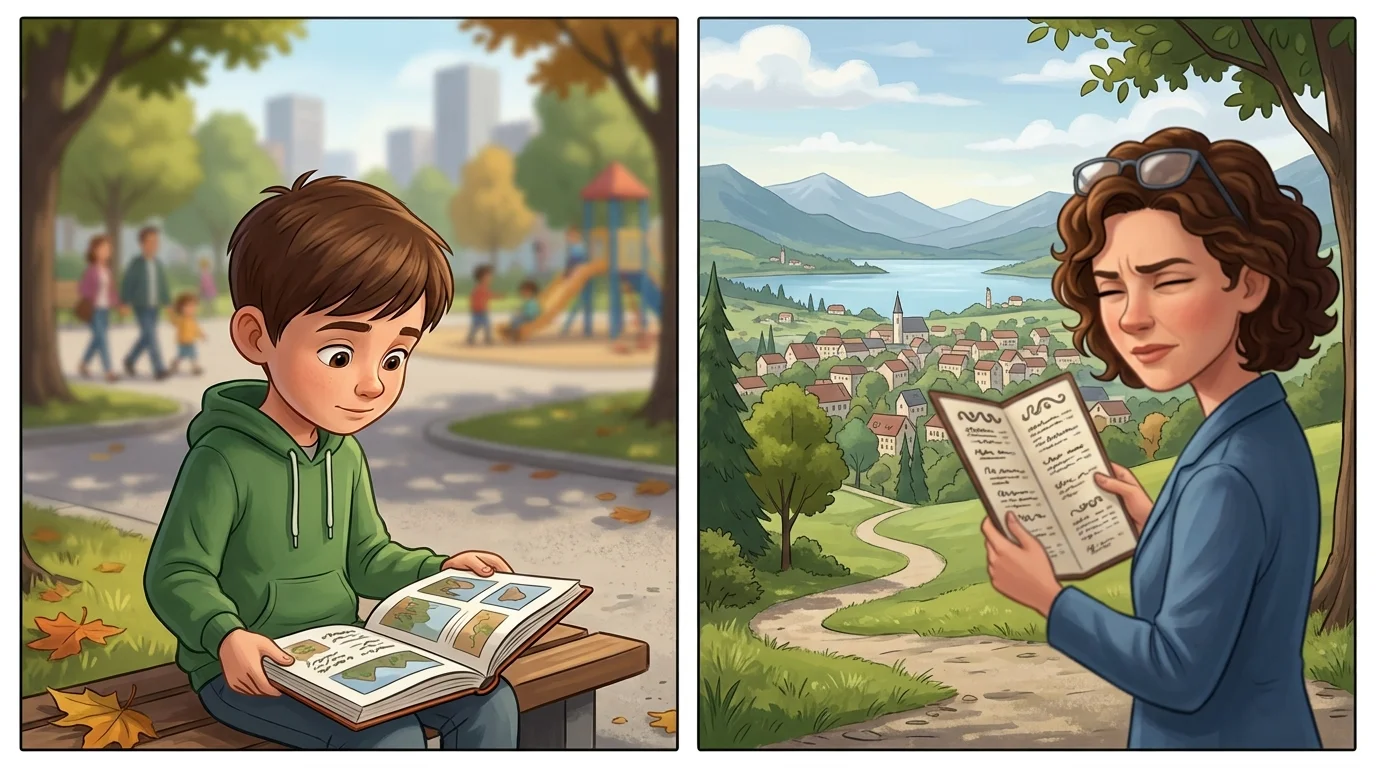
- Reading a menu requires holding it farther away.
- Sewing or crafting becomes tiring.
- Small text on a smartphone is difficult to read.
Key Insight: Mild hyperopia may not be noticeable in younger people because the eye’s focusing system can often compensate.
Nearsighted or Farsighted: Key Differences
Vision
The biggest difference is the viewing distance at which objects appear blurry.
Eye Shape
Nearsightedness usually results from an eye that is too long.
Farsightedness usually results from an eye that is too short.
Everyday Challenges
People with myopia struggle with distance activities.
People with hyperopia often struggle with reading and other close-up tasks.
Comparison Table
| Feature | Nearsighted (Myopia) | Farsighted (Hyperopia) |
|---|---|---|
| Nearby Vision | Clear | Often blurry |
| Distance Vision | Blurry | Usually clearer |
| Light Focuses | In front of the retina | Behind the retina |
| Common Symptoms | Difficulty seeing far away | Difficulty seeing up close |
| Eye Shape | Longer eye | Shorter eye |
| Typical Diagnosis | Childhood or adolescence | Childhood or adulthood |
| Common Correction | Minus (−) lenses | Plus (+) lenses |
Real-World Usage Scenarios
Scenario 1: Driving
Alex easily reads a book but cannot clearly see highway signs.
Diagnosis: Nearsightedness.
🎯 Lesson: Blurry distance vision usually indicates myopia.
Scenario 2: Reading
Emma struggles to read a restaurant menu without holding it farther away.
Diagnosis: Farsightedness or another near-vision issue that should be evaluated by an eye care professional.
🎯 Lesson: Difficulty with close work is commonly associated with hyperopia, though age-related vision changes can also cause similar symptoms.
Scenario 3: Classroom
A student can complete worksheets but cannot clearly read the whiteboard.
Diagnosis: Nearsightedness.
🎯 Lesson: Myopia commonly affects school-age children.
Scenario 4: Computer Work
James experiences headaches after working on a computer for several hours.
An eye examination reveals farsightedness.
🎯 Lesson: Eye strain during prolonged close work can be a sign of hyperopia.
Common Mistakes
Assuming Blurry Vision Always Means Nearsightedness
Many people believe any blurry vision indicates myopia.
In reality, numerous eye conditions—including hyperopia, astigmatism, and cataracts—can cause blurry vision.
Self-Diagnosing
Vision problems should always be evaluated through a comprehensive eye examination rather than relying solely on online symptom checkers.
Confusing Farsightedness with Age-Related Reading Difficulty
Difficulty reading up close after about age 40 is often due to presbyopia, a normal age-related loss of focusing ability. Although the symptoms resemble hyperopia, presbyopia is a different condition with a different underlying cause.
Ignoring Mild Symptoms
Even mild vision changes can affect learning, driving, work performance, and overall eye comfort.
Memory Tricks
Think “Near = Nearby”
Nearsighted means you can see nearby objects clearly.
Think “Far = Far Away”
Farsighted means distant objects are generally easier to see than nearby ones.
Simple Shortcut
- Near = Near is clear
- Far = Far is clearer
Expert Insight
Nearsightedness and farsightedness are both refractive errors, meaning the eye does not focus light precisely on the retina. The distinction lies in where the light comes to a focus. In myopia, the eye’s optical power is too strong or the eye is too long, causing distant images to focus in front of the retina. In hyperopia, the eye’s optical power is relatively weak or the eye is too short, causing the focal point to fall behind the retina.
Both conditions are typically diagnosed with a comprehensive eye exam and are commonly corrected with prescription glasses, contact lenses, or, for suitable candidates, refractive surgery. Regular eye examinations are important because a person’s prescription can change over time. nearsighted or farsighted.