
Quick Answer
The difference between the Navy and the Air Force is their primary mission.
- Navy: Conducts military operations at sea using ships, submarines, aircraft, and naval forces.
- Air Force: Conducts military operations in the air and space using aircraft, satellites, missiles, and advanced technology.
Choose the branch that best aligns with your interests, desired career field, and preferred work environment.
What Is the Navy?
Definition
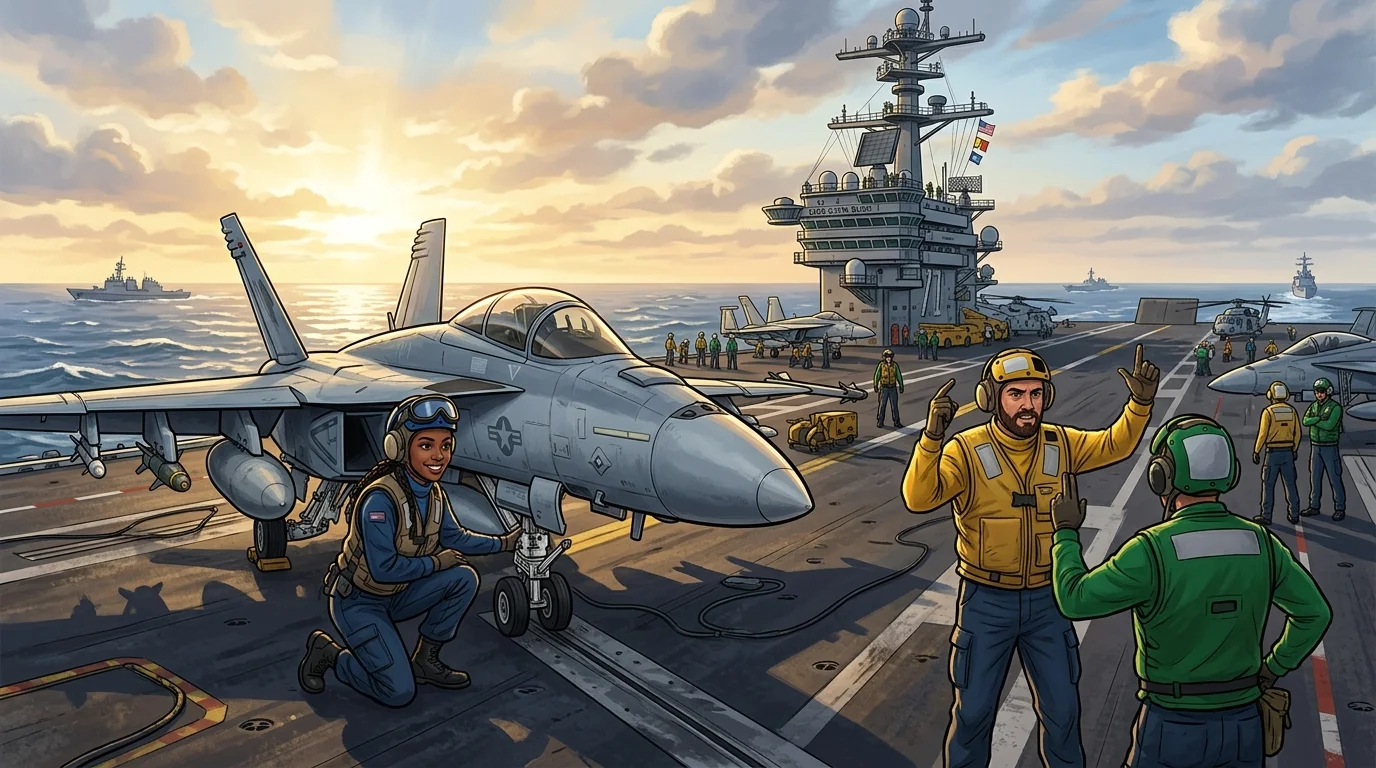
The Navy is the military branch responsible for protecting a nation’s maritime interests. It operates warships, aircraft carriers, submarines, naval aircraft, and amphibious forces to maintain security at sea and support military operations worldwide.
Navies also assist with humanitarian missions, disaster relief, anti-piracy operations, and international security partnerships.
Primary Responsibilities
Typical Navy missions include:
- Maritime security
- Aircraft carrier operations
- Submarine warfare
- Surface warfare
- Naval aviation
- Amphibious operations
- Intelligence gathering
- Humanitarian assistance
- Disaster response
Career Opportunities
The Navy offers careers in:
- Aviation
- Engineering
- Information technology
- Cybersecurity
- Medical services
- Intelligence
- Logistics
- Nuclear engineering
- Communications
- Special operations
Advantages
- Wide variety of technical careers
- Opportunities to travel internationally
- Advanced engineering fields
- Strong maritime expertise
- Diverse duty assignments
Challenges
- Extended deployments at sea
- Life aboard ships or submarines
- Long periods away from family
- Physically demanding operational schedules
Examples
Example 1
A sailor serves aboard an aircraft carrier during an overseas deployment.
Result: They support naval operations while traveling across multiple regions.
Example 2
A naval engineer maintains propulsion systems on a destroyer.
Result: Their work keeps the ship operational during missions.
Key Insight
The Navy is best suited for individuals interested in maritime operations, global travel, and working in unique environments at sea.
What Is the Air Force?
Definition
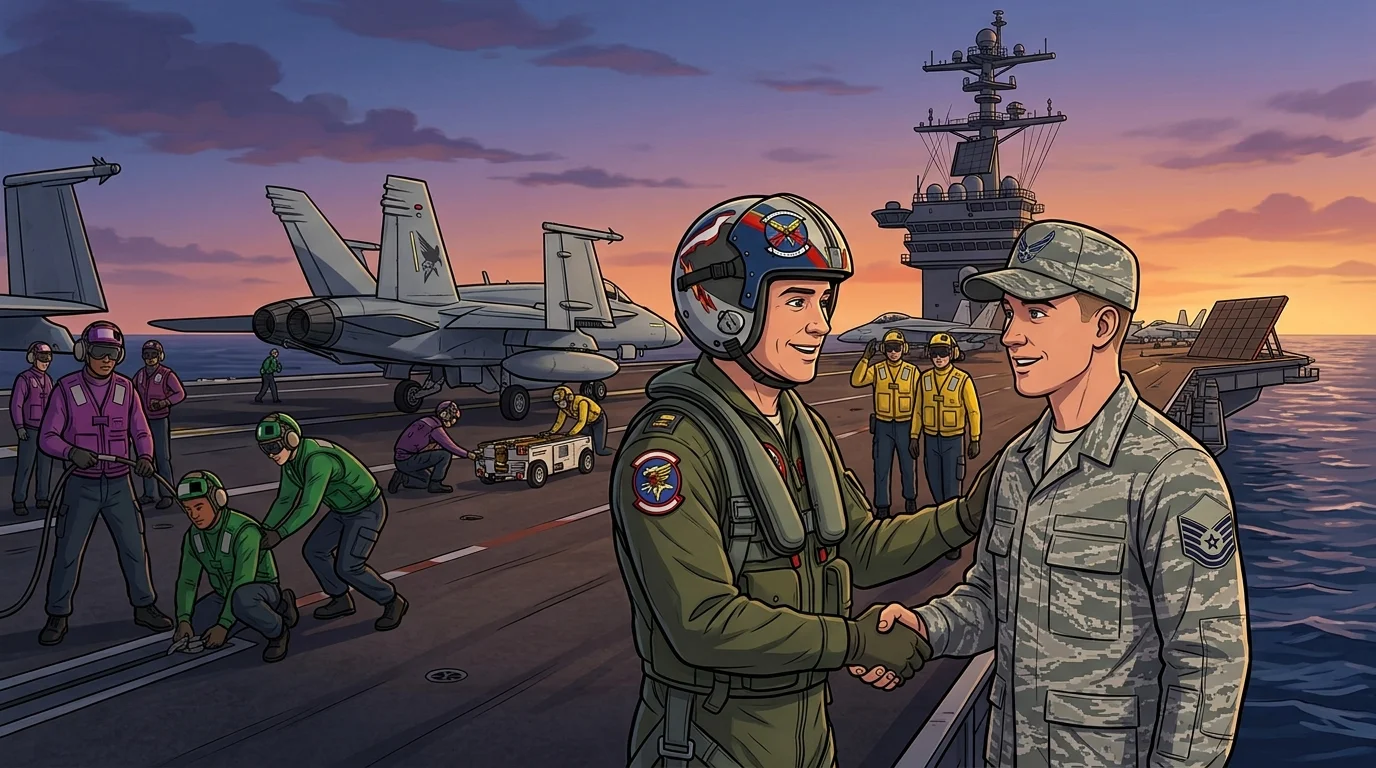
The Air Force is the military branch responsible for air and space operations. It protects national interests through aircraft, satellites, missiles, intelligence systems, and advanced technology.
Modern Air Forces also play a major role in cyber operations, surveillance, reconnaissance, humanitarian relief, and rapid global transportation.
Primary Responsibilities
Typical Air Force missions include:
- Air superiority
- Strategic airlift
- Intelligence and surveillance
- Space operations
- Cyber operations
- Missile defense
- Search and rescue
- Precision strike missions
- Humanitarian airlift
Career Opportunities
The Air Force offers careers in:
- Aviation
- Aircraft maintenance
- Cybersecurity
- Space operations
- Engineering
- Intelligence
- Medical services
- Communications
- Weather forecasting
- Logistics
Advantages
- Strong emphasis on technology
- Excellent technical training
- Modern work environments
- Broad STEM career opportunities
- Diverse aviation specialties
Challenges
- Highly competitive aviation careers
- Frequent relocations
- Demanding operational readiness
- Specialized training requirements
Examples
Example 1
An Air Force technician maintains fighter aircraft before missions.
Result: Safe and reliable aircraft operations depend on their expertise.
Example 2
A cyber specialist protects military computer networks.
Result: They defend critical systems against cyber threats.
Key Insight
The Air Force is ideal for those interested in aviation, advanced technology, engineering, and aerospace careers.
Navy or Air Force: Key Differences
Main Differences
- The Navy focuses on sea operations, while the Air Force focuses on air and space operations.
- Navy personnel often serve aboard ships and submarines.
- Air Force personnel typically work on air bases or space-related installations.
- Both branches offer aviation careers but with different operational missions.
- The Navy emphasizes maritime security and power projection.
- The Air Force emphasizes air superiority, rapid mobility, and aerospace capabilities.
- Both provide excellent education, leadership, and technical training opportunities.
Comparison Table
| Feature | Navy | Air Force |
|---|---|---|
| Primary Domain | Sea | Air and Space |
| Main Mission | Maritime operations | Air and aerospace operations |
| Typical Workplace | Ships, submarines, naval bases | Air bases, flight lines, space facilities |
| Aviation Roles | Naval aviation | Military aviation |
| Global Travel | Very High | High |
| Technical Careers | Excellent | Excellent |
| Cyber Careers | Yes | Yes |
| Engineering Opportunities | Extensive | Extensive |
| Deployment Style | Often sea-based | Often air-base deployments |
| Best Known For | Naval power | Air superiority |
Real-World Usage Scenarios
Scenario 1: Love of the Ocean
Person: “I want to work aboard ships and travel by sea.”
Recommendation: Navy.
🎯 Lesson: The Navy offers careers centered on maritime operations.
Scenario 2: Passion for Aviation
Person: “I want to work with aircraft.”
Recommendation: Air Force.
🎯 Lesson: The Air Force specializes in aviation and aerospace missions.
Scenario 3: Interest in Engineering
Student: “Which branch offers engineering careers?”
Answer: Both.
🎯 Lesson: Both branches provide outstanding engineering opportunities across multiple specialties.
Scenario 4: Technology Enthusiast
Person: “I’m interested in cybersecurity and advanced technology.”
Recommendation: Either branch.
🎯 Lesson: Both offer strong technical careers, though mission environments differ.
Scenario 5: Desire to Travel
Person: “I want to experience different parts of the world.”
Recommendation:
Both branches offer international assignments, but Navy personnel often spend extended periods deployed at sea.
🎯 Lesson: Consider whether you prefer life aboard ships or assignments at air bases.
Common Mistakes
Thinking the Navy Only Operates Ships
Many people overlook the Navy’s aviation, cyber, intelligence, and medical roles.
Correction: Modern navies employ professionals in hundreds of career fields beyond ship operations.
Assuming the Air Force Only Flies Aircraft
Not every Air Force member is a pilot.
Correction: Many serve in engineering, cybersecurity, logistics, intelligence, healthcare, maintenance, and administration.
Choosing Based Only on Popularity
A branch’s reputation may not reflect the career that’s best for you.
Correction: Compare job specialties, lifestyle, deployment patterns, and long-term career goals.
Ignoring Lifestyle Differences
Working aboard a ship differs significantly from serving at an air base.
Correction: Research the daily life and operational environment before making a decision.
Memory Tricks
Remember “N” for Navy
N = Nautical
Think of ships, submarines, and ocean missions.
Remember “A” for Air Force
A = Air
Think of aircraft, satellites, and aerospace operations.
Easy Shortcut
- Sea operations = Navy
- Air and space operations = Air Force
Expert Insight
Although both the Navy and Air Force play vital roles in national defense, their operational environments shape everything from training and deployments to career experiences. The Navy specializes in projecting military power across oceans, protecting sea lanes, and supporting joint operations from the maritime domain. This often involves serving aboard ships, submarines, or naval aviation units.
The Air Force, by contrast, focuses on achieving air superiority, delivering rapid global mobility, conducting intelligence and surveillance, and supporting increasingly important space and cyber missions. Personnel typically work from air bases and highly technical facilities, with many careers centered on aviation, engineering, communications, and advanced technology.
Ultimately, neither branch is universally better. The right choice depends on your career interests, preferred working environment, and long-term professional goals. navy or airforce.