
Quick Answer
NASCAR is focused on oval-track racing, close battles, heavy cars, and endurance strategy.
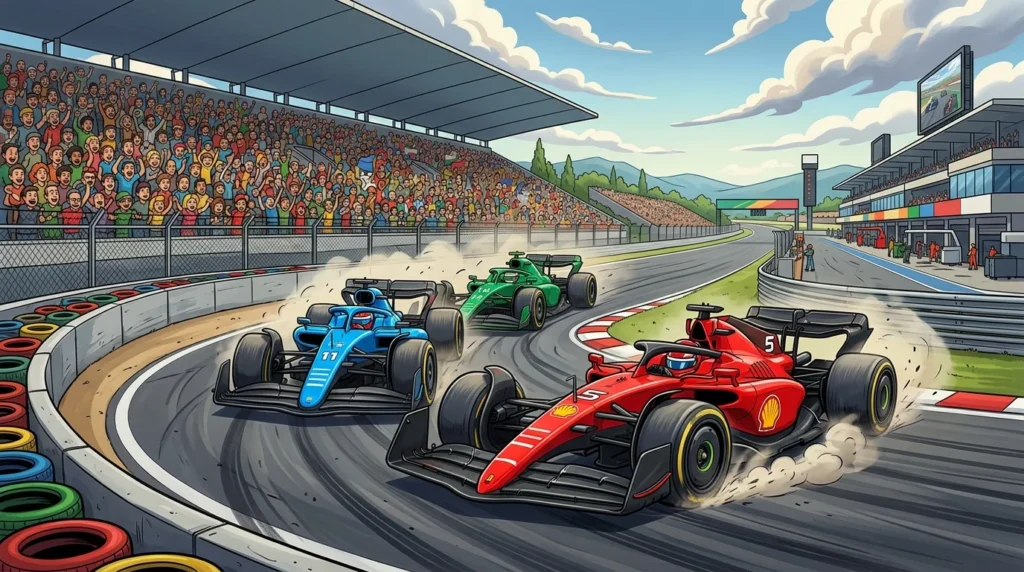
Formula 1 is focused on high-tech engineering, extreme cornering speed, global circuits, and precision driving.
NASCAR is about sustained chaos and racecraft. F1 is about precision and peak performance.
What Is NASCAR?
Definition
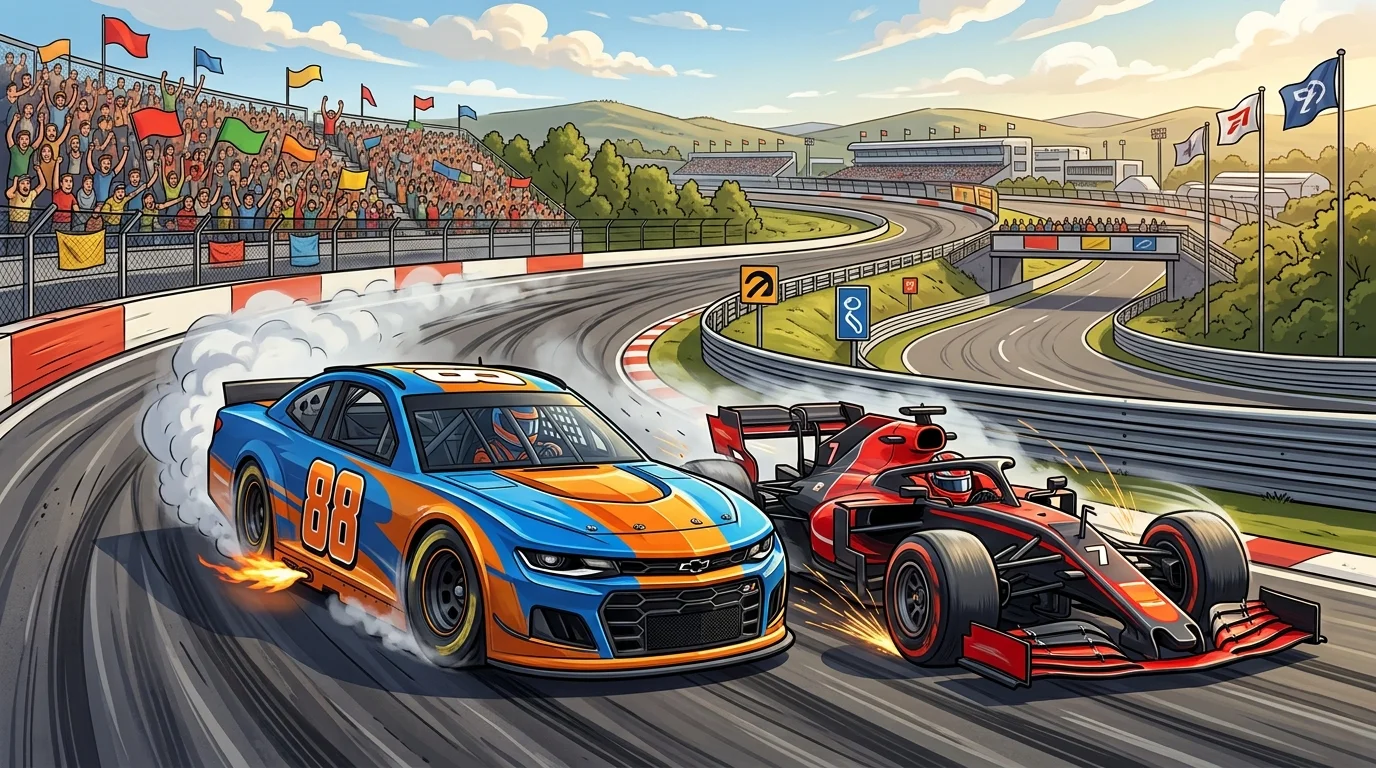
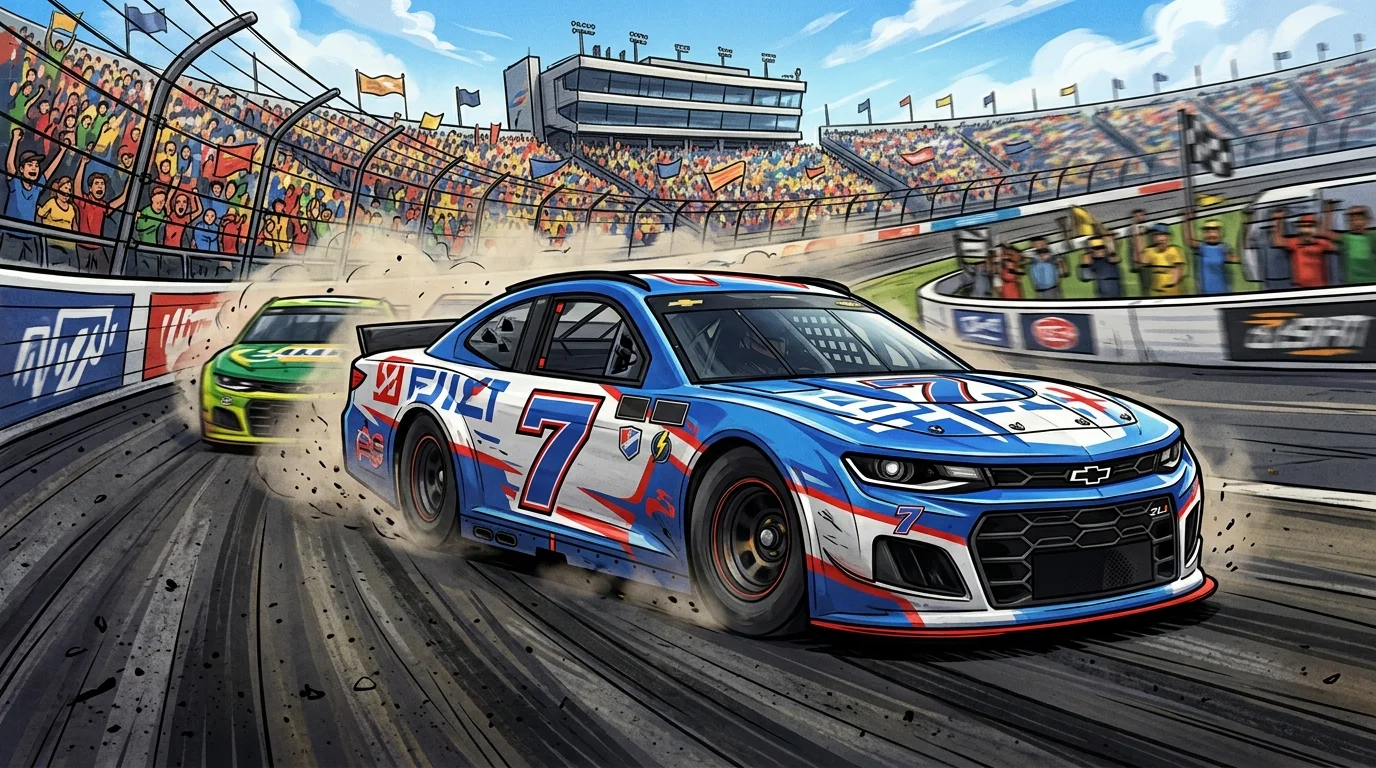
NASCAR (National Association for Stock Car Auto Racing) is an American motorsport series featuring heavily modified production-based cars racing mainly on oval tracks.
Key Characteristics
- Heavy, robust stock cars
- Oval circuits (mostly)
- High-speed drafting and close racing
- Frequent contact and bumping allowed
- Long race durations (200–600 miles)
Racing Style
- Strategy revolves around tire wear, pit stops, and drafting
- Drivers race in tightly packed groups
- Passing often requires slipstreaming or physical positioning
Real Insight
NASCAR rewards consistency, patience, and survival under pressure more than pure precision.
What Is Formula 1?
Definition
Formula 1 is the highest class of international single-seater racing, featuring highly advanced aerodynamic cars competing on global road and street circuits.
Key Characteristics
- Lightweight open-wheel cars
- Extreme aerodynamic design
- Hybrid power units
- Global circuits (Monaco, Silverstone, Suzuka, etc.)
- Precision cornering at high speed
Racing Style
- Focus on qualifying performance
- Strategy based on tire compounds and pit timing
- Minimal contact allowed
- Precision overtaking and race engineering
Real Insight
F1 rewards technical precision, reaction time, and engineering excellence.
NASCAR vs F1: Key Differences
Core Differences
- NASCAR = oval racing, F1 = road circuits
- NASCAR = heavier cars, F1 = ultra-light machines
- NASCAR = contact allowed, F1 = strict penalties
- NASCAR = longer oval races, F1 = shorter technical races
- NASCAR = drafting-based passing, F1 = braking/engineering advantage
Comparison Table
| Feature | NASCAR | Formula 1 |
|---|---|---|
| Car Type | Stock-based heavy cars | Open-wheel aerodynamic cars |
| Tracks | Oval circuits | Road & street circuits |
| Speed Style | Sustained high-speed oval racing | High cornering + straight-line speed |
| Contact | Allowed | Heavily restricted |
| Strategy | Drafting + endurance | Tire + pit + aerodynamics |
| Global Reach | Mostly USA | Worldwide |
| Driver Skill Focus | Racecraft + endurance | Precision + engineering feedback |
| Race Length | Very long (up to 600 miles) | Moderate (approx. 300 km) |
Real-World Racing Scenarios
Scenario 1: Oval Track Battle
Driver A: “I’m stuck behind another car.”
Spotter: “Use drafting and wait for the pit cycle.”
🎯 Lesson: NASCAR relies heavily on pack strategy.
Scenario 2: F1 Qualifying Pressure
Engineer: “You must gain 0.2 seconds this lap.”
Driver: “One mistake and I lose the grid position.”
🎯 Lesson: F1 is extremely precision-focused.
Scenario 3: Contact Situation
NASCAR driver bumps another car to pass.
Commentator: “That’s legal racing here.”
🎯 Lesson: Controlled contact is part of NASCAR.
Scenario 4: Pit Stop Strategy
F1 team: “Box this lap for soft tyres.”
Driver: “Understood.”
🎯 Lesson: F1 strategy is data-driven and precise.
Scenario 5: Endurance Factor
NASCAR driver: “Fuel and tire management is everything today.”
🎯 Lesson: NASCAR rewards long-term consistency.
Common Mistakes
Mistake 1: Thinking One Is Faster Than the Other
Why it happens:
F1 cars look faster on corners and NASCAR looks faster on straights.
Correction:
F1 has higher cornering performance; NASCAR focuses on sustained pack speed.
Mistake 2: Assuming NASCAR Is “Easy”
Why it happens:
Less technology is visible.
Correction:
NASCAR requires extreme situational awareness in tight packs.
Mistake 3: Thinking F1 Is Just Driving Fast
Why it happens:
Casual viewers only see speed.
Correction:
F1 is heavily dependent on engineering, telemetry, and precision control.
Mistake 4: Comparing Them Directly
Why it happens:
Both involve racing cars.
Correction:
They are fundamentally different motorsport disciplines.
Memory Tricks
Trick #1
NASCAR = “Circle Chaos”
Think: oval tracks + constant pack racing.
Trick #2
F1 = “Formula Precision”
Think: formulas, engineering, exact control.
Trick #3
- NASCAR = survive the pack
- F1 = master the machine
Expert Insight
NASCAR and Formula 1 evolved from different racing philosophies.
NASCAR originated from American stock car traditions where durability and close racing mattered more than aerodynamics. This led to heavier cars, oval circuits, and a style centered around drafting and endurance.
Formula 1 evolved as a technological pinnacle of motorsport, where engineering innovation, aerodynamics, and precision driving define success. Teams invest heavily in research to gain fractions of a second per lap. nascar or f1. nascar or f1.
The key distinction is simple:
- NASCAR is a driver-versus-driver endurance battle
- F1 is a engineering-versus-engineering precision war
This is why comparing them directly often leads to misunderstanding—they are not designed to achieve the same goal. nascar or f1.