
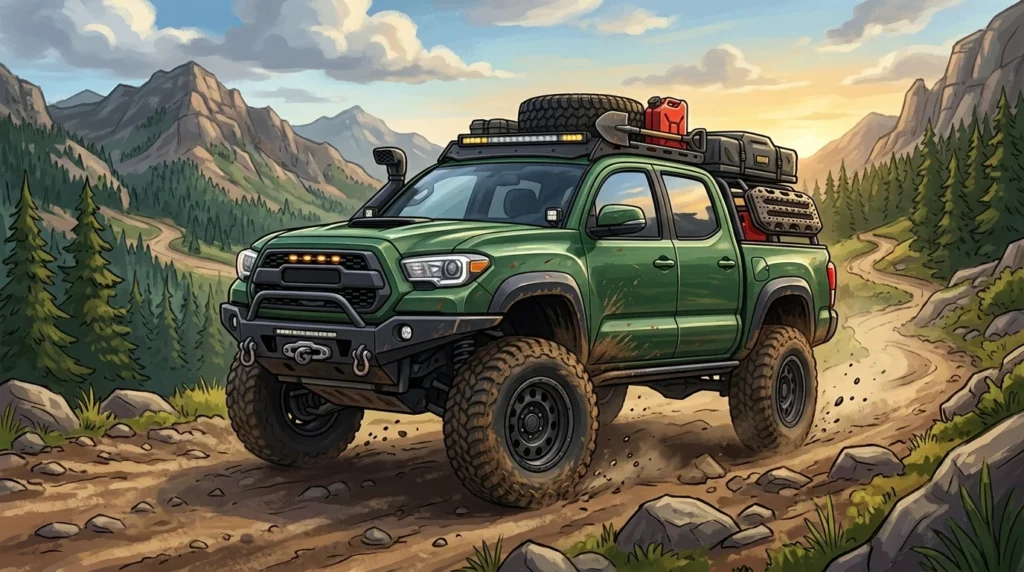
Quick Answer: Jeep or Truck?
If your priority is serious off-road adventures, compact size, and trail capability, a Jeep is usually the better option.
If you need higher towing capacity, larger payloads, more cargo space, or work-related utility, a truck is the better investment.
Neither vehicle is universally better—the right choice depends on how you use it every day.
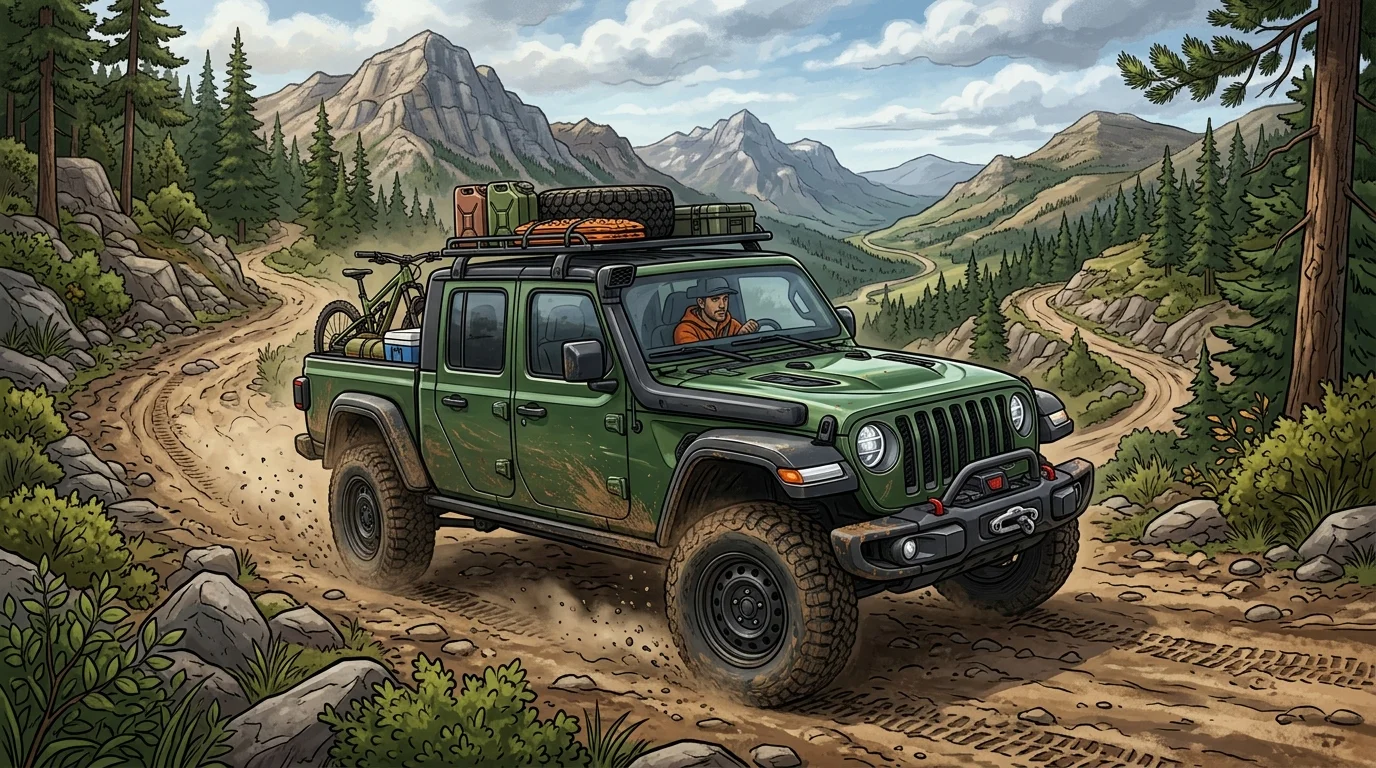
What Is a Jeep?
Definition
A Jeep is a sport utility vehicle (SUV) originally developed for military use but now designed for everyday driving and recreational adventures. Modern Jeep models emphasize four-wheel-drive capability, trail performance, and versatility.
Many people use “Jeep” to describe any rugged off-road SUV, but Jeep is actually a vehicle brand known for producing highly capable off-road vehicles.
Common Characteristics
- Excellent off-road performance
- Four-wheel-drive systems
- Higher ground clearance
- Short wheelbase for maneuverability
- Removable doors and roof on some models
- Comfortable passenger seating
Best Uses
- Camping
- Trail riding
- Mountain driving
- Snowy roads
- Weekend adventures
- Daily commuting with occasional off-roading
Examples
- Weekend trail driving through rocky terrain
- Driving confidently during heavy snowfall
- Exploring forest roads while camping
Key Insight
A Jeep is built primarily for mobility and adventure, not maximum hauling capacity.
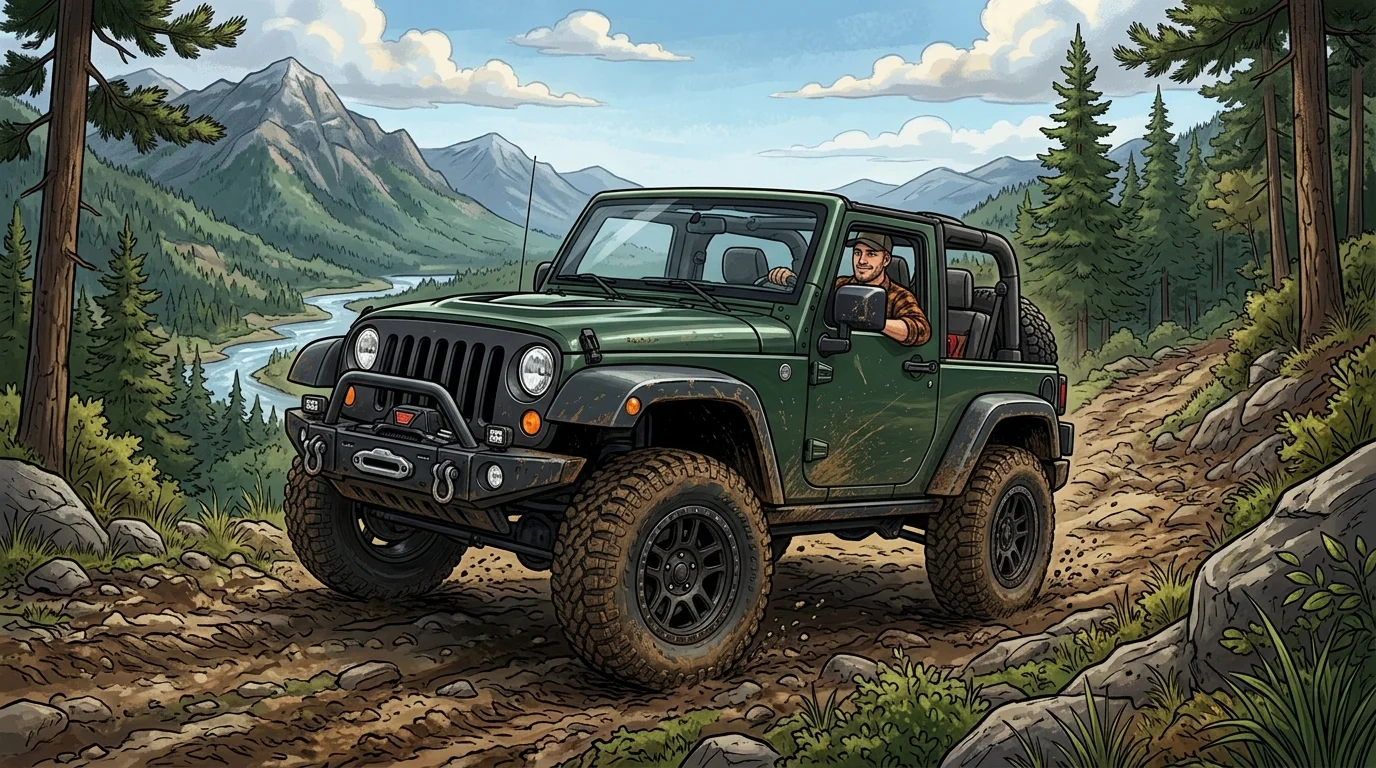
What Is a Truck?
Definition
A truck is a vehicle designed with a separate cargo bed and strong frame that prioritizes hauling, towing, and heavy-duty work while still offering passenger seating.
Modern pickup trucks combine utility with comfort, making them popular among contractors, outdoor enthusiasts, families, and business owners.
Common Characteristics
- Large open cargo bed
- High towing capacity
- Strong payload capability
- Powerful engines
- Longer wheelbase
- Multiple cab configurations
Best Uses
- Construction work
- Towing trailers
- Moving furniture
- Carrying equipment
- Farming
- Long-distance hauling
Examples
- Pulling a camper trailer
- Transporting landscaping materials
- Carrying motorcycles in the truck bed
Key Insight
A truck is designed primarily for work, hauling, and towing, while modern models also provide everyday comfort.
Jeep or Truck: Key Differences
Meaning
- Jeep: Adventure-focused SUV
- Truck: Utility-focused pickup vehicle
Primary Function
- Jeep: Off-road transportation
- Truck: Hauling and towing
Cargo Area
- Jeep: Enclosed cargo compartment
- Truck: Open cargo bed
Passenger Comfort
- Jeep: Generally more SUV-like
- Truck: Depends on cab configuration
Maneuverability
- Jeep: Easier in tight spaces
- Truck: Larger turning radius
Off-Road Capability
- Jeep: Outstanding
- Truck: Very capable but often larger and heavier
Towing
- Jeep: Moderate
- Truck: Excellent
Jeep vs Truck Comparison Table
| Feature | Jeep | Truck |
|---|---|---|
| Primary Purpose | Adventure | Work & Utility |
| Cargo Space | Interior cargo area | Open truck bed |
| Towing Capacity | Moderate | Very High |
| Payload Capacity | Moderate | High |
| Off-Road Performance | Excellent | Good to Excellent |
| Fuel Economy | Moderate | Varies widely |
| Parking Ease | Easier | More difficult |
| Passenger Comfort | SUV-like | Depends on model |
| Daily Driving | Excellent | Good |
| Heavy Work | Limited | Excellent |
Off-Road Performance Comparison
Why Jeeps Excel
Jeeps are engineered specifically for difficult terrain.
Advantages include:
- Short wheelbase
- Excellent approach angles
- Better breakover angles
- Locking differentials on many models
- Specialized trail features
Where Trucks Shine
Modern trucks are surprisingly capable off-road, especially specialized trims.
Advantages include:
- More horsepower
- Larger tires
- Better ground clearance on some models
- Greater stability at higher speeds
Which Wins?
For technical trails, rocks, and narrow paths:
Winner: Jeep
For dirt roads, beaches, and moderate trails while carrying equipment:
Winner: Truck
Towing and Payload
One of the biggest differences between a Jeep and a truck is towing strength.
Jeep
Suitable for:
- Small campers
- Utility trailers
- Small boats
Truck
Ideal for:
- Large campers
- Horse trailers
- Construction equipment
- Heavy boats
- Car trailers
Bottom Line
If towing is your main priority, a truck offers significantly more capability.
Daily Driving Experience
Jeep Advantages
- Easier parking
- Better visibility
- More compact
- Fun driving experience
- Better in urban environments
Truck Advantages
- Comfortable ride in newer models
- Spacious cabins
- Better highway stability
- More room for passengers in crew cab models
Which Is Better?
City driving:
Jeep
Highway travel with cargo:
Truck
Interior Comfort and Technology
Today’s Jeeps and trucks both offer premium interiors.
Common features include:
- Touchscreen infotainment
- Wireless smartphone integration
- Heated seats
- Adaptive cruise control
- Blind-spot monitoring
- Premium audio systems
Luxury trucks often rival premium SUVs in comfort, while Jeep models focus on combining comfort with rugged capability.
Fuel Economy
Fuel efficiency varies depending on engine size, drivetrain, and vehicle weight.
Generally:
Jeep
- Better than many full-size trucks
- Hybrid options available on some models
Truck
- Smaller trucks can be efficient
- Heavy-duty trucks consume considerably more fuel
Drivers focused on fuel savings should compare specific engine options rather than vehicle categories alone.
Maintenance and Ownership Costs
Jeep
Typical expenses include:
- Off-road tire replacement
- Suspension wear from trail use
- Routine SUV maintenance
Truck
Common ownership costs:
- Larger tires
- Higher fuel expenses
- Potentially more expensive heavy-duty components
Insurance, maintenance, and repair costs depend heavily on the specific model and how it’s driven.
Real-World Usage Scenarios
Scenario 1
Buyer: I love camping and mountain trails.
Recommendation: Choose a Jeep.
🎯 Lesson: Frequent off-road adventures favor Jeep ownership.
Scenario 2
Buyer: I tow my boat every weekend.
Recommendation: Buy a truck.
🎯 Lesson: High towing needs require truck capability.
Scenario 3
Buyer: I mostly drive in the city but occasionally visit national parks.
Recommendation: A Jeep is likely the better fit.
🎯 Lesson: Urban driving plus occasional adventure suits a Jeep.
Scenario 4
Buyer: I’m a contractor carrying heavy tools daily.
Recommendation: A truck is the obvious choice.
🎯 Lesson: Payload and cargo bed matter more than off-road agility.
Scenario 5
Buyer: I want one vehicle for work during the week and camping on weekends.
Recommendation: Consider an off-road-oriented truck.
🎯 Lesson: Some trucks successfully combine utility and recreation.
Common Mistakes When Choosing Between a Jeep and a Truck
Mistake 1: Assuming Every Truck Is Better Off-Road
Many trucks are designed mainly for pavement and towing.
Why it happens: Marketing often emphasizes rugged styling.
Mistake 2: Buying a Jeep Only for Appearance
A Jeep’s capabilities may go unused if you never leave paved roads.
Why it happens: Buyers are attracted by the iconic design.
Mistake 3: Ignoring Towing Requirements
Some buyers underestimate future towing needs.
Why it happens: They focus only on current usage.
Mistake 4: Forgetting Parking Limitations
Large trucks can be challenging in tight urban areas.
Why it happens: Buyers prioritize size without considering daily practicality.
Memory Tricks
Remember Jeep
J = Journey
Think:
- Journeys
- Jungle trails
- Joyful adventures
Remember Truck
T = Transport
Think:
- Tow
- Transport
- Tools
- Trailer
These simple associations make it easy to remember each vehicle’s primary purpose.
Expert Insight
The Jeep-versus-truck debate isn’t about determining a universal winner. Vehicle engineers design these categories around different priorities.
Jeeps emphasize articulation, maneuverability, and terrain management through shorter wheelbases and specialized four-wheel-drive systems.
Trucks prioritize frame strength, suspension durability, towing stability, and payload capacity. Their larger dimensions and stronger chassis make them ideal for heavy-duty tasks but less agile on technical trails.
The best choice comes from honestly evaluating how you’ll use the vehicle most often—not how you imagine using it occasionally. jeep or truck.