
Quick Answer
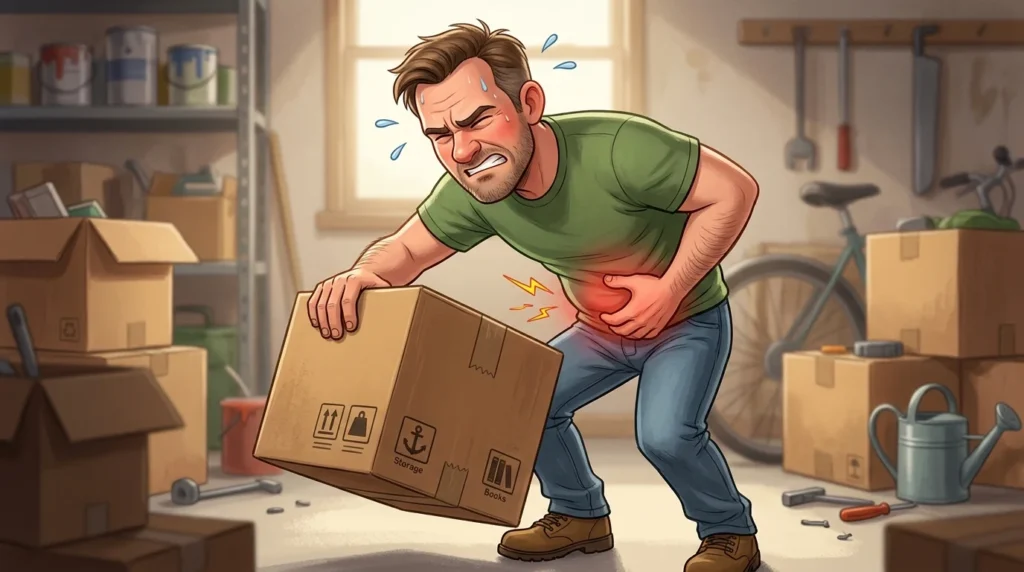
A hernia often causes a lump or bulge that may become more noticeable with coughing, lifting, or straining.
A muscle strain usually causes localized pain, weakness, swelling, or limited movement after a muscle is overstretched or injured.
Quick clue: bulge or lump may suggest a hernia; pain linked to muscle use or movement may suggest a strain.
What Is a Hernia?
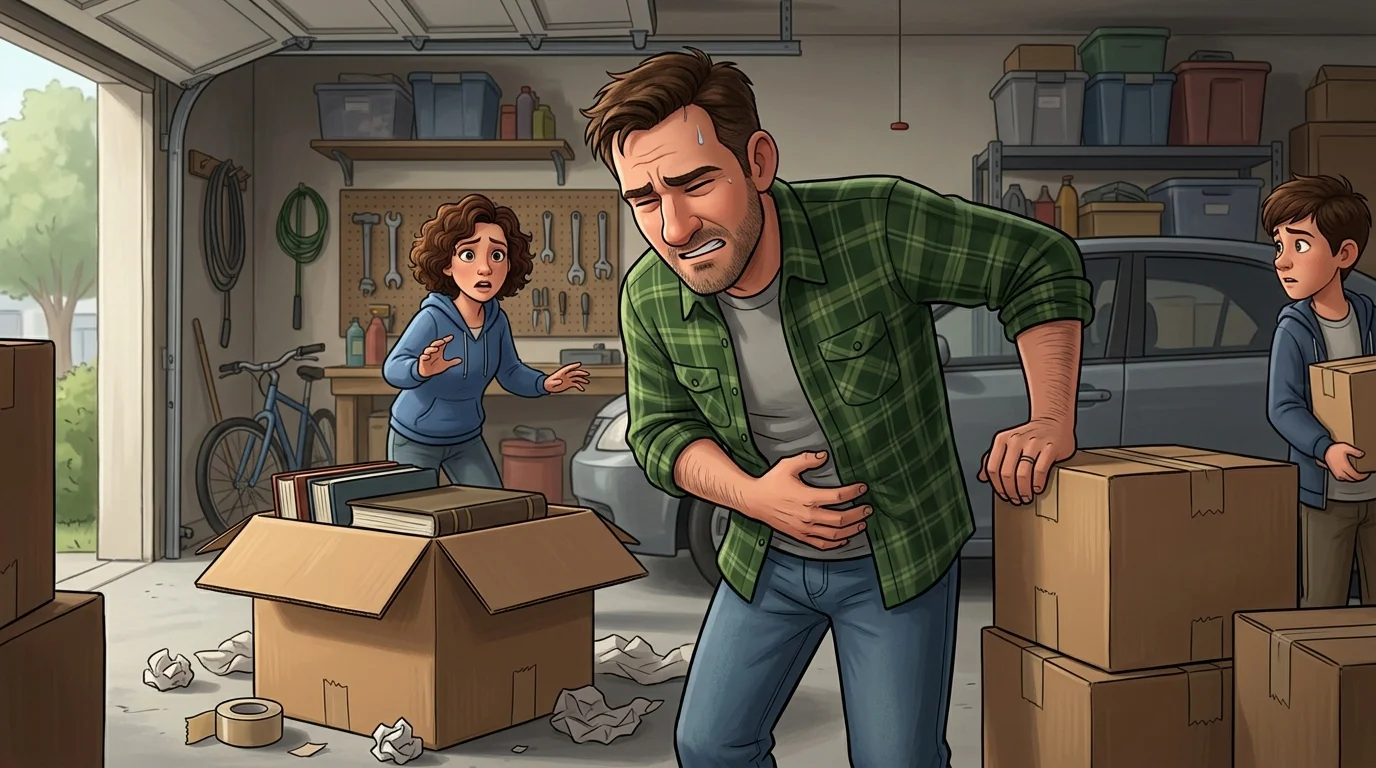
A hernia occurs when an organ, fatty tissue, or other internal tissue pushes through a weak spot or opening in the muscle or tissue that normally contains it. Hernias commonly occur in the abdomen or groin.
The visible or noticeable bulge is one of the most recognizable hernia signs, although not every hernia produces an obvious lump.
Common Signs of a Hernia
Possible hernia symptoms include:
- A visible or noticeable lump
- A bulge that changes with position
- Pressure or heaviness
- Aching or discomfort
- Pain during lifting or straining
- Symptoms that worsen with coughing
- Groin or abdominal discomfort
A hernia bulge may become larger when coughing or straining and smaller when lying down.
When Does Hernia Pain Occur?
Hernia discomfort may become more noticeable during activities that increase pressure in the abdomen.
These can include:
- Heavy lifting
- Coughing
- Bending
- Straining
- Exercise
For example, inguinal hernia pain can worsen during lifting, coughing, straining, or bending.
Real Examples of Hernia Symptoms
Example 1: A person notices a groin bulge that becomes more obvious when coughing.
Example 2: Someone feels pressure in the abdomen while lifting and notices a lump.
Example 3: A bulge appears during physical effort and becomes smaller when lying down.
Key insight: A changing or activity-related bulge is an important clue for some types of hernia, but the absence of a visible bulge does not completely rule one out.

What Is a Muscle Strain?
A muscle strain, commonly called a pulled muscle, occurs when muscle fibers are overstretched and damaged or torn.
Strains can happen suddenly during a forceful movement or develop gradually because of repeated overuse.
Common Signs of a Muscle Strain
Muscle strain symptoms can include:
- Localized muscle pain
- Swelling
- Bruising
- Muscle weakness
- Muscle spasms
- Reduced range of motion
- Pain when using the affected muscle
Some people can connect the pain to a specific movement, sports activity, or physical effort.
When Does Strain Pain Occur?
Strain pain often becomes noticeable when the injured muscle is used.
For example, a groin strain may cause pain and difficulty moving the hip or leg. Swelling, weakness, bruising, and muscle spasms can also occur.
Real Examples of Muscle Strain Symptoms
Example 1: A runner develops groin pain after a sudden change in direction.
Example 2: Someone feels localized abdominal muscle pain after an awkward physical movement.
Example 3: An injured muscle hurts more when the person tries to use or stretch it.
Key insight: A strain usually behaves like a muscle injury, with pain connected to muscle movement, weakness, or reduced mobility.
Hernia or Strain: Key Differences Explained
A hernia and muscle strain can both cause abdominal or groin pain, but the underlying problems are different.
Main Differences Between a Hernia and Strain
- Meaning: A hernia involves tissue pushing through a weak area; a strain involves damaged muscle fibers.
- Bulge: A hernia may cause a lump or bulge; a typical strain usually does not.
- Movement: Strain pain is commonly linked to using the injured muscle.
- Coughing: Hernia symptoms may become more noticeable when coughing or straining.
- Swelling: Muscle strains may cause swelling or bruising.
- Cause: Strains often follow sudden movement or overuse; hernias involve weakness or an opening in a tissue wall.
- Recovery: Many strains improve with appropriate rest and recovery, while hernias do not simply heal like pulled muscles.
Hernia vs Strain Comparison Table
| Feature | Hernia | Strain |
|---|---|---|
| Meaning | Tissue pushes through a weak area | Muscle fibers are damaged or torn |
| Bulge | Often possible | Not typical |
| Pain | Pressure, ache, or discomfort may occur | Localized muscle pain |
| Movement | May worsen with lifting or straining | Often hurts when using the muscle |
| Coughing | Can make symptoms or bulge more noticeable | Not a classic identifying feature |
| Swelling | Depends on the hernia | Swelling or bruising may occur |
| Context | Abdomen or groin are common sites | Any overworked or injured muscle |
| Example | Groin bulge during coughing | Groin pain after sudden movement |
The clearest practical clue is often a bulge, but symptoms alone are not enough for a definite diagnosis.
Real-World Hernia or Strain Usage Scenarios
These examples show why hernia or strain symptoms can be confusing.
Scenario 1: Pain After Lifting
Sam: My abdomen started hurting after I lifted something heavy. It must be a strain.
Alex: Not necessarily. Lifting-related pain can occur with both problems.
🎯 Lesson: The activity that triggered pain does not diagnose the condition by itself.
Scenario 2: The Groin Bulge
Mia: I noticed a lump in my groin that looks bigger when I cough.
Noah: That pattern should be medically assessed for a possible hernia.
🎯 Lesson: A changing groin bulge is an important hernia clue.
Scenario 3: Pain During Movement
Ben: My groin hurts when I move my leg, and the area feels weak after sports.
Emma: Those symptoms can occur with a groin strain.
🎯 Lesson: Pain, weakness, and difficulty moving the leg or hip can occur with a groin muscle injury.
Scenario 4: No Visible Lump
Jack: There is no bulge, so it cannot be a hernia.
Liam: A visible bulge is common, but some hernias may not be obvious from the outside.
🎯 Lesson: No visible lump does not automatically exclude every hernia.
Scenario 5: The Pain Is Not Improving
Ella: I assumed it was a pulled muscle, but the symptoms keep getting worse.
Ryan: Persistent or worsening symptoms need proper medical assessment.
🎯 Lesson: Do not keep self-diagnosing an injury that fails to improve.
Common Hernia or Strain Mistakes
Several assumptions make the hernia vs muscle strain question harder than necessary.
Mistake 1: Pain After Lifting Always Means Strain
Heavy lifting can be associated with both hernia symptoms and muscle injuries.
Why it happens: People connect lifting directly with pulled muscles.
Correction: Look at the complete symptom pattern and seek medical assessment if a hernia is suspected.
Mistake 2: No Bulge Means No Hernia
This is too simplistic.
Some hernias are not easily visible externally.
Why it happens: The classic image of a hernia always includes a large lump.
Correction: Do not use one symptom to rule out a medical condition.
Mistake 3: Every Groin Pain Is a Hernia
Groin strains can cause pain, weakness, swelling, bruising, and movement difficulty.
Why it happens: Groin hernias are widely discussed.
Correction: Consider muscle injury patterns as well.
Mistake 4: Fluent Movement Means There Is No Strain
Mild strains may not completely stop movement.
Why it happens: People assume every muscle tear causes severe disability.
Correction: Muscle strains vary in severity and are classified into different grades.
Mistake 5: Waiting Forever for a Suspected Hernia to Heal
A hernia is not simply a pulled muscle and does not heal through ordinary muscle recovery.
Why it happens: Rest may temporarily reduce discomfort.
Correction: If you think you have a hernia, arrange a medical assessment.
Easy Memory Tricks for Hernia or Strain
Simple mental shortcuts can make the difference easier to remember.
Remember “Hernia = Hole or Weak Spot”
Think:
Hernia → weak spot → tissue pushes through
The actual anatomy varies by hernia type, but this shortcut captures the basic idea.
Remember “Strain = Stretched Muscle”
Think:
Strain → stretch → muscle fiber injury
A strain is fundamentally a muscle injury.
Use the Bulge Clue
Ask:
“Is there a new lump or bulge that changes with coughing, straining, or position?”
That pattern may point toward a hernia and deserves medical assessment.
Use the Muscle Test Carefully
Pain linked to using a specific injured muscle may fit a strain pattern.
However, do not deliberately perform painful exercises or heavy lifting to test yourself. A clinician can assess the area more safely.
Expert Insight
The confusion between a hernia and strain comes from overlapping symptoms and triggers.
Both can cause pain around the abdomen or groin. Both may become noticeable after physical activity. Lifting and sports can also appear in the history of either problem.
The anatomy, however, is fundamentally different.
A muscle strain involves damage to muscle fibers. A hernia involves tissue protruding through a weakness or opening in the structure that normally contains it.
There is another source of confusion: the term sports hernia.
Despite its name, a sports hernia is not a traditional hernia with tissue protruding through a muscle wall. It refers to an injury involving tissues in the lower abdomen or groin and may produce chronic pain.
Expert assessment relies on medical history, symptom patterns, and physical examination. Imaging may sometimes be needed when the diagnosis remains unclear. hernia or strain.