
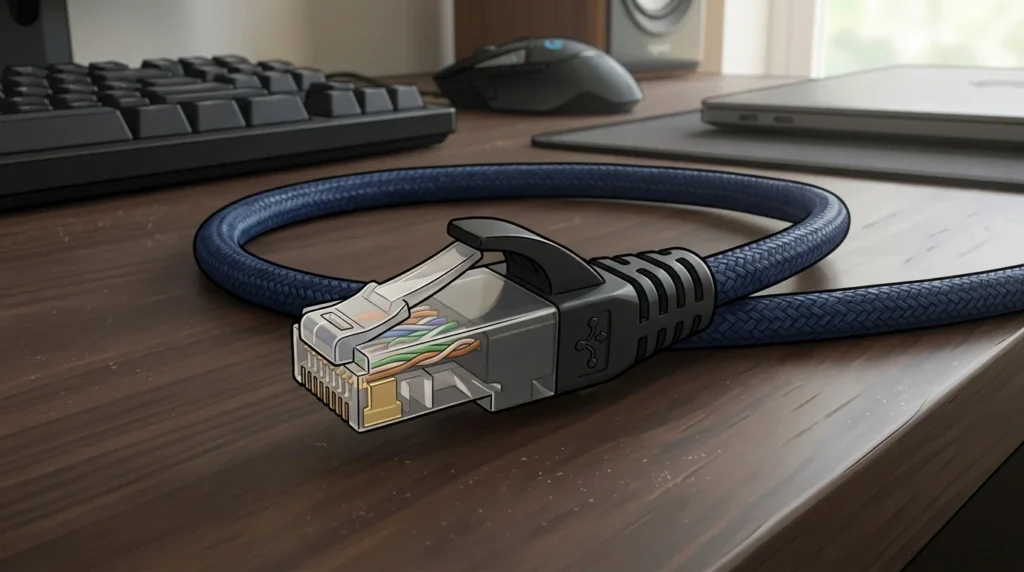
Quick Answer: Cat6 or Cat8?
- Cat6 = Best for home networks, gaming, streaming, and most office setups
- Cat8 = Designed for data centers, servers, and ultra-high-speed short-distance connections
Simple rule:
- Normal users → Cat6 is more than enough
- Professional/server setups → Cat8 only
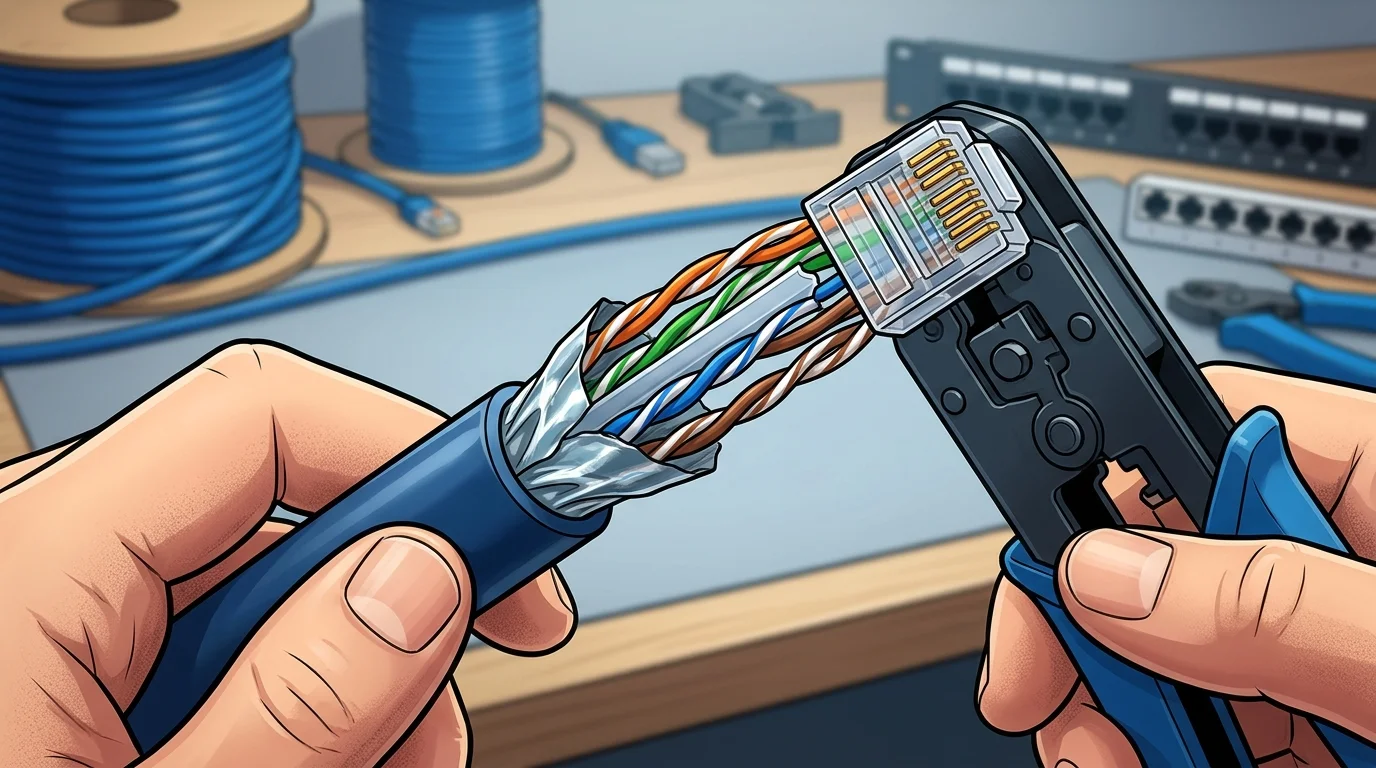
What is Cat6?
Cat6 (Category 6) is a widely used Ethernet cable standard for modern networking.
Key Specifications
- Speed: Up to 1 Gbps (standard), up to 10 Gbps (short distance ~55m)
- Bandwidth: 250 MHz
- Distance: Best performance up to 100 meters (at 1 Gbps)
Where It’s Used
- Home internet setups
- Gaming PCs
- Wi-Fi routers and switches
- Small office networks
Key Insight
Cat6 is the sweet spot of performance + affordability for everyday users.
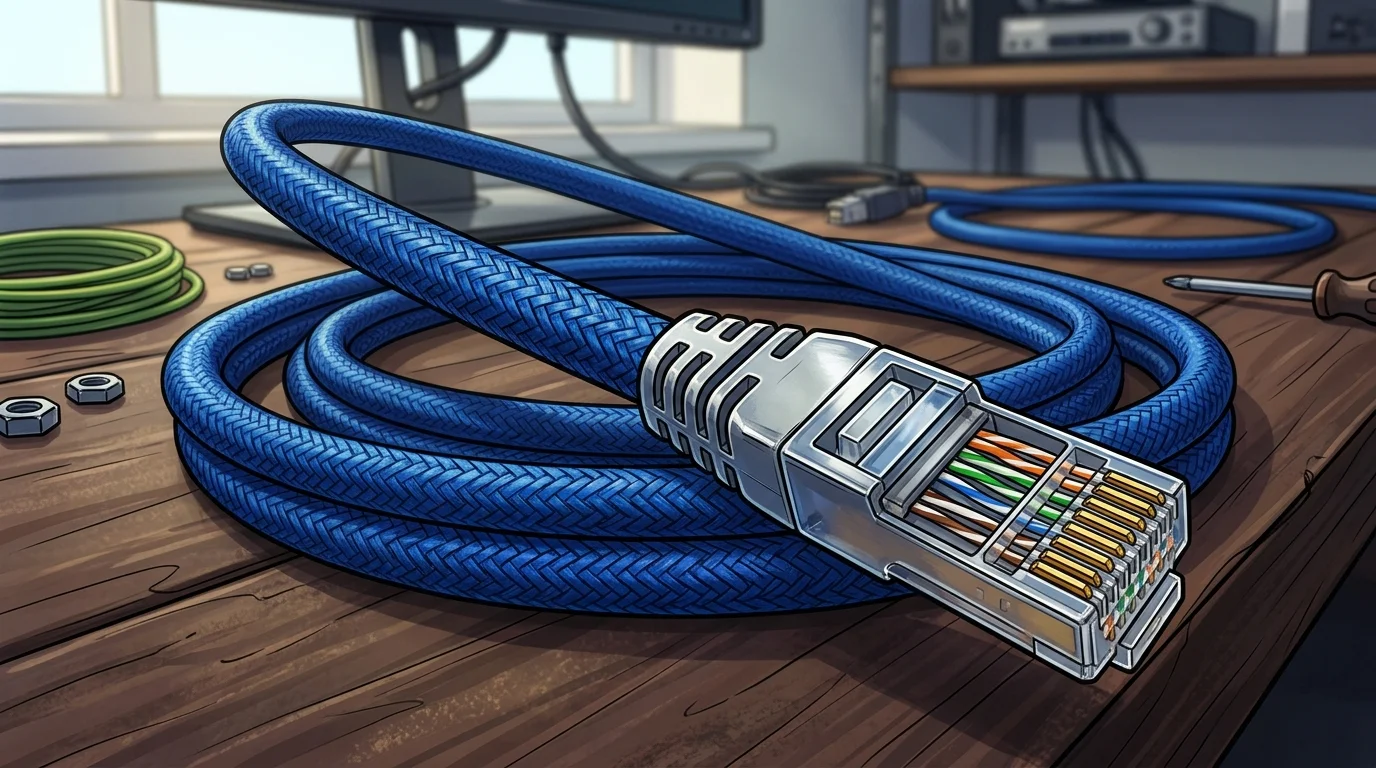
What is Cat8?
Cat8 (Category 8) is a high-performance Ethernet cable designed for professional environments.
Key Specifications
- Speed: Up to 25–40 Gbps
- Bandwidth: 2000 MHz
- Distance: Optimized for short runs (~30 meters or less)
Where It’s Used
- Data centers
- Server rooms
- Enterprise networking
- High-speed backbone connections
Key Insight
Cat8 is built for maximum speed over short distances, not home internet use.
Cat6 vs Cat8: Key Differences
Core Differences
- Cat6 = everyday performance cable
- Cat8 = enterprise-grade high-speed cable
- Cat6 = longer usable distance
- Cat8 = extremely high speed but short range
Comparison Table
| Feature | Cat6 | Cat8 |
|---|---|---|
| Max Speed | 1–10 Gbps | 25–40 Gbps |
| Bandwidth | 250 MHz | 2000 MHz |
| Distance | Up to 100m | ~30m |
| Use Case | Home/office | Data centers |
| Cost | Affordable | Expensive |
| Flexibility | High | Limited |
Real-World Usage Scenarios
Scenario 1: Home internet setup
User: I just want stable Wi-Fi and gaming performance.
- Best choice: Cat6
🎯 Lesson: Internet speed depends more on ISP than cable beyond Cat6.
Scenario 2: Gaming PC setup
User: I want low latency and stable connection.
- Best choice: Cat6
🎯 Lesson: Cat8 won’t improve gaming ping.
Scenario 3: Server room setup
User: I need ultra-fast internal network transfers.
- Best choice: Cat8
🎯 Lesson: Cat8 is only useful in high-load environments.
Scenario 4: Office networking
User: Small business with multiple devices.
- Best choice: Cat6 or Cat6a
🎯 Lesson: Cost efficiency matters more than max speed.
Common Mistakes
Mistake 1: Buying Cat8 for home use
Most users waste money thinking “higher number = better.”
Mistake 2: Expecting faster internet speed
Cable does NOT increase ISP speed.
Mistake 3: Ignoring distance limits
Cat8 loses advantage over long distances.
Memory Tricks
Trick 1: “6 = Everyday, 8 = Enterprise”
- Cat6 → normal users
- Cat8 → data centers
Trick 2: Speed vs Distance rule
- Cat6 = balanced
- Cat8 = speed-focused, short range
Expert Insight
Ethernet cable categories are defined by shielding quality, frequency bandwidth, and signal integrity over distance.
Cat6 uses twisted pair improvements sufficient for Gigabit and limited 10G networks. Cat8 increases shielding and frequency drastically, but this comes at the cost of distance limitation and practical usability.
In real-world networking, bottlenecks are usually:
- ISP speed
- Router quality
- Network congestion
Not Ethernet cable category beyond Cat6 in most consumer environments. cat6 or cat8.