
Quick Answer
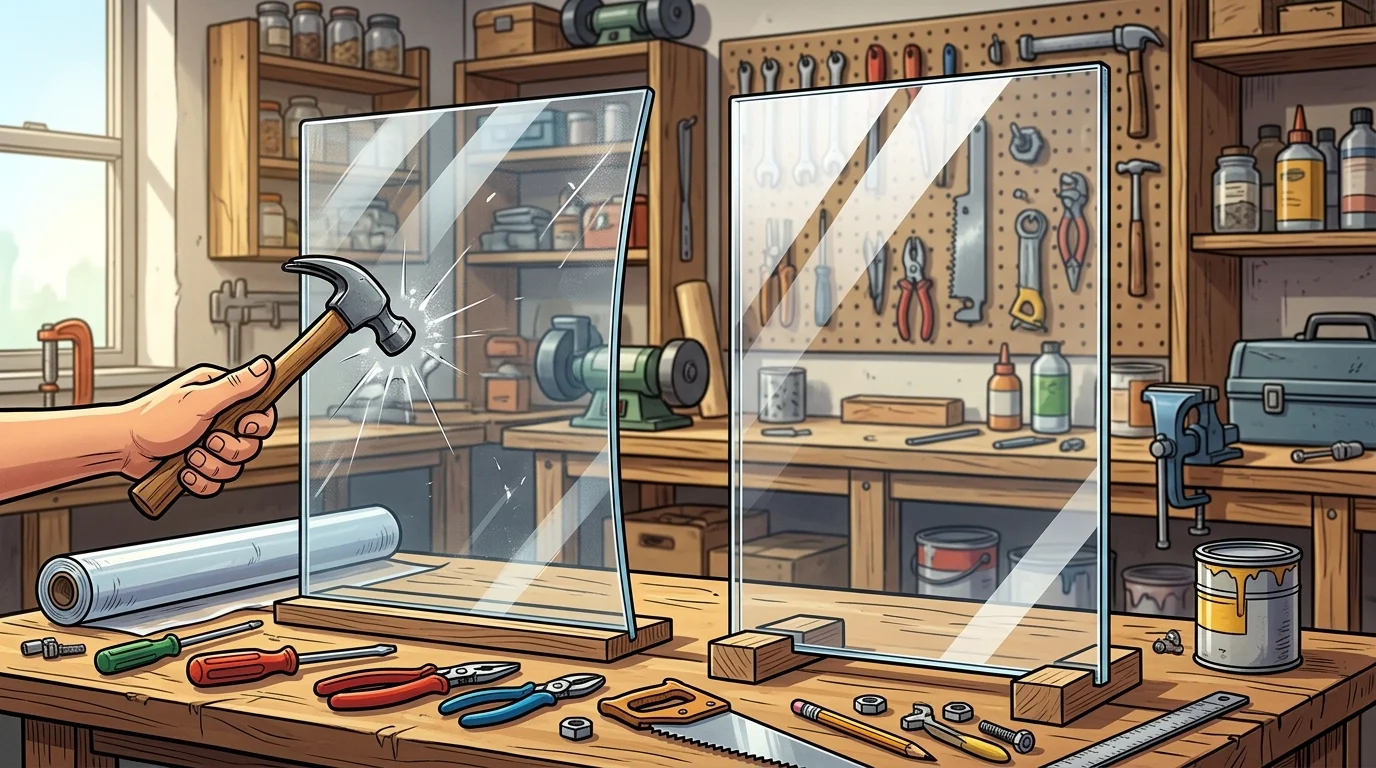
Lexan is a polycarbonate material that is extremely strong and impact-resistant, while Plexiglass (acrylic) is clearer and more scratch-resistant but more brittle.

Lexan (Polycarbonate)
What it is
Lexan is a brand of polycarbonate plastic known for its extreme impact resistance.
Key properties
- Extremely strong and flexible
- Nearly unbreakable under normal force
- Can bend without shattering
- Slightly lower optical clarity than acrylic
Common uses
- Bullet-resistant glass
- Safety shields
- Aircraft windows
- Machine guards
- Protective barriers
Key insight
Lexan is chosen when strength and safety matter more than scratch resistance or perfect clarity.
Plexiglass (Acrylic)
What it is
Plexiglass is a brand of acrylic (PMMA), a rigid transparent plastic.
Key properties
- Very clear (glass-like transparency)
- More scratch-resistant than Lexan
- Lightweight
- Brittle compared to polycarbonate
Common uses
- Display cases
- Signboards
- Aquarium panels
- Windows in signage
- Decorative panels
Key insight
Plexiglass is chosen when visual clarity and appearance matter more than impact strength.
Lexan vs Plexiglass: Key Differences
Main Differences
- Strength: Lexan is much stronger
- Clarity: Plexiglass is clearer
- Flexibility: Lexan bends, Plexiglass cracks
- Scratch resistance: Plexiglass is better
- Impact resistance: Lexan wins easily
- Cost: Plexiglass is usually cheaper
Comparison Table
| Feature | Lexan (Polycarbonate) | Plexiglass (Acrylic) |
|---|---|---|
| Strength | Extremely high | Moderate |
| Clarity | Good | Excellent |
| Flexibility | High | Low (brittle) |
| Scratch resistance | Low | Higher |
| Impact resistance | Very high | Lower |
| Weight | Light | Light |
| Cost | Higher | Lower |
Real-World Usage Scenarios
Scenario 1: Safety shield
Hospital needs protective barrier
👉 Lexan is used
🎯 Lesson: Impact safety matters most
Scenario 2: Store display
Shop needs clear product display case
👉 Plexiglass is used
🎯 Lesson: Clarity and appearance matter more
Scenario 3: Outdoor sign
Needs weather-resistant transparent panel
👉 Plexiglass preferred
🎯 Lesson: Visual clarity + cost efficiency
Scenario 4: Protective machine cover
Factory equipment shield
👉 Lexan used
🎯 Lesson: Strength beats everything else
Common Mistakes
- Thinking both materials are identical
- Using acrylic where impact risk is high
- Choosing Lexan for display clarity needs
- Ignoring scratch resistance differences
- Assuming “stronger = always better”
Why it happens: Both look like glass, so people assume same performance.
Memory Tricks
- Lexan = “L for Load/Impact strength”
- Plexiglass = “P for Pretty (clear)”
- Break risk → Lexan wins
- Display quality → Plexiglass wins
Expert Insight
Lexan (polycarbonate) and Plexiglass (acrylic) differ mainly in molecular structure. Polycarbonate chains provide high flexibility and impact resistance, allowing it to absorb force without breaking. Acrylic, however, has a more rigid structure, which improves optical clarity but reduces impact tolerance.
This is why industries choose based on function rather than appearance: safety-critical environments rely on Lexan, while aesthetic applications prefer Plexiglass. lexan or plexiglass.