
Quick Answer
A vole is a small rodent that eats plants, while a shrew is an insect-eating mammal with a long, pointed snout and higher metabolism.
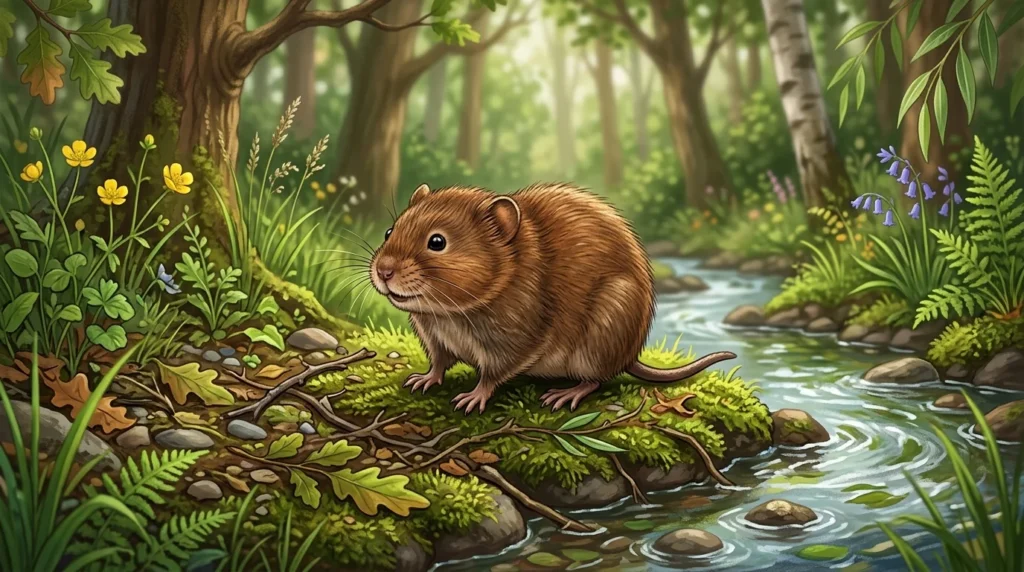
Vole (Meaning and Characteristics)
What it is
A vole is a small rodent similar to a mouse but with a shorter tail and stockier body.
Key features
- Short tail
- Rounded face
- Small ears hidden in fur
- Stocky body
- Herbivorous diet
Habitat
- Grasslands
- Gardens
- Fields
- Burrows underground
Diet
- Grass
- Roots
- Seeds
- Plants
Behavior
- Creates tunnels in soil
- Active both day and night
- Often damages plants in gardens

Shrew (Meaning and Characteristics)
What it is
A shrew is a very small insect-eating mammal, not a rodent.
Key features
- Long pointed snout
- Very small eyes
- Thin tail
- Fast movements
- High energy needs
Habitat
- Forest floors
- Gardens
- Under leaves or logs
- Soil surface
Diet
- Insects
- Worms
- Small invertebrates
- Occasionally small animals
Behavior
- Extremely active
- Eats constantly due to high metabolism
- Not usually harmful to plants
Vole vs Shrew: Key Differences
Main Differences
- Classification: Rodent vs insectivore
- Diet: Plants vs insects
- Snout: Rounded vs pointed
- Behavior: Burrowing vs hunting insects
- Impact: Plant damage vs pest control
Comparison Table
| Feature | Vole | Shrew |
|---|---|---|
| Type | Rodent | Insectivore |
| Diet | Plants, roots | Insects, worms |
| Snout | Short & round | Long & pointed |
| Tail | Short | Thin & longer |
| Eyes | Small | Very small |
| Behavior | Burrows, damages plants | Hunts insects |
| Garden impact | Often harmful | Usually helpful |
Real-World Identification Scenarios
Scenario 1
You see tunnels in your garden and damaged roots.
👉 Likely a vole
🎯 Lesson: Plant damage = vole activity
Scenario 2
You see a tiny fast-moving animal eating insects.
👉 Likely a shrew
🎯 Lesson: Insect hunting = shrew behavior
Scenario 3
Animal has a blunt face and short tail.
👉 Vole
🎯 Lesson: Rounded face = rodent clue
Scenario 4
Animal has a sharp nose and constantly moving body.
👉 Shrew
🎯 Lesson: Pointed snout = insectivore clue
Common Mistakes
- Assuming both are mice
- Thinking both damage crops
- Confusing snout shape
- Judging only size instead of diet
- Ignoring tail differences
Why it happens: Both are small, fast, and rarely seen clearly.
Memory Tricks
- Vole = “Vegetarian rodent” → eats plants
- Shrew = “Sharp snout insect eater”
- Rounded face = vole
- Pointed nose = shrew
Expert Insight
Although they look similar, voles and shrews belong to completely different biological groups. Voles are rodents closely related to mice and rats, adapted for gnawing plant material. Shrews belong to the order Eulipotyphla and are more closely related to moles.
Their metabolic differences are extreme: shrews have one of the highest metabolic rates among mammals, requiring them to eat constantly, while voles have slower energy demands suited to plant-based diets. vole or shrew.