
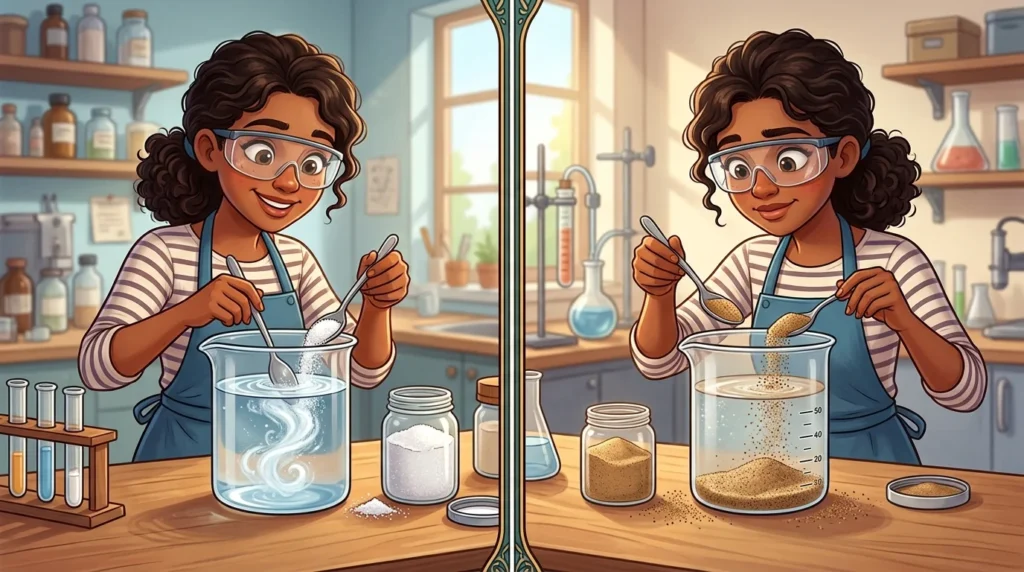
Quick Answer: Soluble or Insoluble?
- Soluble = a substance that dissolves in a liquid (usually water)
- Insoluble = a substance that does NOT dissolve in a liquid
Simple example:
- Sugar is soluble in water → it disappears into the water
- Sand is insoluble in water → it stays unchanged and settles
What Does “Soluble” Mean?
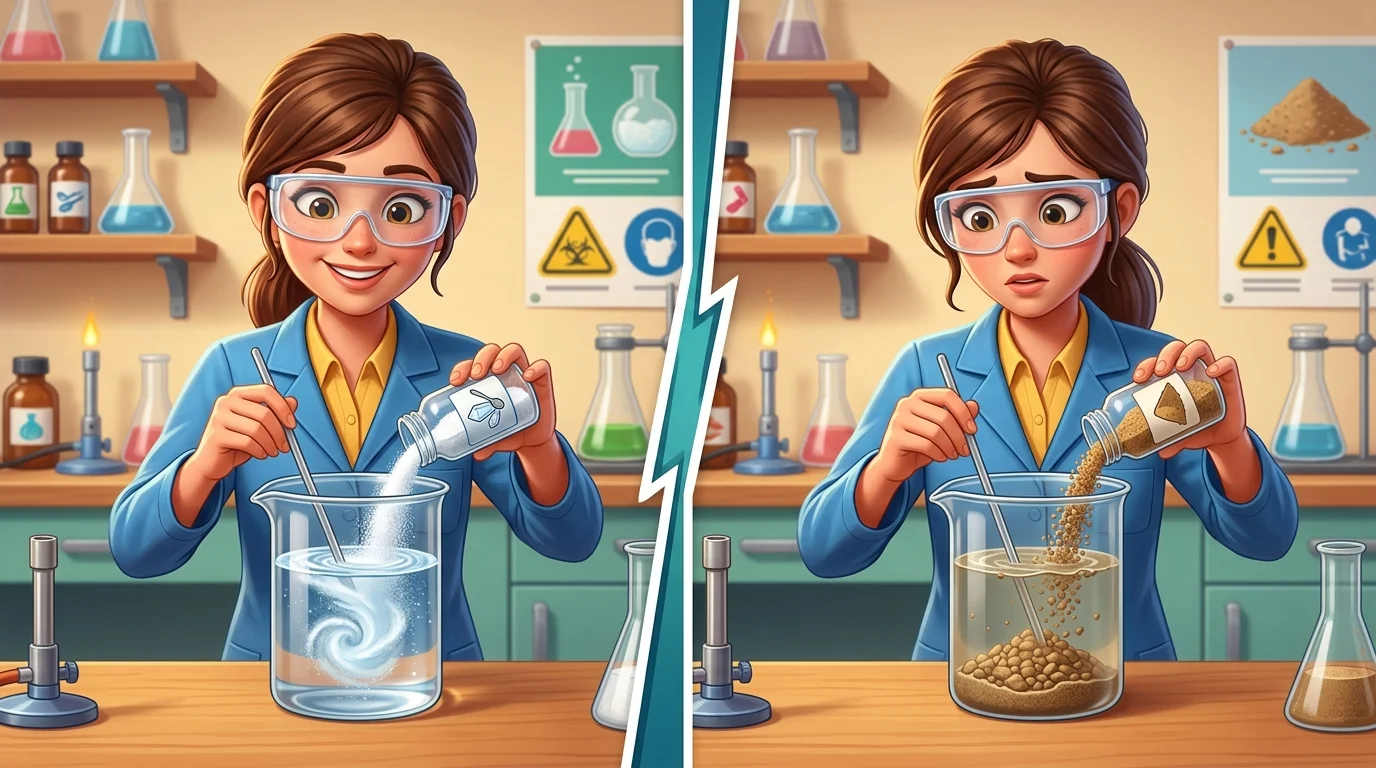
A substance is called soluble when it can dissolve completely in a solvent and form a uniform solution.
Key Characteristics
- Mixes evenly in water or another solvent
- Cannot be seen separately after dissolving
- Forms a clear or uniform mixture
Examples
- Sugar in water
- Salt in water
- Oxygen in blood (biological example)
- Carbon dioxide in soda
Key Insight
Soluble substances break into tiny particles (ions or molecules) that spread evenly.
What Does “Insoluble” Mean?
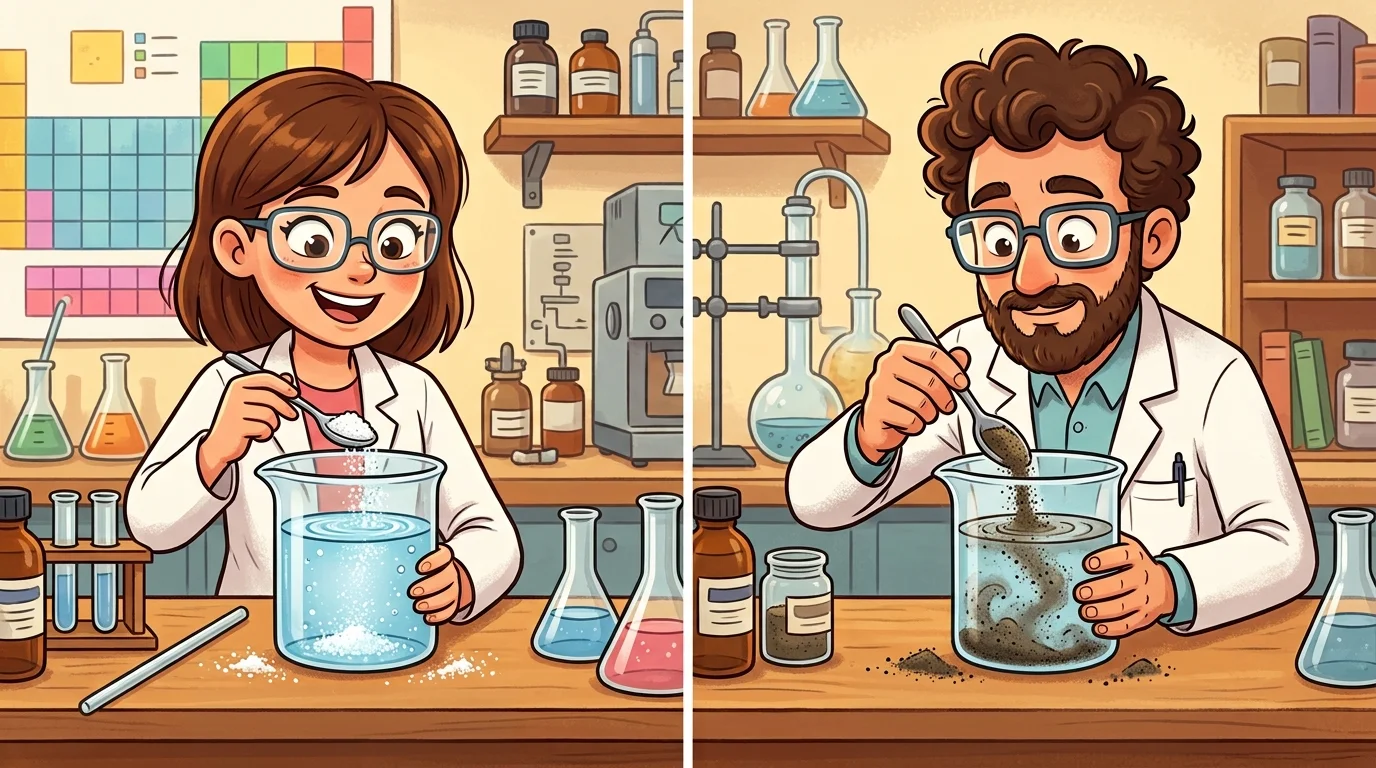
A substance is called insoluble when it does not dissolve in a solvent.
Key Characteristics
- Does not mix evenly
- Settles or floats in liquid
- Remains visible as solid particles
Examples
- Sand in water
- Oil in water
- Chalk in water
- Plastic in water
Key Insight
Insoluble substances do not break apart at the molecular level in that solvent.
Soluble vs Insoluble: Key Differences
Core Differences
- Soluble substances dissolve completely
- Insoluble substances do not dissolve
- Soluble forms a uniform solution
- Insoluble forms a mixture with separate phases
Comparison Table
| Feature | Soluble | Insoluble |
|---|---|---|
| Meaning | Dissolves in liquid | Does not dissolve |
| Result | Homogeneous solution | Heterogeneous mixture |
| Visibility | Not visible separately | Remains visible |
| Example | Sugar in water | Sand in water |
| Behavior | Mixes at molecular level | Stays separate |
Real-World Usage Scenarios
Scenario 1: Making tea
Sugar dissolves in tea.
🎯 Lesson: Sugar is soluble in water.
Scenario 2: Cleaning sand from water
Sand settles at the bottom.
🎯 Lesson: Sand is insoluble in water.
Scenario 3: Oil and water mix
Oil floats on top of water.
🎯 Lesson: Oil is insoluble in water.
Scenario 4: Soft drinks
Carbon dioxide dissolves under pressure.
🎯 Lesson: Some gases are soluble in liquids.
Common Mistakes
Mistake 1: Thinking everything dissolves in water
Not all substances are water-soluble.
Mistake 2: Confusing melting with dissolving
Melting = heat change
Dissolving = mixing in solvent
Mistake 3: Assuming insoluble means “disappears slowly”
Insoluble substances never truly dissolve.
Memory Tricks
Trick 1: “Soluble = Solution”
If it forms a solution → soluble.
Trick 2: “Insoluble = Invisible only in name”
It does NOT become part of the liquid.
Trick 3: Visual test
- Clear liquid → soluble
- Dirty/settled mixture → insoluble
Expert Insight
Solubility depends on molecular interactions between solute and solvent. If attractive forces between solute and solvent are strong enough to overcome internal bonding, the substance dissolves.
This is why:
- Ionic compounds like salt dissolve easily in water
- Non-polar substances like oil do not mix with water
Water is a polar solvent, which explains most everyday solubility behavior. soluble or insoluble.