
Quick Answer
Gasoline engines use spark ignition and are generally smoother, cheaper, and better for short-distance driving.
Diesel engines use compression ignition, produce more torque, and are more fuel-efficient for long-distance or heavy-duty use.
👉 Simple rule:
- Gasoline = smoother, cheaper upfront
- Diesel = more powerful, more efficient long-term
What Is Gasoline?
Definition
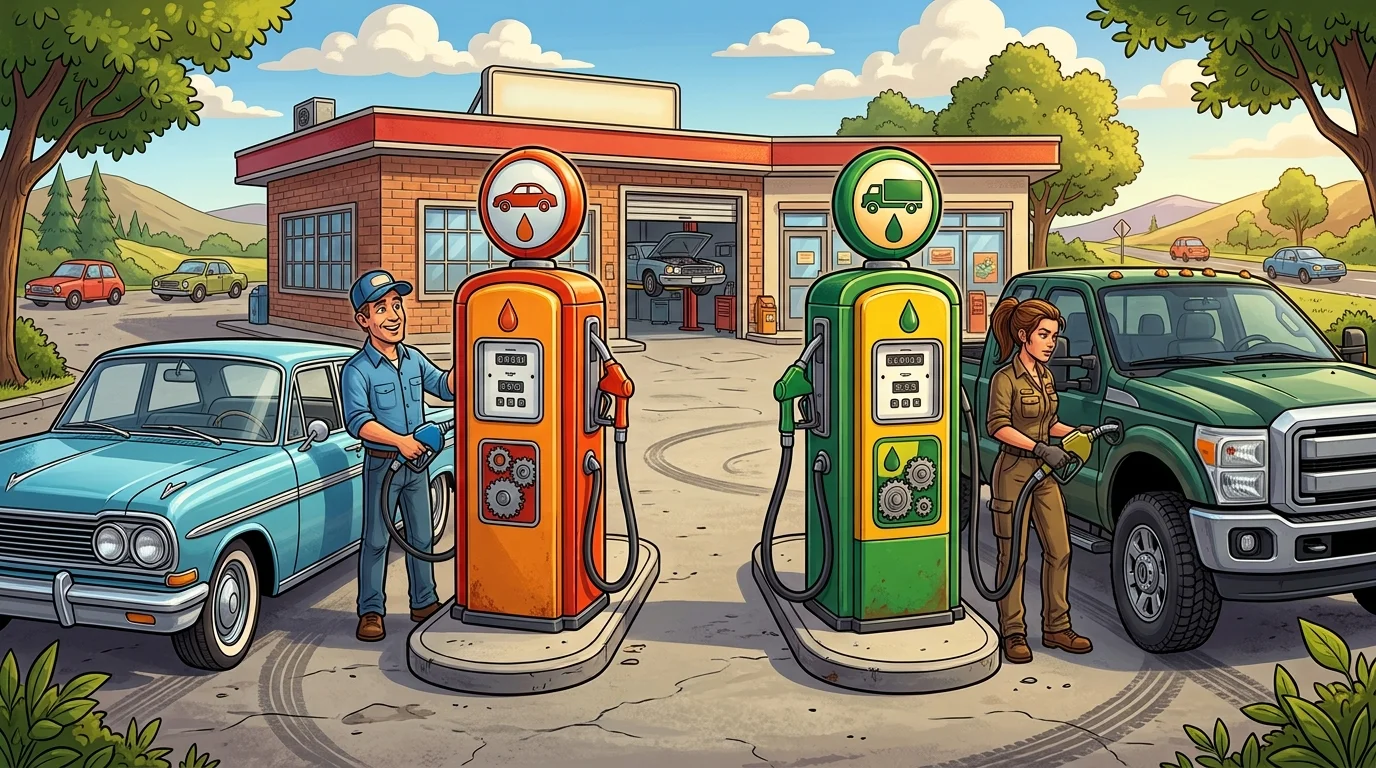
Gasoline is a refined petroleum fuel used in spark-ignition engines where fuel is ignited by a spark plug.
How It Works
- Air and fuel are mixed in the engine
- Spark plug ignites the mixture
- Controlled explosions power the engine
Key Characteristics
- Faster engine response
- Quieter operation
- Lower initial vehicle cost
- Higher fuel consumption compared to diesel
Real Examples
- City cars
- Motorcycles
- Small SUVs
- Daily commuters
Key Insight
👉 Gasoline engines are designed for smoothness and speed, not heavy load efficiency.
What Is Diesel?
Definition
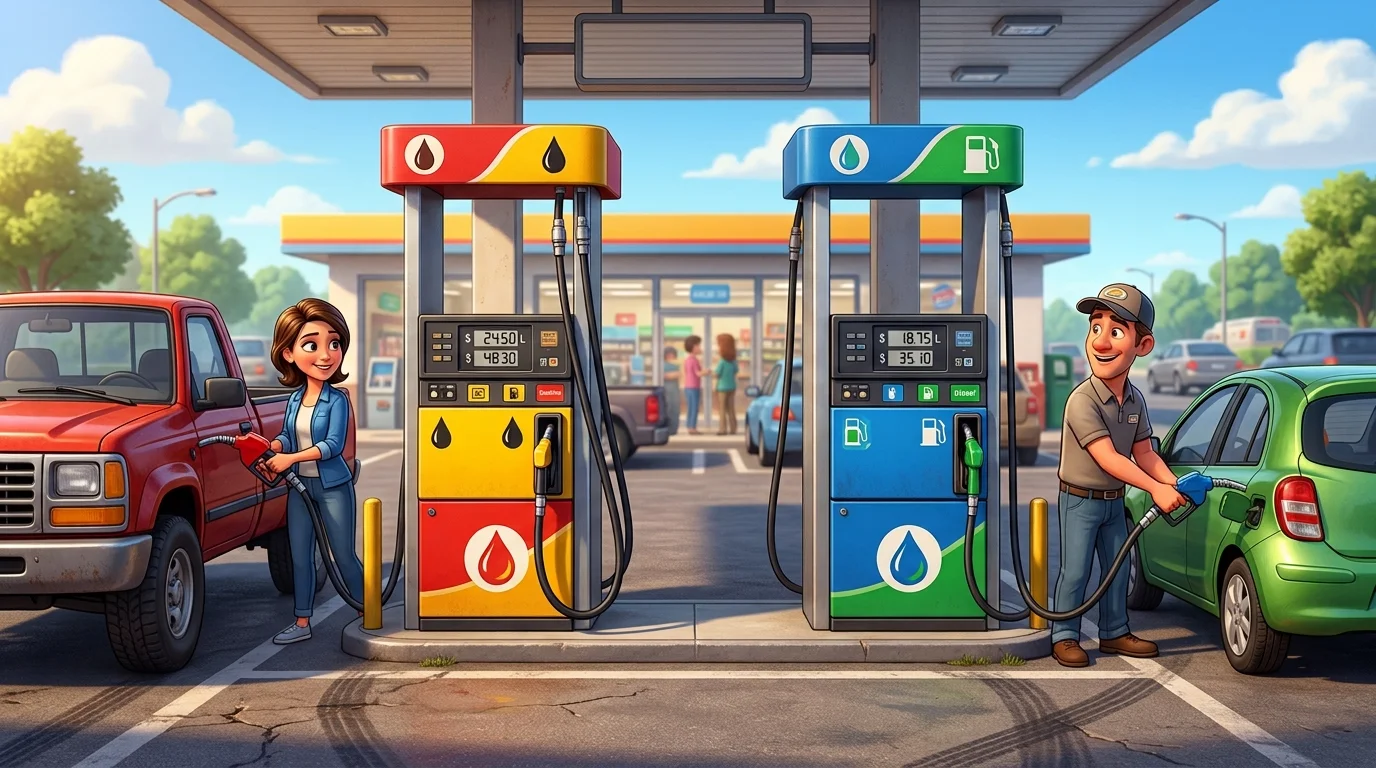
Diesel is a heavier petroleum fuel used in compression-ignition engines where air is compressed until fuel ignites automatically.
How It Works
- Air is highly compressed
- Fuel is injected into hot compressed air
- No spark plug needed
Key Characteristics
- High torque output
- Better fuel efficiency
- Strong performance under load
- Higher engine durability
Real Examples
- Trucks
- Buses
- Long-distance SUVs
- Industrial vehicles
Key Insight
👉 Diesel engines are built for power, endurance, and efficiency over long distances.
Gasoline vs Diesel: Key Differences
Engine Type
- Gasoline: Spark ignition
- Diesel: Compression ignition
Fuel Efficiency
- Gasoline: Lower efficiency
- Diesel: Higher efficiency
Performance
- Gasoline: Faster acceleration
- Diesel: Higher torque
Maintenance
- Gasoline: Lower maintenance cost
- Diesel: Higher but longer-lasting engine
Noise & Smoothness
- Gasoline: Quiet and smooth
- Diesel: Louder and more vibration
Gasoline vs Diesel Comparison Table
| Feature | Gasoline | Diesel |
|---|---|---|
| Ignition System | Spark plug | Compression |
| Fuel Efficiency | Lower | Higher |
| Torque | Lower | Higher |
| Noise Level | Quiet | Loud |
| Maintenance Cost | Lower | Higher |
| Engine Lifespan | Shorter | Longer |
| Best Use | City driving | Long-distance/heavy load |
Real-World Usage Scenarios
Scenario 1: City Driving
Driver: “I mostly drive in traffic and short distances.”
Answer: Gasoline is better.
🎯 Lesson: Gasoline engines handle stop-and-go traffic more efficiently.
Scenario 2: Long Highway Travel
Driver: “I travel long distances every week.”
Answer: Diesel is better.
🎯 Lesson: Diesel saves fuel on long trips.
Scenario 3: Heavy Load Use
Driver: “I carry goods and heavy loads.”
Answer: Diesel is better.
🎯 Lesson: Diesel provides higher torque for pulling power.
Scenario 4: Budget Purchase
Buyer: “I want a cheaper car upfront.”
Answer: Gasoline is better.
🎯 Lesson: Diesel vehicles usually cost more initially.
Scenario 5: Low Maintenance Preference
Owner: “I want fewer engine issues.”
Answer: Gasoline is better.
🎯 Lesson: Gasoline engines are simpler and cheaper to maintain.
Common Mistakes
Mistake 1: Thinking Diesel Is Always Better
Why it happens: Diesel has better mileage
Fix: It depends on usage, not just efficiency
Mistake 2: Choosing Based Only on Fuel Price
Why it happens: Short-term thinking
Fix: Consider maintenance + driving pattern
Mistake 3: Using Diesel for Short City Trips
Why it happens: Misunderstanding engine design
Fix: Diesel performs poorly in short-distance use
Mistake 4: Assuming Gasoline Has No Power
Why it happens: Comparing only torque
Fix: Gasoline engines are better for speed and response
Memory Tricks
Trick 1
- Gasoline = “Go smooth”
- Diesel = “Do heavy work”
Trick 2
- Gasoline = City life
- Diesel = Highway + load
Trick 3
Simple rule:
👉 Short trips = Gasoline
👉 Long heavy trips = Diesel
Expert Insight
From an engineering perspective, gasoline engines operate using a spark ignition cycle, optimized for speed, responsiveness, and smooth combustion. Diesel engines rely on compression ignition, which produces higher thermal efficiency and torque due to higher compression ratios.
This is why diesel engines dominate commercial transport, while gasoline engines dominate personal and urban vehicles. gasoline or diesel.
Modern advancements like turbocharging and direct injection have reduced the gap, but the core design philosophy of both engines remains fundamentally different. gasoline or diesel.