
Quick Answer
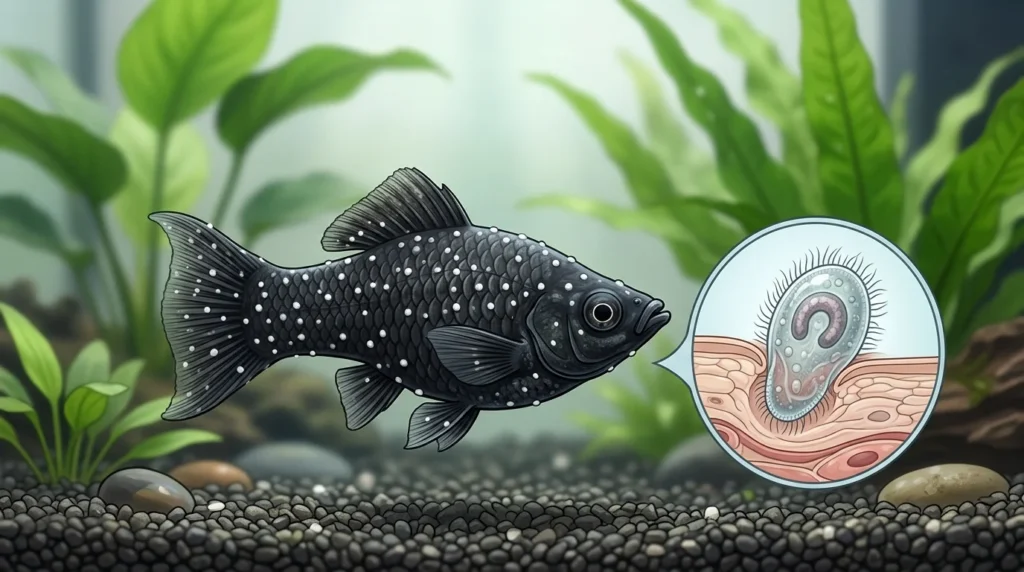
Ich is a parasitic disease caused by Ichthyophthirius multifiliis that usually appears as small, salt-like white spots beneath the fish’s skin.
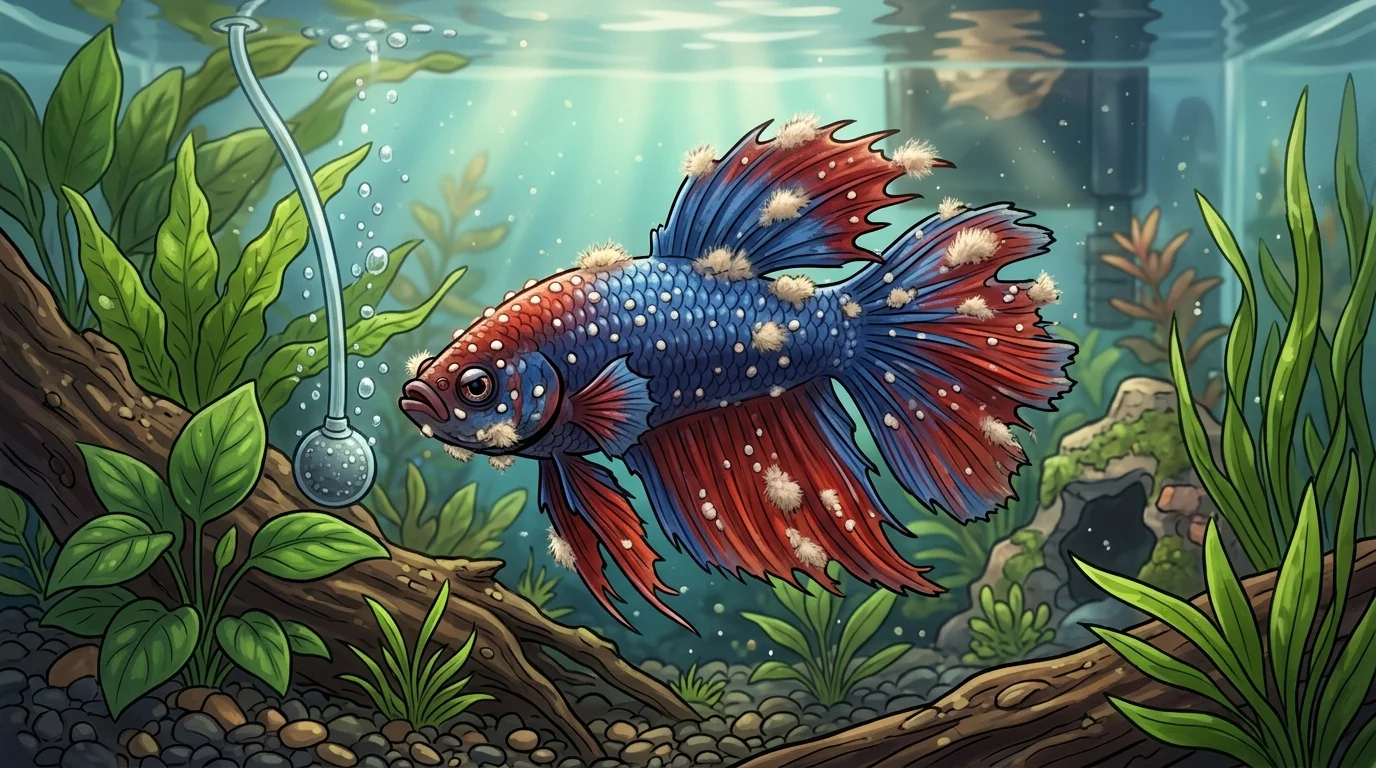
Epistylis is a protozoan organism that often appears as fuzzy or raised white growths on the skin and is frequently associated with bacterial infections.
A key difference is that Ich spots are usually embedded under the skin, while Epistylis growths often protrude from the body surface.
What Is Ich?
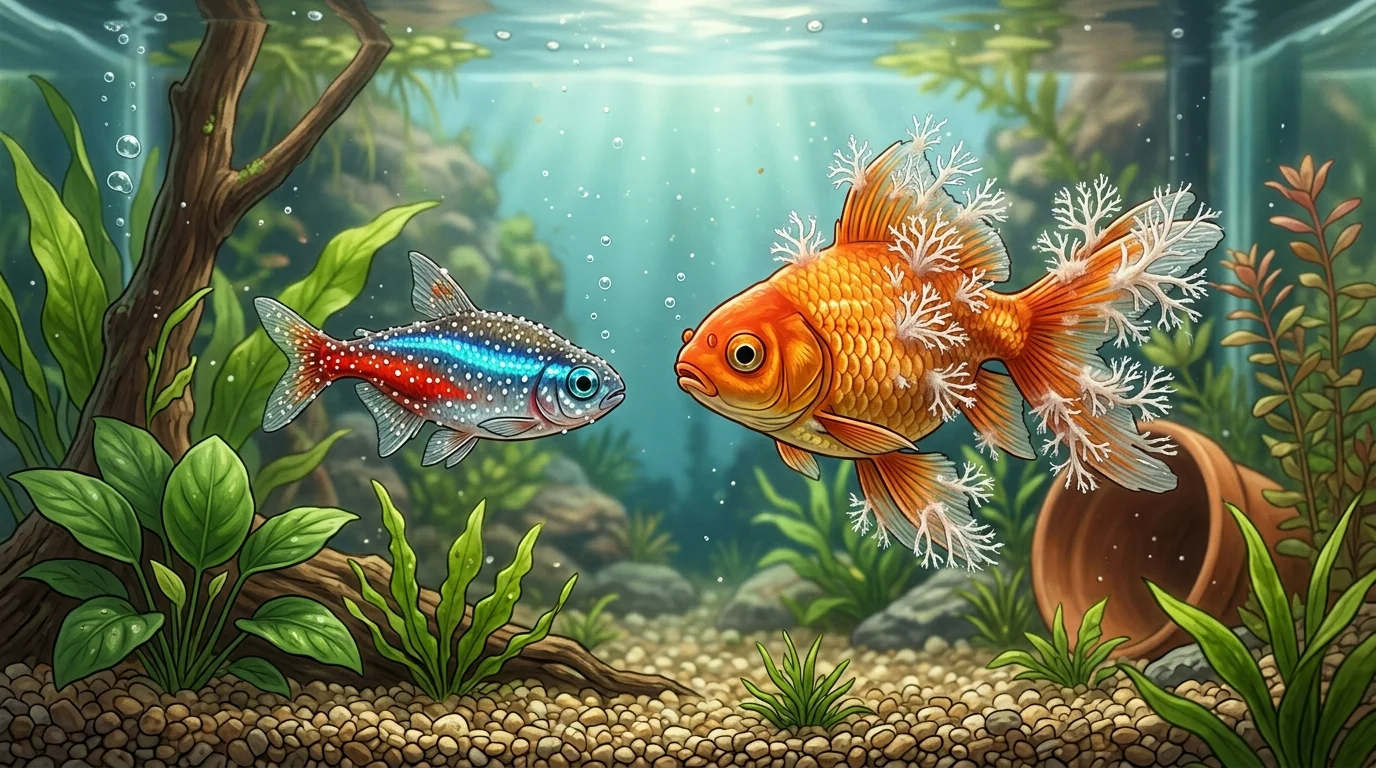
Ich, often called “white spot disease,” is one of the most common aquarium fish diseases. ich or epistylis.
It is caused by the parasite Ichthyophthirius multifiliis.
The parasite goes through a life cycle that includes:
- Feeding on the fish
- Leaving the fish
- Reproducing in the environment
- Reinfecting fish
Common Symptoms
- Tiny white spots resembling grains of salt
- Flashing or rubbing against objects
- Rapid breathing
- Clamped fins
- Reduced appetite
- Lethargy
Context and Occurrence
Ich commonly appears when fish are stressed by:
- Poor water quality
- Sudden temperature changes
- Overcrowding
- Transportation stress
Examples
Example 1
A fish develops dozens of tiny white dots evenly scattered across its fins.
Example 2
New fish introduced without quarantine trigger an outbreak.
Example 3
Fish repeatedly scrape themselves against decorations.
Key Insight
Ich typically looks like small white grains trapped beneath the skin.
What Is Epistylis?
Epistylis is a colonial protozoan organism that attaches to the surface of fish.
Unlike Ich, it is often linked to environmental issues and underlying bacterial infections. ich or epistylis.
Common Symptoms
- Raised white patches
- Cotton-like growths
- Lesions on the skin
- Redness around affected areas
- Ulcers
- Reduced activity
Context and Occurrence
Epistylis is often associated with:
- Poor water quality
- High organic waste
- Overfeeding
- Elevated bacterial loads
- Stressed fish populations
Examples
Example 1
White growths appear elevated above the fish’s scales.
Example 2
Affected areas become red and inflamed.
Example 3
Spots look fuzzy rather than smooth.
Key Insight
Epistylis is often attached to the surface of the fish rather than embedded beneath the skin.
Ich vs Epistylis: Key Differences
Cause
- Ich: Parasitic infection.
- Epistylis: Surface-dwelling protozoan often linked to bacterial issues.
Appearance
- Ich: Salt-grain spots.
- Epistylis: Raised or fuzzy white growths.
Location
- Ich: Under the skin.
- Epistylis: On the skin surface.
Progression
- Ich: Follows a predictable parasite life cycle.
- Epistylis: Often develops around damaged tissue or poor environmental conditions.
Treatment Response
- Ich: Commonly responds to established anti-parasitic treatments.
- Epistylis: Often requires addressing water quality and associated bacterial problems.
Ich vs Epistylis Comparison Table
| Feature | Ich | Epistylis |
|---|---|---|
| Cause | Parasite | Colonial protozoan |
| Appearance | Salt-like spots | Raised or fuzzy patches |
| Spot Location | Beneath skin | Surface of skin |
| Texture | Smooth | Often fuzzy |
| Redness Around Lesions | Uncommon | Common |
| Associated Bacterial Issues | Usually not primary | Frequently associated |
| Spread Pattern | Classic parasite cycle | Environmental and opportunistic |
| Typical Look | White grains | White tufts or nodules |
Real-World Usage Scenarios
Scenario 1
Aquarist: “My fish has tiny white dots that look like salt.”
Experienced Hobbyist: “That sounds more like Ich.”
🎯 Lesson: Salt-grain appearance often points toward Ich.
Scenario 2
Aquarist: “The white spots are sticking out from the skin.”
Experienced Hobbyist: “Consider Epistylis as a possibility.”
🎯 Lesson: Raised growths are less typical of Ich.
Scenario 3
Aquarist: “The lesions look red around the edges.”
Expert: “That can occur with Epistylis and associated bacterial involvement.”
🎯 Lesson: Inflammation often suggests something beyond classic Ich.
Scenario 4
Aquarist: “The fish keeps rubbing against rocks.”
Expert: “Ich is a common cause of that irritation.”
🎯 Lesson: Flashing behavior is frequently associated with Ich.
Scenario 5
Aquarist: “The spots look fuzzy under close inspection.”
Expert: “Epistylis becomes more likely.”
🎯 Lesson: Fuzzy texture is a valuable diagnostic clue.
Common Mistakes
Mistake 1: Assuming Every White Spot Is Ich
Why it happens:
Ich is the best-known aquarium disease.
Correction:
Examine texture, elevation, and surrounding tissue carefully.
Mistake 2: Treating Epistylis as Ich Without Confirmation
Why it happens:
Both conditions can initially appear similar.
Correction:
Look for raised growths, redness, and fuzzy structures.
Mistake 3: Ignoring Water Quality Problems
Why it happens:
Owners focus only on visible symptoms.
Correction:
Test and improve water conditions immediately.
Mistake 4: Delaying Diagnosis
Why it happens:
Early signs may appear minor.
Correction:
Investigate unusual white spots as soon as they appear.
Memory Tricks
Trick 1
Ich = Invisible Under the Skin
Think of Ich as buried beneath the surface.
Trick 2
Epistylis = Elevated
The “E” in Epistylis can remind you of elevated growths.
Trick 3
Salt vs Fuzz
- Salt-like = Ich
- Fuzzy-like = Epistylis
Expert Insight
One reason aquarists frequently confuse Ich and Epistylis is that both can produce white markings visible from a distance. However, close inspection often reveals important differences.
Ich parasites develop beneath the outer tissues of the fish, creating the classic appearance of embedded white grains. Epistylis colonies, by contrast, attach externally and may appear raised or fuzzy. Additionally, Epistylis is often associated with environmental stressors and secondary bacterial issues, making overall tank management especially important.
Because treatment approaches can differ, accurate identification is critical before beginning any intervention. ich or epistylis.