
Quick Answer
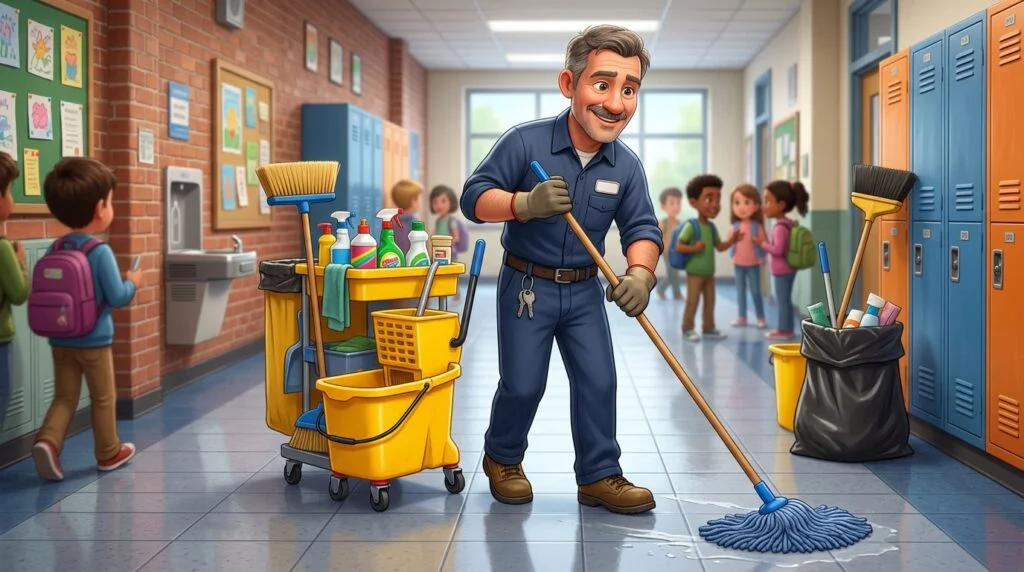
A janitor is a traditional term for a cleaning worker responsible for maintaining buildings.
A custodian is a more modern or formal term that often implies broader responsibility for building care, maintenance, and safety.
In many real-world jobs, both terms refer to the same role.
What Is a Janitor?
Definition
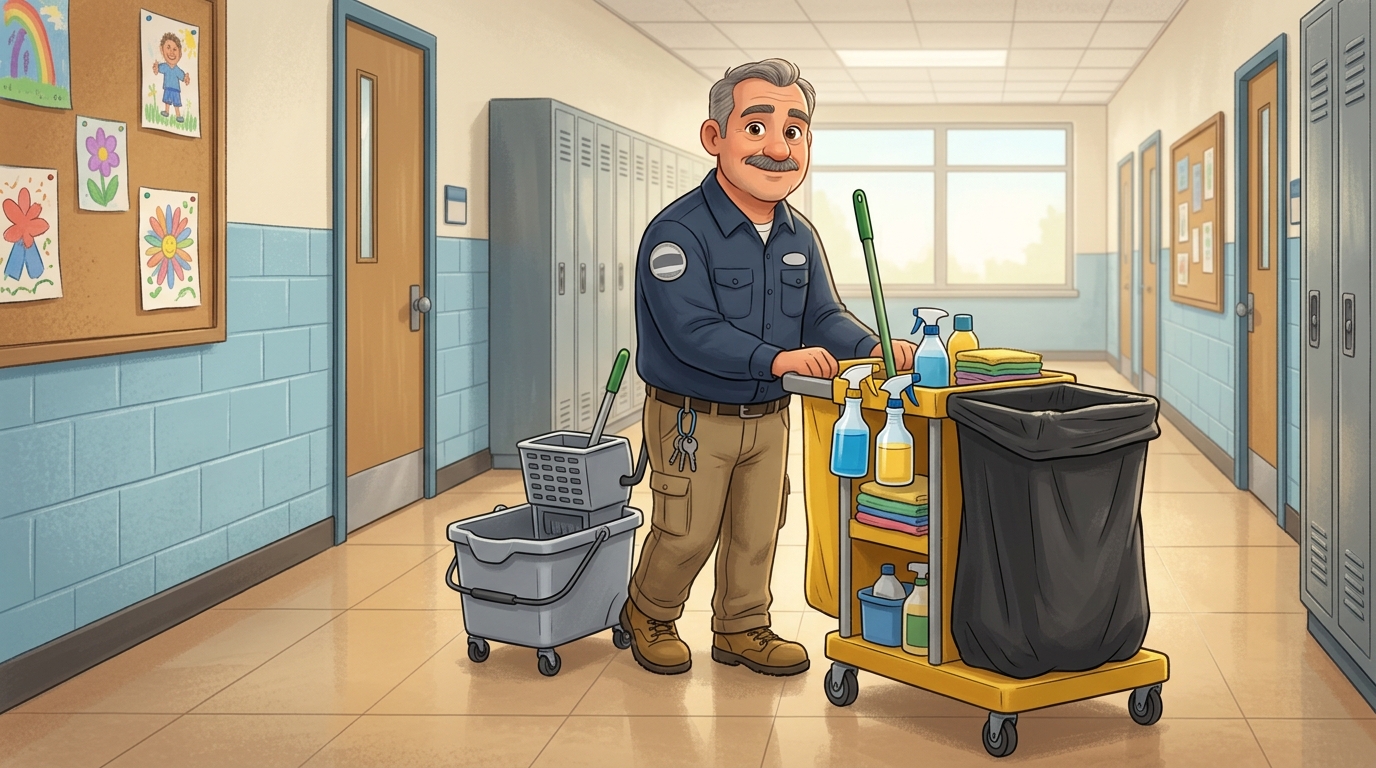
A janitor is a worker who cleans and maintains buildings such as schools, offices, hospitals, and commercial spaces.
Typical Duties
- Sweeping and mopping floors
- Cleaning bathrooms
- Emptying trash bins
- Basic maintenance tasks
- Restocking supplies
Work Environment
- Schools
- Offices
- Shopping centers
- Residential buildings
Usage Context
The word janitor is more traditional and commonly used in everyday speech.
Example
- The janitor cleaned the hallway after school hours.
Key Insight
“Janitor” focuses mainly on cleaning tasks and is often seen as the older or informal term.
What Is a Custodian?
Definition
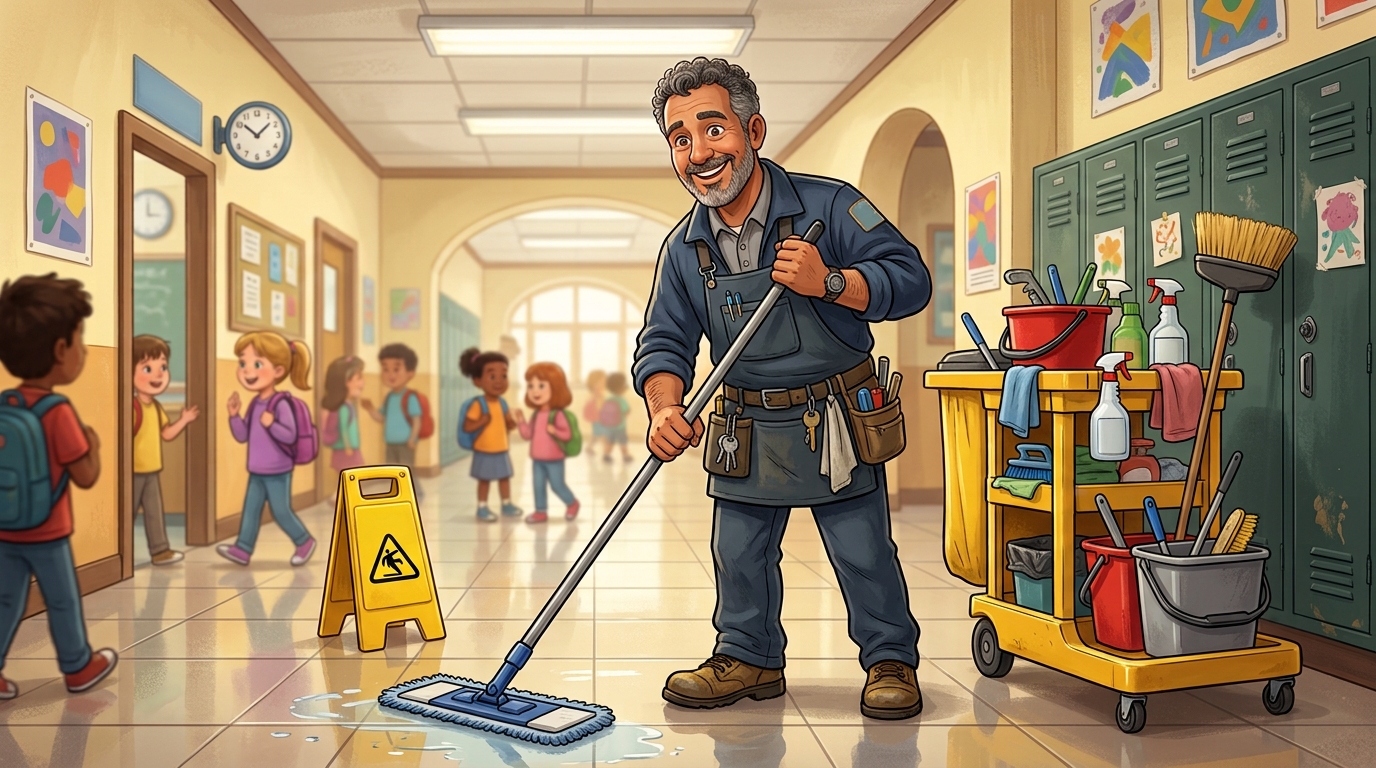
A custodian is a person responsible for the cleaning, maintenance, and general upkeep of a building, often with a more professional or administrative tone.
Typical Duties
- Cleaning and sanitation
- Minor repairs
- Building maintenance checks
- Security-related tasks (in some cases)
- Managing facility condition reports
Work Environment
- Schools (common usage in modern systems)
- Government buildings
- Corporate offices
- Institutions and hospitals
Usage Context
The term custodian is more formal and widely used in professional, institutional, and administrative settings.
Example
- The custodian ensured the school building was clean and safe every morning.
Key Insight
“Custodian” emphasizes responsibility for the care and upkeep of a facility, not just cleaning.
Janitor vs Custodian: Key Differences
Core Differences
- Janitor = traditional, informal term
- Custodian = modern, formal term
- Janitor = focuses on cleaning tasks
- Custodian = includes maintenance and care responsibilities
- Janitor = common in casual speech
- Custodian = common in official job titles
Comparison Table
| Feature | Janitor | Custodian |
|---|---|---|
| Meaning | Cleaning worker | Building care worker |
| Tone | Informal | Formal |
| Duties | Mostly cleaning | Cleaning + maintenance |
| Usage | Everyday language | Professional/institutional |
| Perception | Traditional term | Modern job title |
| Responsibility Scope | Narrow | Broader |
Real-World Usage Scenarios
Scenario 1: School Setting
Principal: “We need the janitor to clean the gym.”
District policy: “Custodians are responsible for building maintenance.”
🎯 Lesson: Same role, different terminology depending on context.
Scenario 2: Job Application
Applicant: “Should I write janitor or custodian on my resume?”
Career advisor: “Use custodian for a more professional tone.”
🎯 Lesson: Word choice affects perception.
Scenario 3: Workplace Conversation
Employee: “The janitor fixed the leak.”
Supervisor: “Our custodian handles facility maintenance.”
🎯 Lesson: Custodian implies broader responsibility.
Scenario 4: School System Policy
Document: “Custodial staff must inspect classrooms daily.”
🎯 Lesson: Official systems prefer “custodian.”
Scenario 5: Casual Speech
Student: “The janitor is cleaning the hall.”
Teacher: “Yes, the custodian is working after hours.”
🎯 Lesson: Both terms refer to the same person in practice.
Common Mistakes
Mistake 1: Thinking They Are Different Jobs
Why it happens:
Job titles vary by country and organization.
Correction:
They often describe the same role with different wording.
Mistake 2: Assuming “Janitor” Is Offensive
Why it happens:
Modern workplaces prefer more formal language.
Correction:
“Janitor” is not wrong, just less formal.
Mistake 3: Believing Custodians Don’t Clean
Why it happens:
The word sounds administrative.
Correction:
Custodians still perform cleaning tasks, often along with maintenance.
Mistake 4: Using Terms Interchangeably in Formal Writing
Why it happens:
Lack of awareness of tone differences.
Correction:
Use “custodian” in professional or institutional contexts.
Memory Tricks
Trick #1
Janitor = “Jan” (basic cleaning job)
Custodian = “Cost + care” (responsibility for upkeep)
Trick #2
- Janitor = job focus
- Custodian = responsibility focus
Trick #3
If it sounds formal → Custodian
If it sounds casual → Janitor
Expert Insight
Historically, the term janitor was widely used across schools and businesses to describe cleaning staff. Over time, many institutions shifted toward the term custodian to better reflect the broader responsibilities involved in building care, safety, and maintenance.
This change is part of a larger trend in workplace language where job titles are modernized to reflect respect, professionalism, and expanded duties.
However, in practice, both roles still overlap heavily. In most real-world environments, there is no functional difference in daily tasks—only in terminology and perception.