
Quick Answer
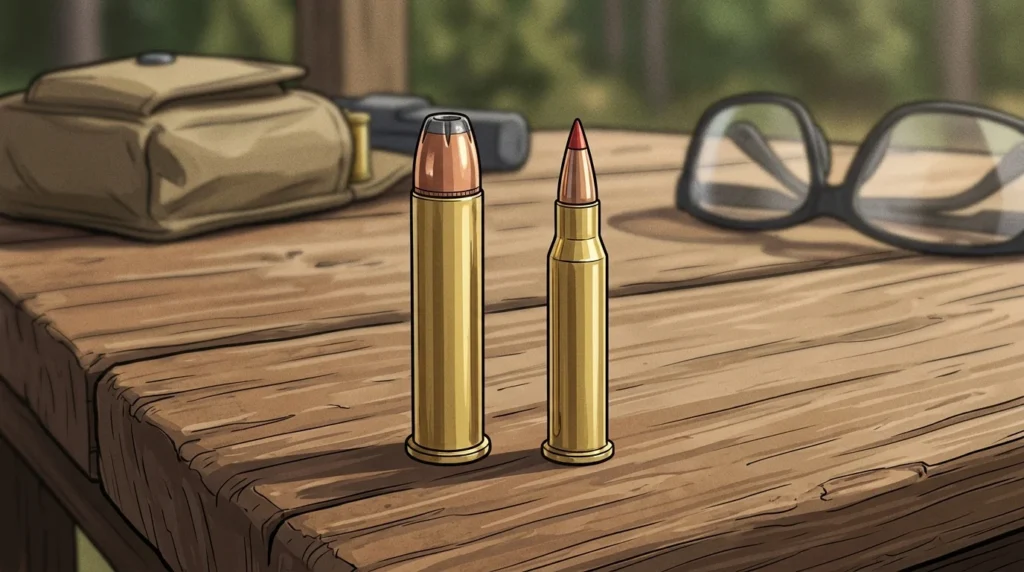
The .17 HMR is generally known for its higher velocity, flatter trajectory, and excellent accuracy at longer rimfire distances.
The .22 Magnum (.22 WMR) fires heavier bullets and is often favored for applications where greater bullet weight and energy at shorter to moderate ranges are desirable.
In simple terms:
- .17 HMR = Higher speed and flatter trajectory
- .22 Mag = Heavier bullet and greater versatility at closer ranges
Understanding Rimfire Cartridges
What Is a Rimfire Cartridge?
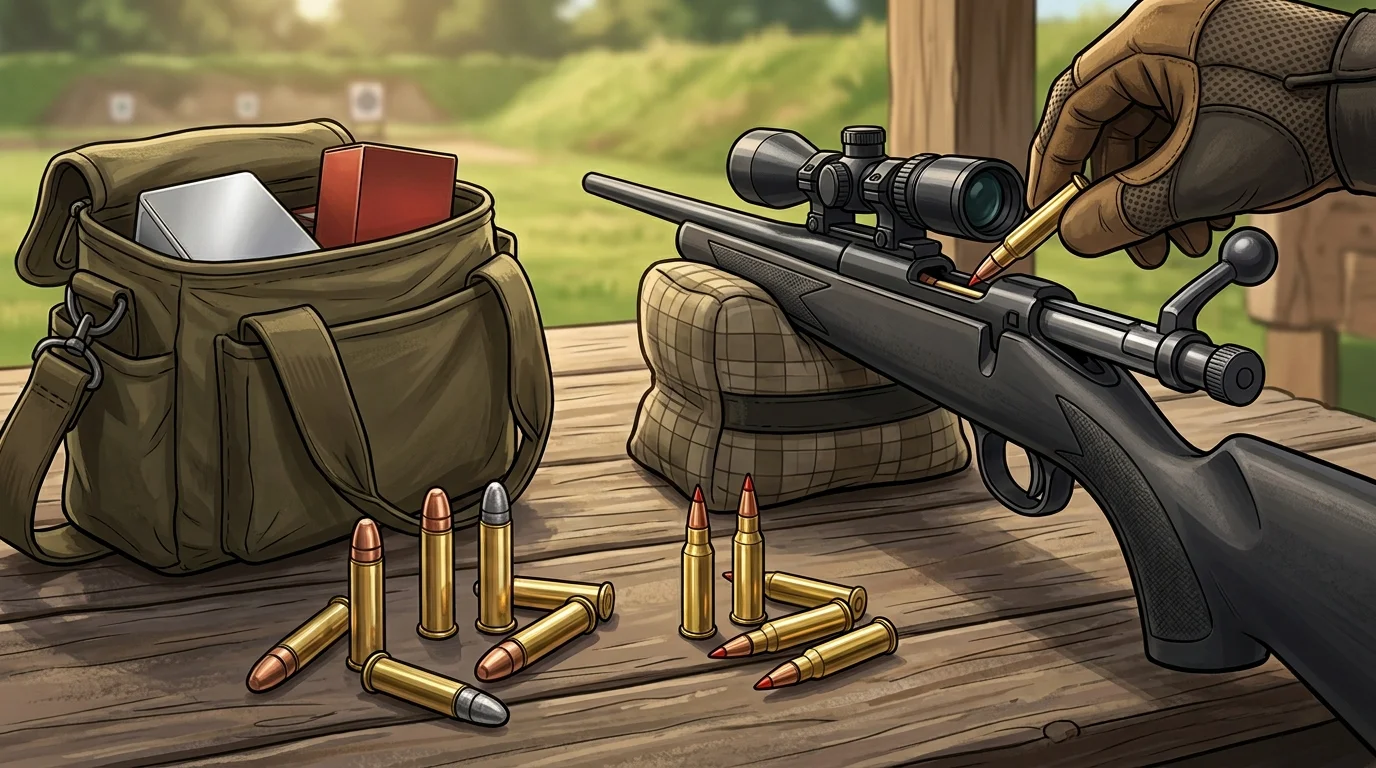
A rimfire cartridge contains its primer in the rim of the cartridge case rather than in a separate center primer. Rimfire ammunition is commonly used for recreational shooting, small-game hunting, and pest control because it generally produces modest recoil and is widely available.
Although .22 Mag and .17 HMR are both rimfire cartridges, they differ significantly in bullet diameter, bullet weight, velocity, and typical applications.
What Is .22 Mag?
Definition
.22 Magnum, officially known as .22 Winchester Magnum Rimfire (.22 WMR), is a rimfire cartridge introduced in 1959. It uses heavier bullets than the .17 HMR and is commonly chosen for small-game hunting and varmint control.
Typical Characteristics
- Heavier bullet weights
- Moderate to high rimfire velocity
- Suitable for a variety of hunting situations
- Effective at short to medium distances
Common Applications
- Small game
- Varmint control
- Farm pest management
- Recreational target shooting
Key Insights
- Uses heavier projectiles.
- Often performs well through light vegetation compared with lighter, faster bullets.
- Available in several bullet types for different purposes.
What Is .17 HMR?
Definition
The .17 Hornady Magnum Rimfire (.17 HMR) was introduced in 2002. It is based on the .22 WMR case necked down to accept a .17-caliber bullet.
Typical Characteristics
- Very high muzzle velocity
- Lightweight bullets
- Flat trajectory
- Excellent long-range rimfire accuracy
Common Applications
- Varmint hunting
- Precision target shooting
- Small pest control
- Open-field shooting
Key Insights
- Designed for speed and precision.
- Popular where longer rimfire shots are common.
- Wind can affect its lightweight bullets more than heavier projectiles.
.22 Mag vs .17 HMR: Key Differences
Main Differences
- .17 HMR typically shoots faster.
- .17 HMR generally has a flatter trajectory.
- .22 Mag uses heavier bullets.
- .22 Mag often retains more bullet mass for close- to mid-range applications.
- Both are rimfire cartridges but serve slightly different roles.
Comparison Table
| Feature | .22 Mag (.22 WMR) | .17 HMR |
|---|---|---|
| Bullet diameter | .224 inch | .172 inch |
| Typical bullet weight | Heavier | Lighter |
| Velocity | High | Generally higher |
| Trajectory | More curved | Flatter |
| Long-range accuracy | Good | Excellent |
| Wind resistance | Better with heavier bullets in some conditions | More affected by crosswinds |
| Typical use | Small game, varmints | Varmints, precision shooting |
| Recoil | Very light | Very light |
Hunting Applications
When .22 Mag Is Commonly Chosen
Hunters often select .22 Mag for:
- Rabbits
- Squirrels
- Raccoons (where lawful)
- Foxes (where lawful)
- General farm pest control
Its heavier bullets can be advantageous for certain hunting situations at shorter to moderate distances.
When .17 HMR Is Commonly Chosen
The .17 HMR is often preferred for:
- Ground squirrels
- Prairie dogs
- Groundhogs
- Crows (where lawful)
- Small varmints in open terrain .22 mag or .17 hmr.
Its flat trajectory can reduce the amount of holdover needed at longer distances.
Accuracy and Effective Range
.17 HMR
Many shooters appreciate the .17 HMR for its excellent accuracy and flat trajectory at extended rimfire distances, making precise shot placement easier.
.22 Mag
The .22 Mag is also accurate, though its trajectory is generally more curved due to its lower velocity. Many hunters find it highly effective within moderate hunting distances.
Ammunition Cost and Availability
Both cartridges are widely available in many regions.
General trends include:
- .22 Mag often offers a wider variety of bullet styles.
- .17 HMR ammunition may cost slightly more depending on brand and load.
- Prices and availability vary by location and market conditions.
Real-World Usage Scenarios
Scenario 1
A hunter plans to shoot small varmints across open fields where longer shots are common.
🎯 Lesson: A flatter-shooting cartridge like the .17 HMR may be advantageous.
Scenario 2
A landowner wants a versatile rimfire cartridge for a mix of small-game hunting and pest control around a property.
🎯 Lesson: Many shooters choose .22 Mag because of its heavier bullet options and versatility.
Scenario 3
A target shooter enjoys precision shooting at varying rimfire distances.
🎯 Lesson: The .17 HMR’s speed and flat trajectory are often appreciated for precision work.
Scenario 4
A hunter expects shorter-range opportunities in mixed terrain.
🎯 Lesson: The .22 Mag remains a popular choice for these conditions.
Common Mistakes
Mistake 1
Assuming one cartridge is better for every purpose.
Correction: Each has strengths depending on distance, target size, and shooting conditions.
Why it happens: Comparisons often overlook the intended use.
Mistake 2
Ignoring bullet weight.
Correction: Bullet weight influences performance, energy, and behavior under different conditions.
Why it happens: Velocity numbers often receive more attention than projectile characteristics.
Mistake 3
Choosing solely based on speed.
Correction: Velocity is only one factor. Accuracy, ammunition availability, intended game, and shooting environment also matter.
Why it happens: Faster cartridges are often assumed to be universally superior.
Memory Tricks
Remember .17 HMR
Think:
17 = Speed and precision
Remember .22 Mag
Think:
22 = Heavier bullet and versatility
Quick Memory Chart
- .17 HMR = Faster and flatter
- .22 Mag = Heavier and versatile
Expert Insight
Although both cartridges occupy a similar niche, neither replaces the other completely.
The .17 HMR emphasizes high velocity and precision, making it a favorite for small varmints in open areas where flatter trajectories can simplify shot placement. The .22 Magnum, meanwhile, .22 mag or .17 hmr. offers heavier bullet options that many hunters value for versatility across a range of small-game and pest-control situations.
The better choice depends less on which cartridge is “more powerful” and more on your typical shooting distances, target species, local regulations, rifle availability, and perso.nal preferences. 22 mag or 17 hmr