
Quick Answer
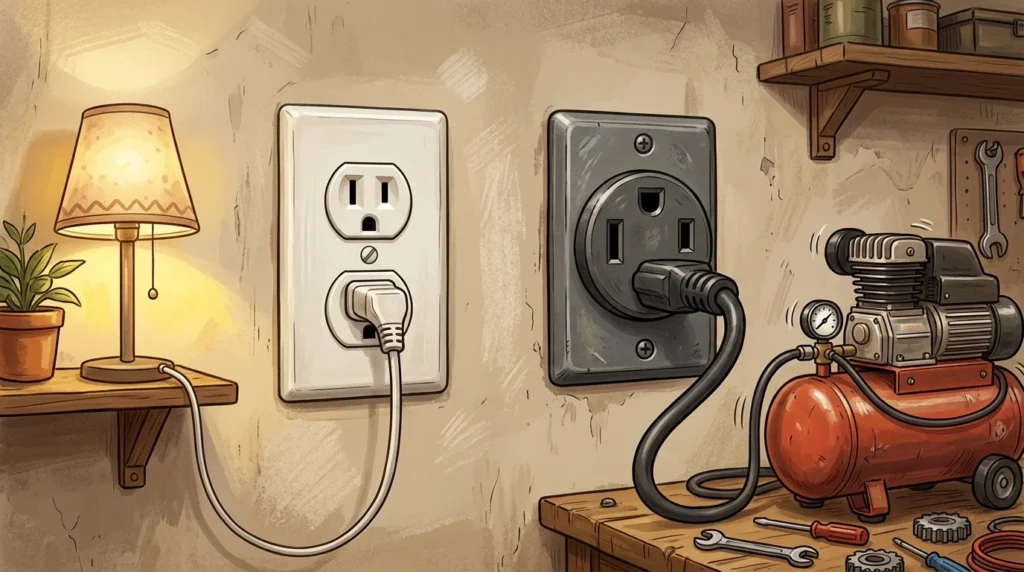
110V (also called 120V in many countries) and 220V (often 230V or 240V depending on the region) are standard household electrical voltages.
- 110V is mainly used in North America and parts of Central America and Japan.
- 220V is common across Europe, Asia, Africa, Australia, and much of the rest of the world.
Neither is universally better—they simply represent different electrical standards.
110V Explained
What Is 110V?
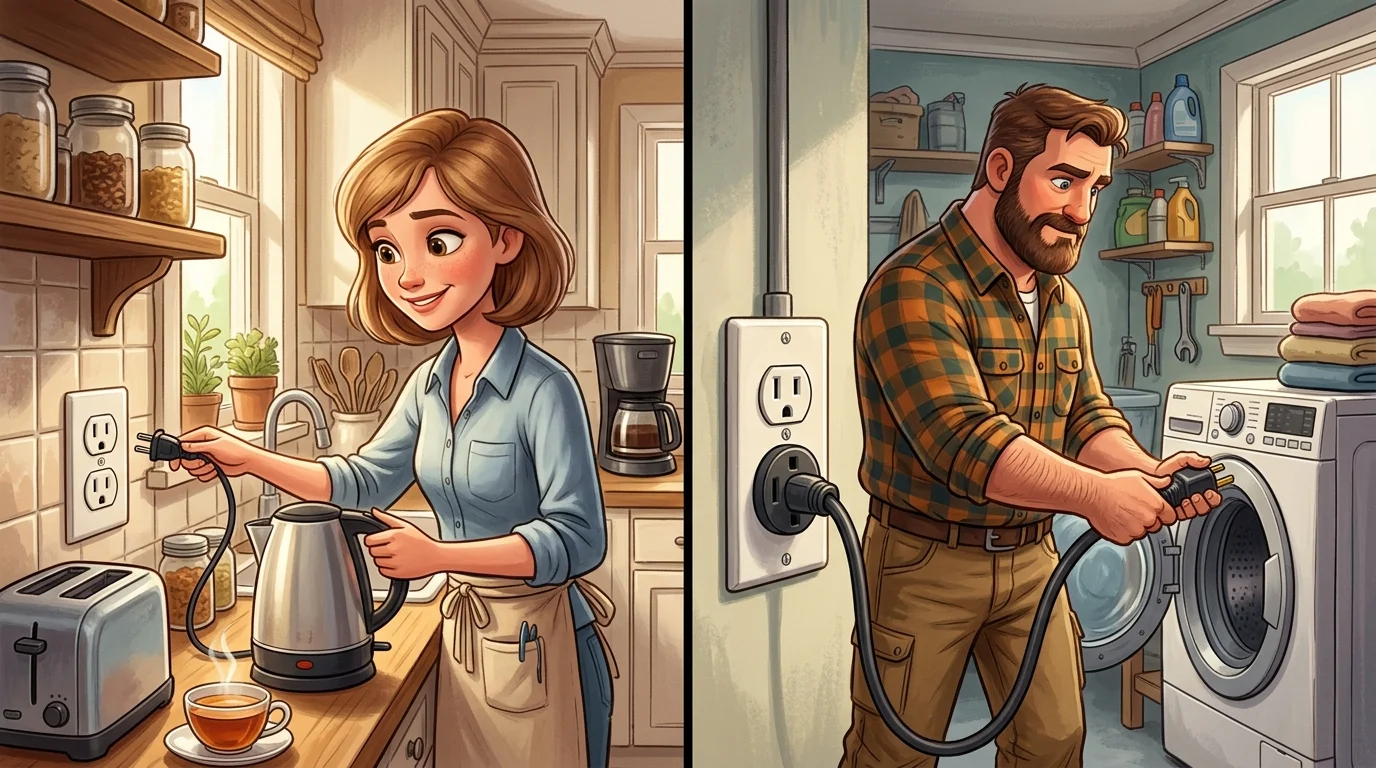
110V is a lower household voltage standard. In modern electrical systems, the actual supplied voltage is often around 120 volts, but people commonly refer to it as 110V.
Homes using this system receive electricity that powers everyday appliances through standard outlets.
Where Is 110V Used?
Common regions include:
- United States
- Canada
- Mexico
- Japan (100V system, often grouped with 110V appliances)
- Parts of Central America
- Some Caribbean countries
Common Appliances
Typical 110V appliances include:
- Televisions
- Computers
- Phone chargers
- Lamps
- Coffee makers
- Microwaves
- Vacuum cleaners
- Small kitchen appliances
Advantages
- Lower shock severity compared to higher voltages
- Widely available in North America
- Compatible with many consumer electronics
- Well-established infrastructure
Disadvantages
- Requires higher current for the same power output
- Thicker wiring may be needed for high-power appliances
- Less efficient for long-distance power delivery inside buildings
Examples
Example 1
A U.S. home plugs a laptop charger into a standard 120V wall outlet.
Example 2
A coffee maker operates using a typical North American household outlet.
Example 3
Most bedroom lamps in the United States are designed for 110–120V service.
Key Insight
110V uses more current than 220V to deliver the same amount of electrical power.
220V Explained
What Is 220V?
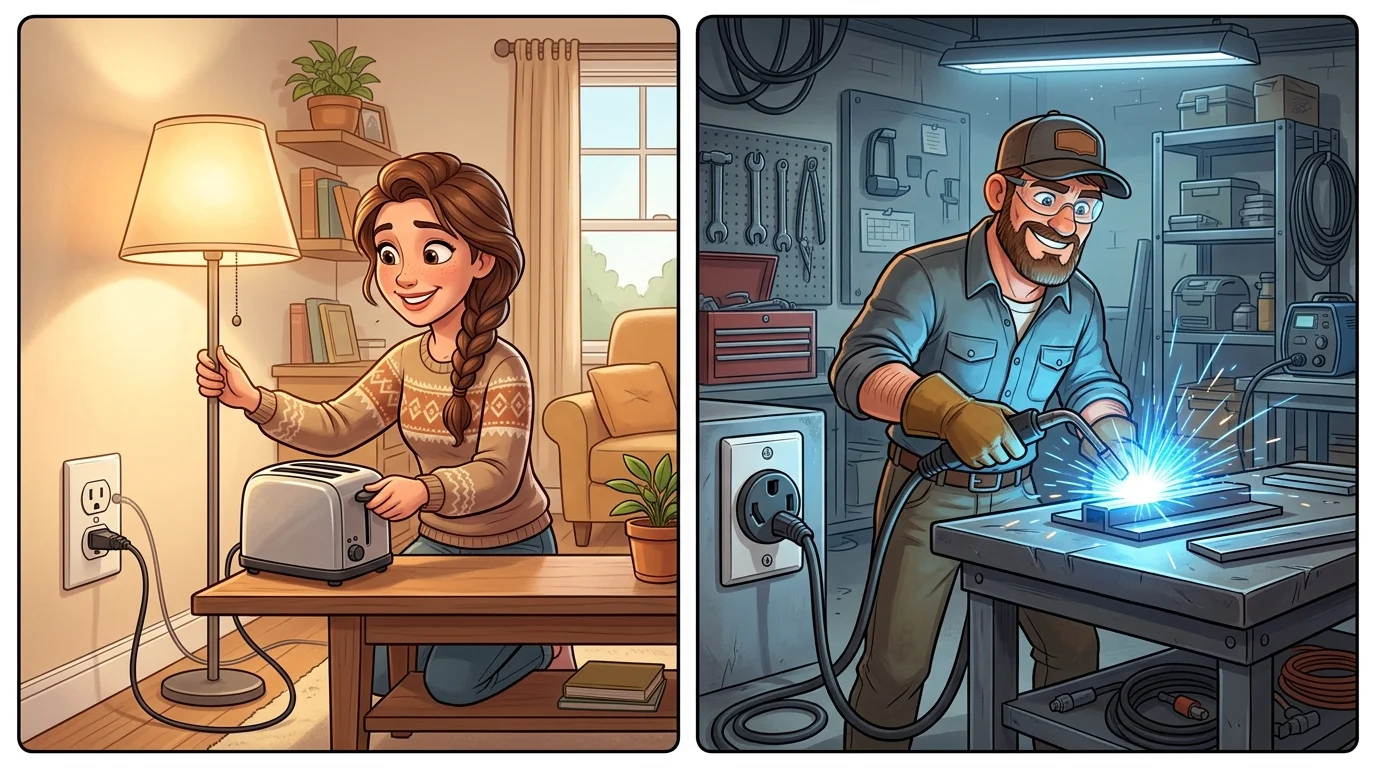
220V is a higher household voltage standard. Many countries now officially supply 230V or 240V, but the term 220V remains widely used.
Because of its higher voltage, it delivers the same power while using less current.
Where Is 220V Used?
Common regions include:
- United Kingdom
- Germany
- France
- Spain
- Italy
- Australia
- China
- India
- Pakistan
- South Africa
- Most countries in Europe, Asia, Africa, and the Middle East
Common Appliances
Many high-power appliances use 220V, including:
- Air conditioners
- Electric ovens
- Water heaters
- Clothes dryers
- Electric kettles
- Washing machines
- Refrigerators
- Large power tools
Advantages
- More energy-efficient power distribution
- Lower current reduces cable losses
- Better suited for high-power appliances
- Smaller wire sizes may be sufficient for equivalent power
Disadvantages
- Higher voltage can increase shock risk if safety precautions are ignored
- Travelers often need adapters or voltage converters
- Incompatible with many 110V-only appliances
Examples
Example 1
An electric oven in Europe operates on a 230V household supply.
Example 2
A split air conditioner in Pakistan uses a 220–240V connection.
Example 3
An electric kettle boils water quickly using a 230V outlet.
Key Insight
220V provides the same power with roughly half the current required by a 110V system.
110V or 220V: Key Differences
Main Differences
- Voltage
- 110V: Lower voltage
- 220V: Higher voltage
- Current
- 110V: Higher current
- 220V: Lower current
- Efficiency
- 110V: Slightly less efficient for high-power loads
- 220V: More efficient for heavy appliances
- Safety
- 110V: Lower shock voltage
- 220V: Greater shock hazard if mishandled
- Countries
- 110V: Mainly North America and Japan
- 220V: Most of the world
Comparison Table
| Feature | 110V | 220V |
|---|---|---|
| Standard Voltage | 110–120V | 220–240V |
| Current for Same Power | Higher | Lower |
| Wire Size | Usually thicker for high loads | Often smaller for equivalent power |
| Efficiency | Good | Better for heavy appliances |
| Common Regions | North America | Europe, Asia, Africa, Australia |
| High-Power Appliances | Less common | Very common |
| Shock Risk | Lower | Higher |
Real-World Usage Scenarios
Scenario 1
Traveler: “Can I use my U.S. hair dryer in Europe?”
Answer: Not without checking its voltage rating. A 110V-only appliance may require a voltage converter.
🎯 Lesson: Always read the appliance label before plugging it into a foreign outlet.
Scenario 2
Homeowner: “Why does my oven use 220V?”
Electrician: “High-power appliances work more efficiently on higher voltage.”
🎯 Lesson: Large appliances often benefit from 220V service.
Scenario 3
Student: “Will my phone charger work overseas?”
Friend: “Most modern chargers support 100–240V automatically.”
🎯 Lesson: Many electronics only need a plug adapter, not a voltage converter.
Scenario 4
DIY Enthusiast: “Can I plug a 220V machine into a 110V outlet?”
Electrician: “No. It likely won’t operate correctly and could be damaged.”
🎯 Lesson: Match appliance voltage to the supply voltage.
Scenario 5
New Homeowner: “Why are some outlets different?”
Electrician: “Different circuits are designed for different power requirements.”
🎯 Lesson: Outlet type often indicates voltage and intended appliance use.
Common Appliances by Voltage
Typical 110V Appliances
- TVs
- Gaming consoles
- Wi-Fi routers
- Lamps
- Blenders
- Toasters
- Desktop computers
- Phone chargers
Typical 220V Appliances
- Air conditioners
- Water heaters
- Electric ovens
- Clothes dryers
- Electric kettles
- Large refrigerators
- Electric cooktops
- Heavy-duty workshop equipment
Common Mistakes
Mistake 1
Assuming all countries use the same voltage.
Correction: Electrical standards vary worldwide.
Why it happens: Travelers often overlook local voltage differences.
Mistake 2
Ignoring the appliance label.
Correction: Check the voltage rating before connecting it.
Why it happens: Many appliances look identical but are built for different electrical systems.
Mistake 3
Confusing a plug adapter with a voltage converter.
Correction: A plug adapter changes the plug shape, while a voltage converter changes the electrical voltage.
Why it happens: The two devices are often mistaken for one another.
Mistake 4
Thinking 220V always uses more electricity.
Correction: Electricity consumption depends on the appliance’s power (watts) and usage time—not simply the voltage.
Why it happens: Voltage is often confused with energy consumption.
Mistake 5
Trying to modify wiring without expertise.
Correction: Voltage changes should only be handled by qualified electricians.
Why it happens: DIY electrical work can seem simpler than it actually is.
Memory Tricks
Remember 110V
1 = Lower Voltage
Think:
110V = Lower voltage, higher current.
Remember 220V
2 = Double the Voltage
Think:
220V = Higher voltage, lower current for the same power.
Easy Shortcut
- 110V = Lower voltage, higher current
- 220V = Higher voltage, lower current
Expert Insight
The relationship between voltage, current, and power is governed by the formula:
Power (Watts) = Voltage × Current
For example, a 2,000-watt appliance draws:
- About 16.7 amps on a 120V supply
- About 8.3 amps on a 240V supply
Because higher-voltage systems require less current to deliver the same power, they experience lower resistive losses in wiring. This is why many countries use 220–240V systems for household electricity and why large appliances often perform more efficiently on higher-voltage circuits.
It’s also important to note that modern electronics such as laptops, smartphones, and many camera chargers are designed with universal power supplies (typically 100–240V), allowing them to work worldwide with only the appropriate plug adapter. 110v or 220v.