
QUICK ANSWER
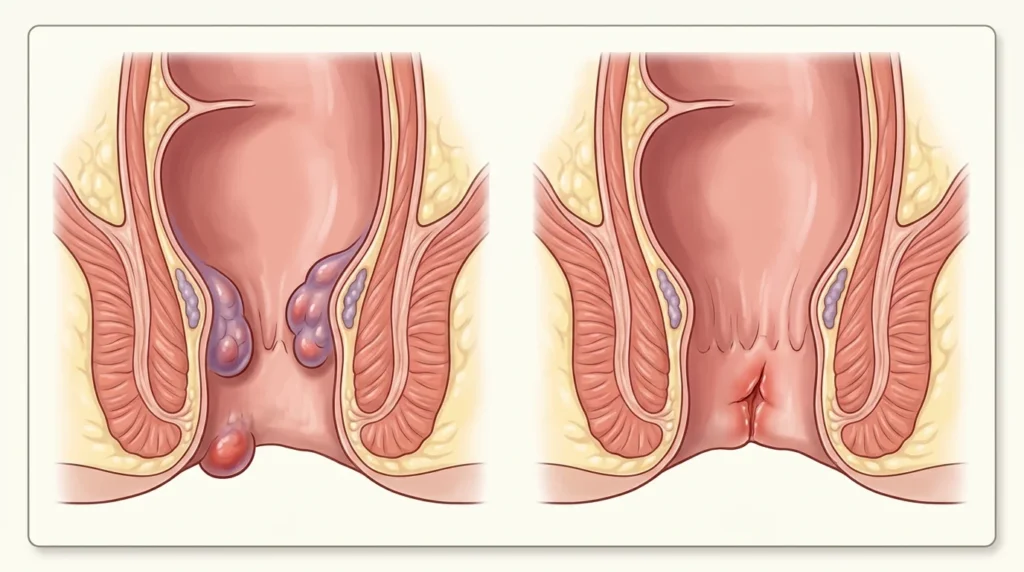
A fissure is a small tear in the skin of the anal opening that causes sharp pain during bowel movements. Hemorrhoids are swollen blood vessels in or around the anus that may cause discomfort, swelling, or bleeding.
The key difference:
👉 Fissure = cut/tear
👉 Hemorrhoids = swollen veins
DEEP EXPLANATION: FISSURE
What is a Fissure?
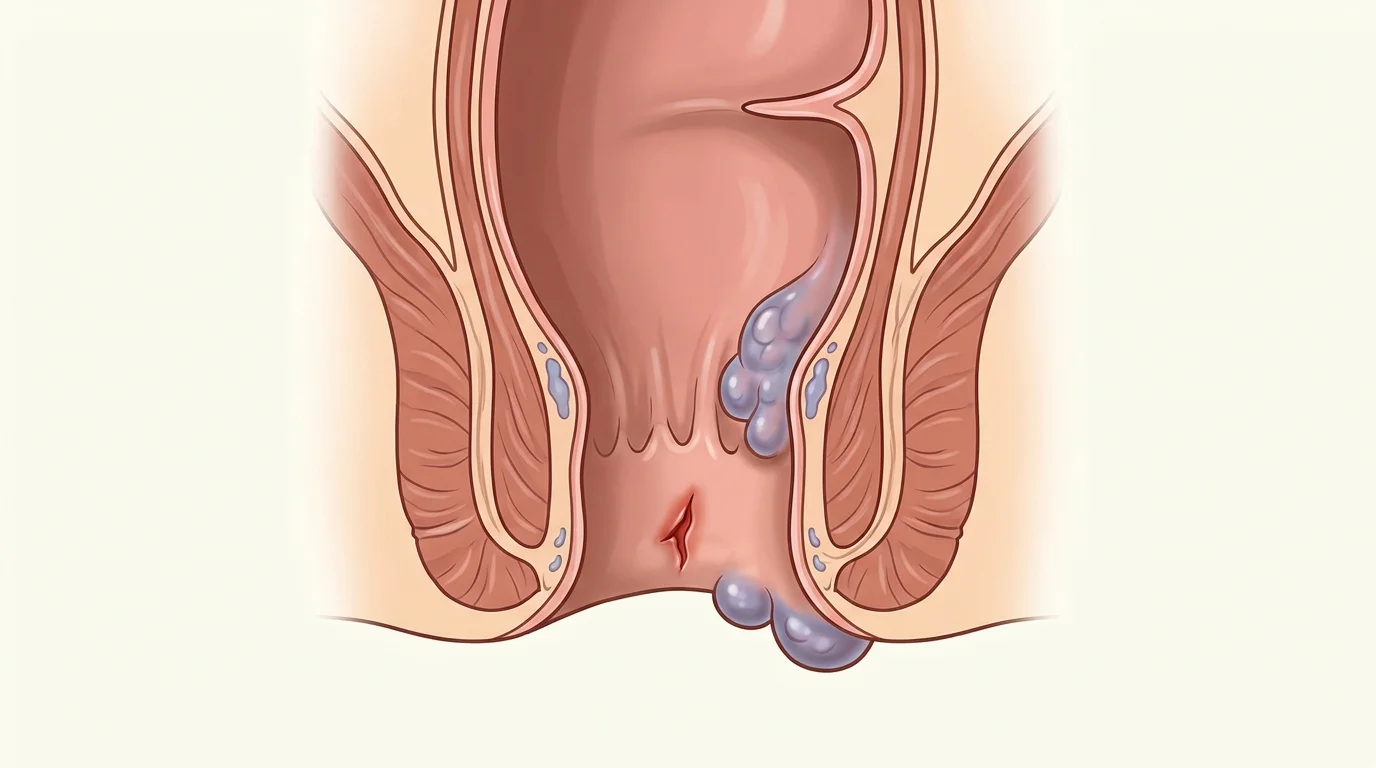
An anal fissure is a small crack or tear in the lining of the anus, usually caused by passing hard or large stools.
Key Characteristics
- Sharp, burning pain during or after bowel movement
- Small amount of bright red blood
- Visible tear in some cases
- Muscle spasms around anus
Causes
- Constipation
- Hard stool passage
- Excess straining
- Chronic diarrhea (less common)
Real Examples
- “It feels like glass cutting during stool” → classic fissure symptom
- Blood on toilet paper after hard stool
Key Insight
Fissures are pain-dominant, not swelling-dominant.
DEEP EXPLANATION: HEMORRHOIDS
What are Hemorrhoids?
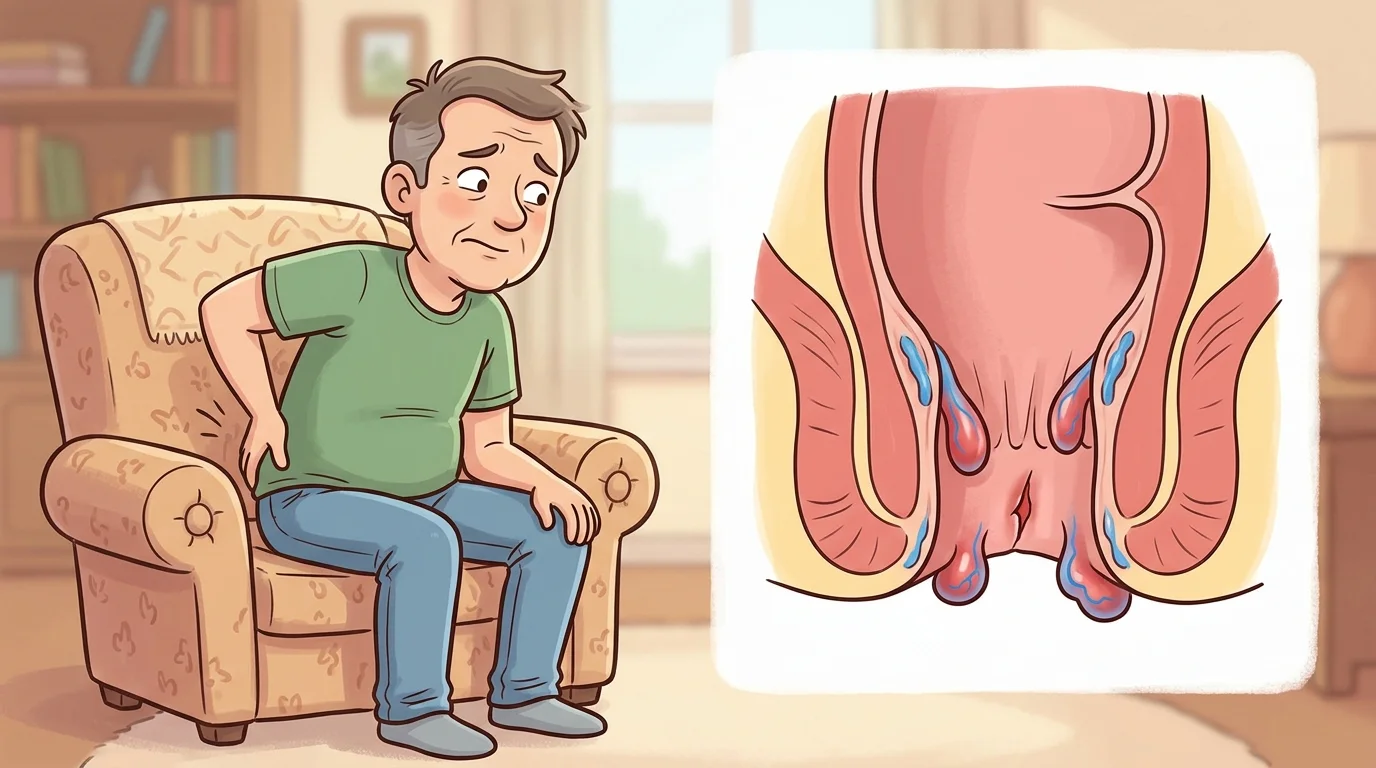
Hemorrhoids are swollen or inflamed veins in the rectum or anus, similar to varicose veins.
Key Characteristics
- Painless or mild pain (internal hemorrhoids often painless)
- Itching or irritation
- Swelling or lump near anus
- Bright red bleeding during stool
Causes
- Chronic constipation
- Prolonged sitting (especially toilet use)
- Pregnancy
- Heavy lifting
Real Examples
- “Painless bleeding while wiping” → likely hemorrhoids
- Soft lump near anus after straining
Key Insight
Hemorrhoids are swelling-dominant, not tear-dominant.
SERP-DOMINATING COMPARISON SECTION
Bullet Differences
- Meaning: Tear in skin vs swollen veins
- Pain type: Sharp (fissure) vs dull/itchy (hemorrhoids)
- Bleeding: Small, painful vs often painless
- Location: Anal lining vs internal/external veins
- Cause: Hard stool tear vs pressure and vein swelling
- Severity feeling: Cuts-like pain vs pressure/discomfort
Comparison Table
| Feature | Fissure | Hemorrhoids |
|---|---|---|
| Meaning | Skin tear | Swollen veins |
| Pain | Sharp, intense | Mild or itching |
| Bleeding | Small, painful | Bright red, often painless |
| Cause | Hard stool tear | Pressure/straining |
| Physical sign | Visible crack | Lump/swelling |
| Trigger | Passing stool | Sitting/constipation |
REAL-WORLD USAGE SCENARIOS
Scenario 1
“I see blood when I wipe but no pain.”
→ Likely hemorrhoids
🎯 Lesson: Painless bleeding usually points to hemorrhoids. fissure or hemorrhoids.
Scenario 2
“It feels like glass cutting during stool.”
→ Likely fissure
🎯 Lesson: Sharp pain = fissure, not hemorrhoids.
Scenario 3
“I have a lump and itching near the anus.”
→ Hemorrhoids
🎯 Lesson: Swelling and irritation = hemorrhoids.
Scenario 4
“Pain lasts even after going to the toilet.”
→ Fissure
🎯 Lesson: Fissure pain often lingers.
COMMON MISTAKES
- Assuming all bleeding = hemorrhoids
- Ignoring sharp pain and self-diagnosing incorrectly
- Confusing itching with pain
- Delaying treatment because symptoms seem “minor”
Why it happens:
Both conditions affect the same area, so people rely on guesswork instead of symptom patterns.
MEMORY TRICKS
- Fissure = “F” for “File cut” (sharp pain)
- Hemorrhoids = “H” for “Hanging swelling” (lumps)
- Pain first = fissure
- Swelling first = hemorrhoids
EXPERT INSIGHT SECTION
Medically, these conditions differ in tissue type:
- Fissures involve skin and mucosal lining damage
- Hemorrhoids involve vascular structures (venous cushions)
This is why fissures hurt more intensely—nerve endings are exposed due to tearing. fissure or hemorrhoids.
Hemorrhoids, on the other hand, are vascular congestion issues, which explains swelling and bleeding without sharp tearing pain in many cases. fissure or hemorrhoids.