
Quick Answer: Tumor or Pimple
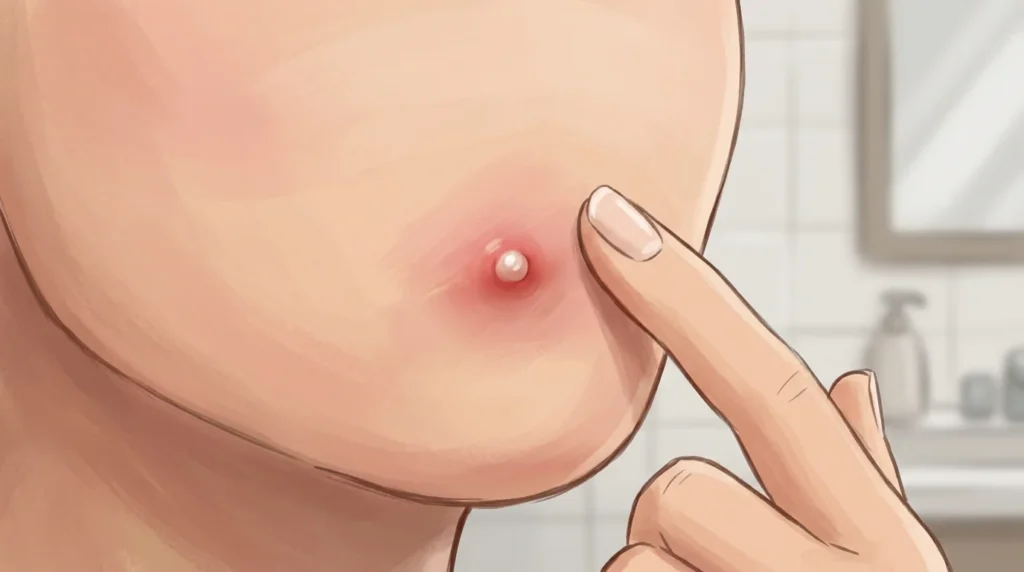
A pimple is a common skin blemish caused by clogged pores, bacteria, excess oil, or inflammation. It usually heals within days or weeks.
A tumor is an abnormal growth of cells that may be harmless (benign) or cancerous (malignant). Unlike most pimples, tumors often persist, gradually enlarge, or require medical evaluation.

Understanding What a Pimple Is
Definition
A pimple is a small inflamed bump that develops when a hair follicle or pore becomes blocked with oil, dead skin cells, and sometimes bacteria.
Most pimples are part of acne and are not dangerous.
Common Causes
- Excess oil production
- Clogged pores
- Acne-causing bacteria
- Hormonal changes
- Friction from clothing or equipment
- Certain cosmetics
Typical Characteristics
- Red or pink appearance
- White or yellow center (pus)
- Tender or painful when touched
- Usually small
- Appears suddenly
- Often disappears within a few days or weeks
Real Examples
Example 1
A teenager develops a red bump on the forehead after sports practice. It becomes a whitehead and disappears after one week.
Example 2
An adult notices several painful bumps around the chin during hormonal changes that improve with acne treatment.
Key Insights
- Pimples are extremely common.
- They usually remain close to the skin’s surface.
- Most heal without permanent problems.

Understanding What a Tumor Is
Definition
A tumor is an abnormal mass formed when cells grow or divide more than they should. Tumors can develop almost anywhere in the body, including the skin.
Not every tumor is cancer.
Types of Tumors
Benign Tumors
These are non-cancerous growths that generally do not spread to other parts of the body.
Examples include:
- Lipomas (fatty lumps)
- Skin cysts
- Fibromas
Malignant Tumors
These are cancerous growths that may invade nearby tissues or spread to distant organs.
Early diagnosis improves treatment outcomes.
Common Characteristics
- Usually grows slowly (although some grow quickly)
- May feel firm or hard
- Often painless at first
- Can remain for months or years
- May gradually increase in size
- Does not behave like a typical acne lesion
Real Examples
Example 1
Someone notices a painless lump beneath the skin of the shoulder that slowly enlarges over several years. A doctor diagnoses it as a benign lipoma.
Example 2
A person develops a persistent skin growth that changes in appearance and bleeds occasionally. Medical evaluation identifies it as a skin cancer requiring treatment.
Key Insights
- A tumor is not automatically cancer.
- Many tumors are completely benign.
- Any persistent or changing lump should be evaluated by a healthcare professional.
Tumor or Pimple: Key Differences
Quick Comparison
- Meaning
- Pimple: Inflamed clogged pore.
- Tumor: Abnormal growth of cells.
- Cause
- Pimple: Oil, bacteria, hormones, inflammation.
- Tumor: Abnormal cell growth.
- Duration
- Pimple: Days to weeks.
- Tumor: Weeks, months, or years.
- Pain
- Pimple: Often painful.
- Tumor: Frequently painless initially.
- Growth
- Pimple: Usually shrinks and heals.
- Tumor: Often persists or enlarges.
- Medical Attention
- Pimple: Usually managed with routine skin care.
- Tumor: May require medical evaluation, imaging, biopsy, or treatment.
Comparison Table
| Feature | Tumor | Pimple |
|---|---|---|
| Meaning | Abnormal cell growth | Inflamed clogged pore |
| Primary Cause | Abnormal cell division | Blocked hair follicle and inflammation |
| Appearance | Lump or mass | Red inflamed bump |
| Pain | Often painless initially | Frequently tender |
| Growth Pattern | May continue growing | Usually resolves naturally |
| Duration | Weeks to years | Days to weeks |
| Treatment | Depends on diagnosis | Acne treatment or self-care |
| Cancer Risk | Some tumors are cancerous | Not cancer |
Real-World Usage Scenarios
Scenario 1
Person: I found a painful bump on my nose yesterday.
Friend: It sounds more like a pimple than a tumor.
🎯 Lesson: Sudden painful bumps are commonly pimples.
Scenario 2
Person: I’ve had this painless lump under my arm for six months.
Doctor: Because it has persisted, we’ll examine it to determine its cause.
🎯 Lesson: Long-lasting lumps deserve medical evaluation.
Scenario 3
Person: My forehead bump disappeared after five days.
Doctor: That behavior is typical of a pimple.
🎯 Lesson: Pimples usually heal relatively quickly.
Scenario 4
Person: This lump keeps getting larger every month.
Doctor: Persistent growth should always be assessed.
🎯 Lesson: Progressive enlargement is not typical of a simple pimple.
Scenario 5
Person: The bump has started bleeding without injury.
Doctor: Changes like bleeding should be examined promptly.
🎯 Lesson: Bleeding or changing skin growths require professional evaluation.
Common Mistakes
Mistake 1
Assuming every lump is cancer.
Correction: Many tumors are benign and not life-threatening.
Why it happens: The word “tumor” is often mistakenly used as a synonym for cancer.
Mistake 2
Ignoring a lump that keeps growing.
Correction: Persistent enlargement should be assessed by a healthcare professional.
Why it happens: People often expect every bump to disappear on its own.
Mistake 3
Trying to squeeze every skin bump.
Correction: Not all lumps are pimples, and squeezing an unknown lump can worsen inflammation or delay proper diagnosis.
Why it happens: Many skin lumps look similar.
Mistake 4
Thinking painless means harmless.
Correction: Some serious conditions begin without pain.
Why it happens: Pain is commonly associated with illness, but its absence does not rule out a medical problem.
Memory Tricks
Remember “P”
Pimple = Pore Problem
If it starts from a clogged pore, think pimple.
Remember “T”
Tumor = Tissue Growth
If it’s an abnormal growth of tissue that persists, think tumor.
Easy Shortcut
- Pimple → Often painful and temporary
- Tumor → Often persistent and needs evaluation
Expert Insight
Although both tumors and pimples can appear as bumps on or under the skin, they arise through entirely different biological processes.
A pimple develops because of inflammation involving a blocked hair follicle, excess oil, bacteria, and the body’s immune response. In contrast, a tumor forms when normal controls over cell growth are disrupted, leading to an abnormal accumulation of cells. Tumors may be benign, meaning they remain localized, or malignant, meaning they have the potential to invade surrounding tissues or spread elsewhere in the body.
Appearance alone cannot reliably distinguish every skin lump. Factors such as duration, growth pattern, texture, associated symptoms, and clinical examination are important. In some cases, imaging or a biopsy is needed to establish the diagnosis. tumor or pimple.