
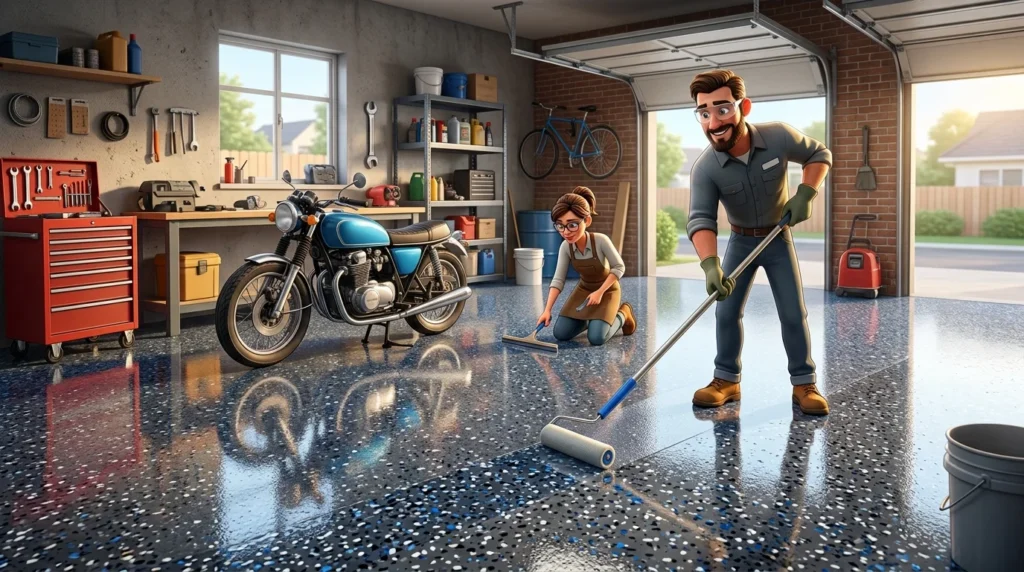
QUICK ANSWER (FEATURED SNIPPET TARGET)
Epoxy is a strong, cost-effective floor coating that hardens slowly and is ideal for indoor use. Polyaspartic is a newer coating that cures fast, resists UV damage, and performs better outdoors and in high-traffic environments. Polyaspartic is generally more durable but more expensive. epoxy or polyaspartic.
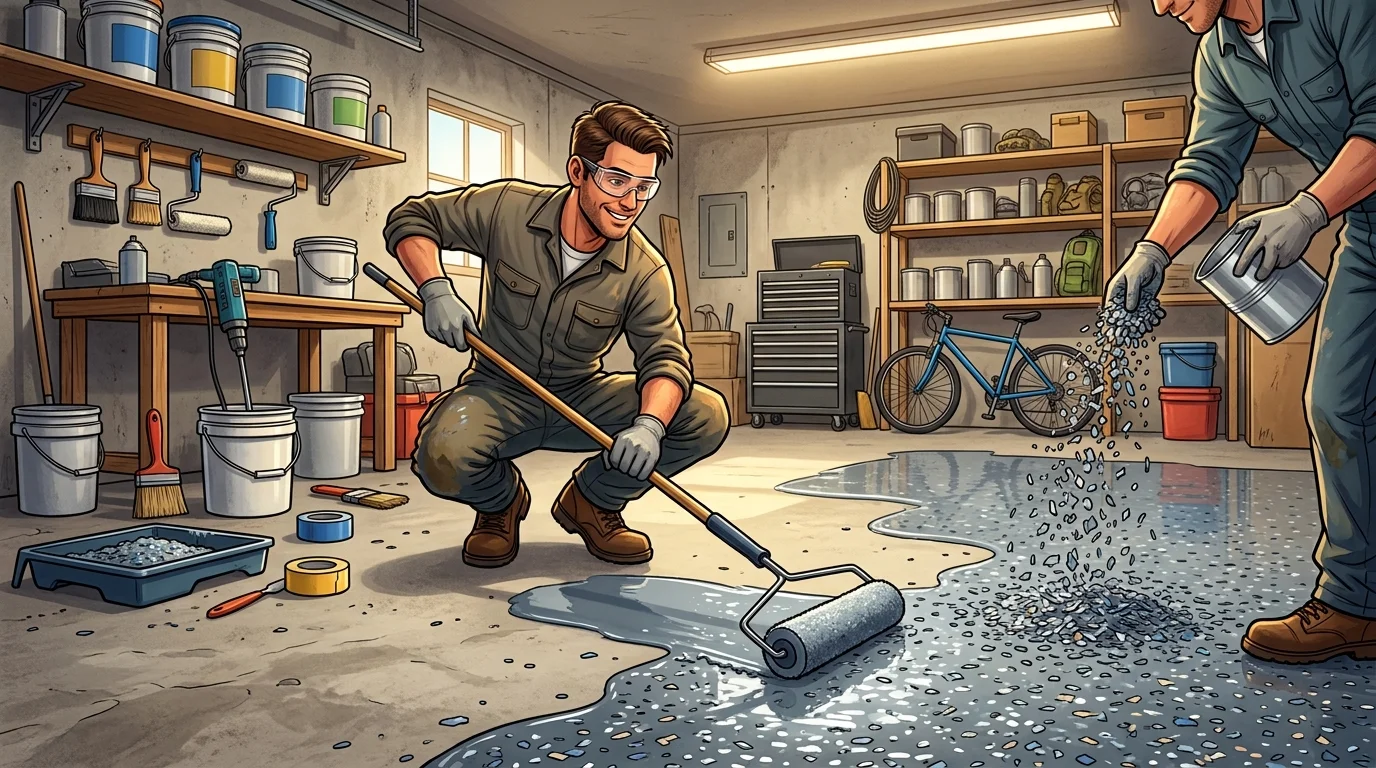
DEEP EXPLANATION: EPOXY
Epoxy is a resin-based flooring system created by mixing resin and hardener. It chemically bonds to concrete and forms a thick, protective surface.
✔️ Usage Rules
- Best for indoor spaces
- Ideal for garages, basements, warehouses
- Requires dry, controlled application conditions
✔️ Key Strengths
- High adhesion to concrete
- Cost-effective installation
- Excellent chemical resistance
✔️ Limitations
- Slow curing (24–72 hours or more)
- Can yellow under UV exposure
- Less flexible under temperature swings
✔️ Real Examples
- Garage floor coatings
- Industrial storage floors
- Basement protection layers
Key Insight: Epoxy is a “budget durability” solution — strong but not fast or UV-stable.
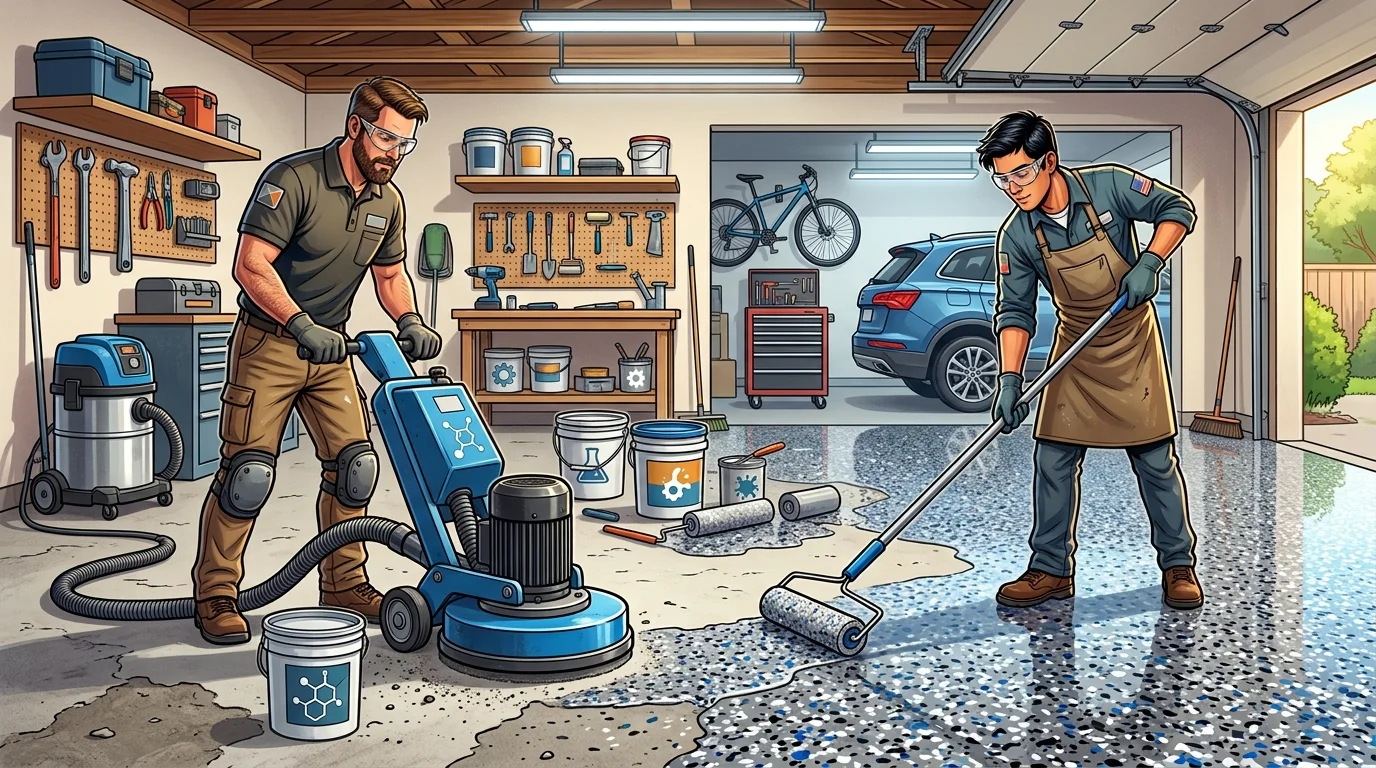
DEEP EXPLANATION: POLYASPARTIC
Polyaspartic is an advanced aliphatic polyurea coating designed for fast curing and extreme durability, especially in demanding environments.
✔️ Usage Breakdown
- Indoor + outdoor applications
- Commercial garages, showrooms
- High-traffic industrial areas
✔️ Key Strengths
- Cures in hours (very fast return to service)
- UV stable (no yellowing)
- Flexible and impact resistant
- Works in wider temperature ranges
✔️ Limitations
- Higher material cost
- Requires skilled installation
- Fast cure leaves less working time
✔️ Real Examples
- Car dealerships
- Outdoor parking decks
- Commercial kitchens
Key Insight: Polyaspartic is “performance-first flooring” — faster, tougher, and more modern. epoxy or polyaspartic.
SERP-DOMINATING COMPARISON SECTION
✔️ Key Differences
- Meaning: Epoxy is a resin system; polyaspartic is a polyurea coating
- Function: Epoxy = protection layer, Polyaspartic = high-performance coating
- Usage: Epoxy = indoor, Polyaspartic = indoor/outdoor
- Curing: Epoxy = slow, Polyaspartic = fast
- UV resistance: Epoxy = weak, Polyaspartic = strong
- Cost: Epoxy = cheaper, Polyaspartic = expensive
📊 Comparison Table
| Feature | Epoxy | Polyaspartic |
|---|---|---|
| Meaning | Resin coating system | Polyurea coating system |
| Usage | Indoor floors only | Indoor & outdoor |
| Curing time | Slow (1–3 days) | Fast (hours) |
| UV resistance | Low (yellowing risk) | High (UV stable) |
| Durability | Strong | Very strong |
| Cost | Lower | Higher |
| Flexibility | Rigid | Flexible |
REAL-WORLD USAGE SCENARIOS
Scenario 1
Customer: “I want a cheap garage floor.”
Contractor: “Epoxy is enough for indoor use.”
🎯 Lesson: Epoxy is best when budget matters more than speed.
Scenario 2
Customer: “My garage gets sunlight.”
Contractor: “Use polyaspartic or it will yellow.”
🎯 Lesson: UV exposure changes everything.
Scenario 3
Customer: “I need floor ready in 1 day.”
Contractor: “Epoxy can’t do that.”
🎯 Lesson: Cure time is a major deciding factor.
Scenario 4
Customer: “Heavy traffic commercial floor?”
Contractor: “Polyaspartic handles stress better.”
🎯 Lesson: High traffic demands advanced coating.
COMMON MISTAKES
- Thinking both are the same coating
- Choosing epoxy for outdoor areas
- Ignoring curing time requirements
- Selecting based only on price
- Underestimating UV damage
Why it happens: Most marketing descriptions oversimplify both systems.
MEMORY TRICKS
- Epoxy = “E” for “Economy + Enclosed spaces”
- Polyaspartic = “P” for “Performance + Patio/outdoor”
- Epoxy = slow cooker
- Polyaspartic = fast microwave
EXPERT INSIGHT (E-E-A-T BOOST)
Chemically, epoxy relies on step-growth polymerization, which requires longer curing time to fully cross-link. Polyaspartic coatings are part of the polyurea family, which react faster due to different amine chemistry, enabling rapid curing and higher UV stability.
This is why polyaspartic systems dominate modern commercial flooring where downtime is expensive. epoxy or polyaspartic.