
Quick Answer
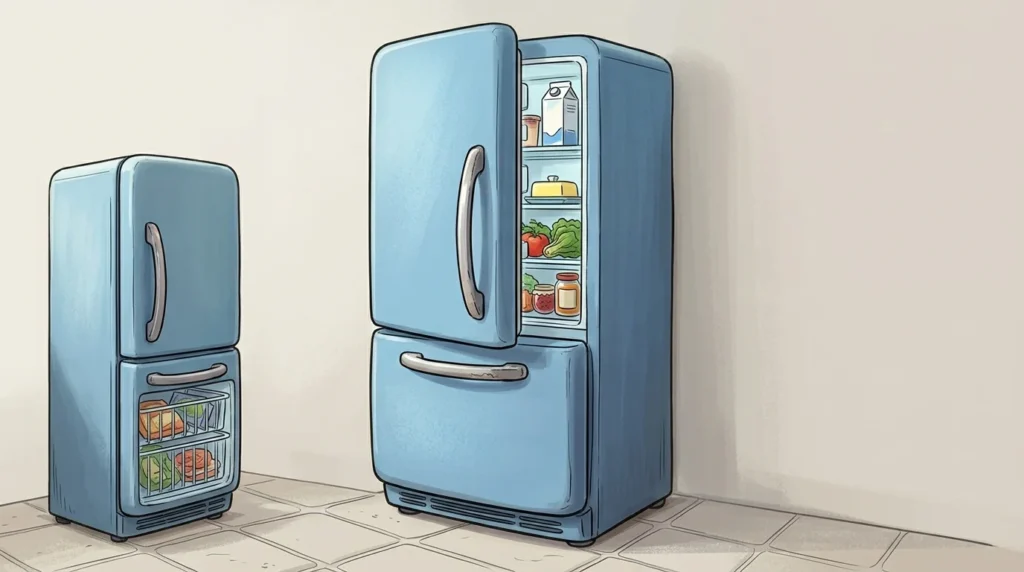
A fridge keeps food at a cool temperature (typically 35–40°F or 2–4°C) to keep it fresh for several days.
A freezer stores food at 0°F (-18°C) or lower, stopping bacterial growth and preserving food for much longer periods.
Use a fridge for everyday foods and a freezer for long-term storage.
What Is a Fridge?
Definition
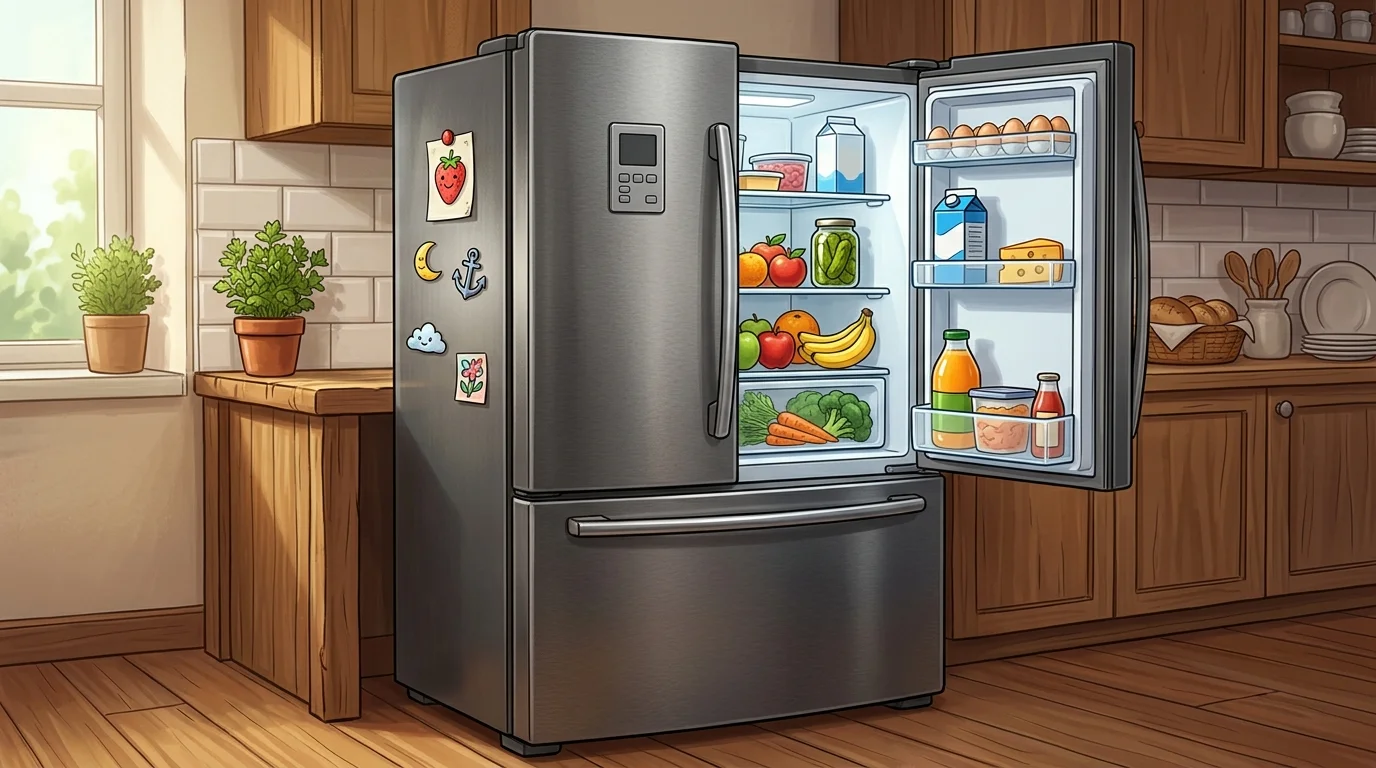
A fridge (short for refrigerator) is a kitchen appliance designed to keep food and beverages cold without freezing them. The cool environment slows the growth of bacteria, helping food stay fresh longer.
How a Fridge Works
A refrigeration system removes heat from inside the appliance and releases it outside, maintaining a consistently cool temperature.
Common Uses
A fridge is ideal for storing:
- Fresh fruits
- Vegetables
- Milk
- Cheese
- Yogurt
- Eggs (depending on regional recommendations)
- Cooked leftovers
- Drinks
- Butter
- Condiments
Recommended Temperature
- 35–40°F (2–4°C)
Keeping the fridge within this range helps reduce the risk of foodborne illness while maintaining food quality.
Pros
- Keeps food fresh
- Easy daily access
- Ideal for frequently used items
- Preserves flavor and texture
- Uses less energy than opening a freezer repeatedly
Cons
- Food eventually spoils
- Not suitable for long-term storage
- Requires regular cleaning
- Can become overcrowded, reducing cooling efficiency
Examples
Example 1
You buy fresh vegetables for dinner this week.
Result: Store them in the fridge.
Example 2
You cooked pasta yesterday.
Result: Refrigerate the leftovers and consume them within a few days.
Key Insight
A fridge is designed to extend freshness, not preserve food indefinitely.
What Is a Freezer?
Definition
A freezer is an appliance or compartment that keeps food frozen at very low temperatures, allowing it to be stored safely for extended periods.
How a Freezer Works
Like a refrigerator, a freezer removes heat, but it operates at much lower temperatures to freeze water inside food.
This dramatically slows spoilage by preventing bacterial growth.
Common Uses
A freezer is ideal for storing:
- Frozen vegetables
- Meat
- Poultry
- Fish
- Ice cream
- Frozen meals
- Bread
- Ice cubes
- Batch-cooked meals
- Long-term leftovers
Recommended Temperature
- 0°F (-18°C) or below
This temperature is widely recommended for safe long-term food storage.
Pros
- Long food preservation
- Reduces food waste
- Convenient for meal prep
- Stores seasonal foods
- Useful for bulk purchases
Cons
- Freezer burn can affect food quality
- Some foods lose texture after thawing
- Requires thawing for many items
- Occupies additional storage space
Examples
Example 1
You buy chicken in bulk.
Result: Freeze portions you’ll use later.
Example 2
You prepare meals for the month.
Result: Store individual portions in the freezer.
Key Insight
A freezer is built for long-term preservation, not immediate daily access.
Fridge or Freezer: Key Differences
Main Differences
- A fridge cools food, while a freezer freezes it.
- Fridges are for short-term storage.
- Freezers are for long-term storage.
- Fridges keep food above freezing.
- Freezers keep food below freezing.
- Fresh produce belongs in a fridge.
- Frozen foods belong in a freezer.
- Food texture changes more in a freezer after thawing.
Comparison Table
| Feature | Fridge | Freezer |
|---|---|---|
| Primary Purpose | Keep food fresh | Preserve food long term |
| Temperature | 35–40°F (2–4°C) | 0°F (-18°C) or lower |
| Storage Duration | Days to about a week (varies by food) | Weeks to months (varies by food) |
| Food State | Chilled | Frozen |
| Best For | Daily foods | Bulk storage |
| Prevents Spoilage | Slows it | Greatly slows it by freezing |
| Common Foods | Dairy, produce, leftovers | Meat, frozen meals, ice cream |
| Preparation Needed | Usually ready to eat | Often requires thawing |
Real-World Usage Scenarios
Scenario 1: Fresh Groceries
Person: “I bought lettuce, milk, and yogurt.”
Answer: Store them in the fridge.
🎯 Lesson: Perishable foods for near-term use belong in the fridge.
Scenario 2: Buying Meat in Bulk
Person: “I won’t cook this chicken for another month.”
Answer: Store it in the freezer.
🎯 Lesson: Freeze foods you won’t use soon.
Scenario 3: Leftover Soup
Person: “I’ll eat it tomorrow.”
Answer: Refrigerate it.
🎯 Lesson: The fridge is best for leftovers you’ll consume within a few days.
Scenario 4: Meal Prepping
Person: “I cooked lunches for the next four weeks.”
Answer: Freeze most portions and refrigerate only those you’ll eat soon.
🎯 Lesson: Combine both appliances for efficient meal planning.
Scenario 5: Ice Cream
Person: “Can I keep ice cream in the fridge?”
Answer: No. It will melt and lose its proper texture.
🎯 Lesson: Frozen desserts should stay in the freezer.
Common Mistakes
Storing Frozen Foods in the Fridge
People sometimes move frozen foods to the fridge for long-term storage.
Correction: Refrigeration only slows spoilage; it doesn’t preserve food for weeks or months.
Putting Hot Food Directly Into the Freezer
Large amounts of hot food can raise the freezer’s internal temperature.
Why it happens: People want to cool food quickly.
Correction: Let food cool slightly before freezing, using safe food-handling practices.
Overloading Either Appliance
Blocking air circulation reduces cooling efficiency.
Correction: Leave space for cold air to circulate.
Assuming Frozen Food Lasts Forever
Frozen food remains safe for long periods when stored properly, but quality can decline over time due to freezer burn and moisture loss.
Correction: Label and rotate frozen foods for the best quality.
Memory Tricks
Remember “Fresh = Fridge”
If you plan to eat it within a few days, think Fridge = Fresh.
Remember “Freeze = Freezer”
If you want to save it for weeks or months, think Freezer = Freeze.
Easy Shortcut
- Today’s food = Fridge
- Future food = Freezer
Expert Insight
Although both appliances use refrigeration technology, they are designed for different stages of food preservation. Refrigeration slows the growth of most bacteria, extending freshness while maintaining texture and flavor. Freezing, on the other hand, turns the water inside food into ice, significantly slowing microbial activity and chemical reactions that cause spoilage.
However, freezing doesn’t improve food quality—it simply preserves its current state. Foods frozen at peak freshness generally retain better taste and texture than foods frozen after they’ve already begun to deteriorate. Proper packaging, airtight containers, and consistent temperatures also play a major role in preventing freezer burn and maintaining quality. fridge or freezer.