
Quick Answer
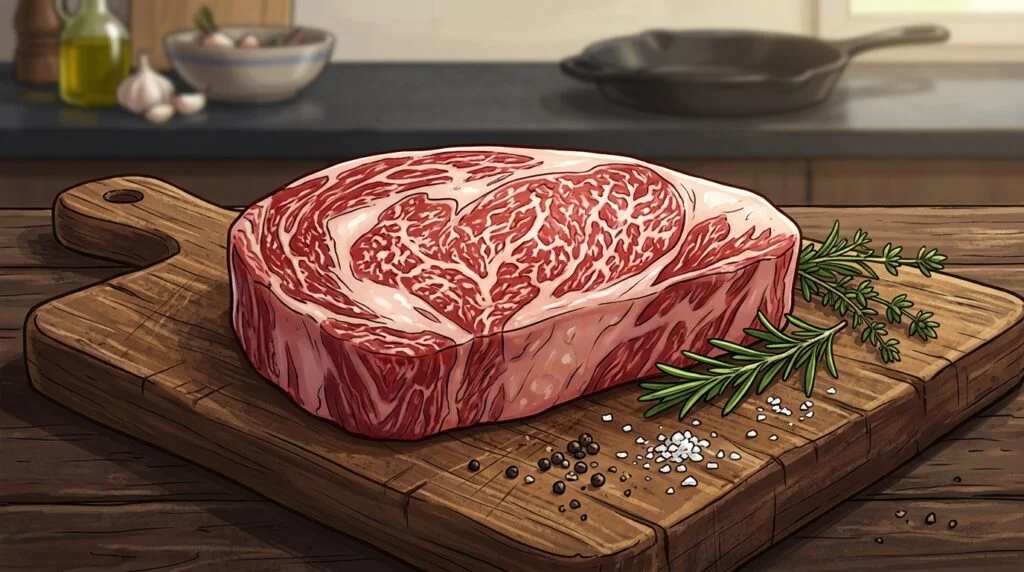
The biggest difference between Kobe and Wagyu is that Kobe is a specific type of Wagyu.
- Wagyu refers to several Japanese cattle breeds known for exceptional marbling.
- Kobe beef is Wagyu from the Tajima strain of Japanese Black cattle that is raised, processed, and certified under strict standards in Japan’s Kobe region.
In simple terms:
All Kobe beef is Wagyu, but only a small percentage of Wagyu qualifies as Kobe beef.
What Is Wagyu?
Definition
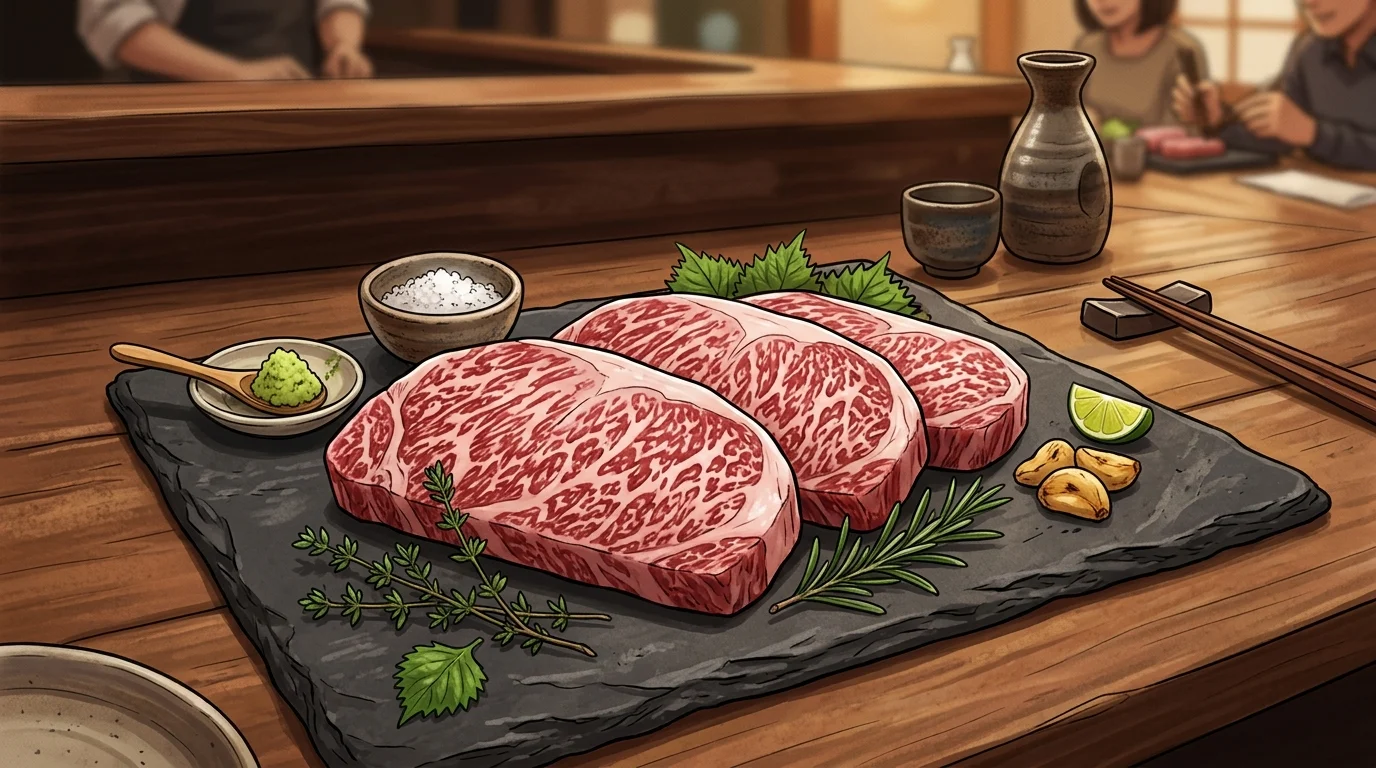
Wagyu (和牛) literally means “Japanese cow” or “Japanese cattle.” It refers to several Japanese cattle breeds famous for producing beef with abundant intramuscular fat, known as marbling.
The four recognized Japanese Wagyu breeds are:
- Japanese Black
- Japanese Brown
- Japanese Shorthorn
- Japanese Polled
Among these, Japanese Black is the most prized because of its intense marbling.
Characteristics
Wagyu is known for:
- Extensive marbling
- Rich buttery texture
- Tender meat
- Complex beef flavor
- High-quality fat that melts at a relatively low temperature
Types of Wagyu
Depending on where it’s produced, you may encounter:
- Japanese Wagyu
- American Wagyu
- Australian Wagyu
- Crossbred Wagyu
These differ in genetics, feeding practices, and grading standards.
Real Examples
Example 1
“The restaurant serves Japanese Wagyu ribeye.”
Example 2
“American Wagyu burgers have become increasingly popular.”
Example 3
“The chef recommended Wagyu because of its exceptional marbling.”
Key Insights
- Wagyu is a broad category.
- It includes several cattle breeds.
- Not all Wagyu comes from Japan.
- Quality varies depending on origin and grading.
What Is Kobe Beef?
Definition
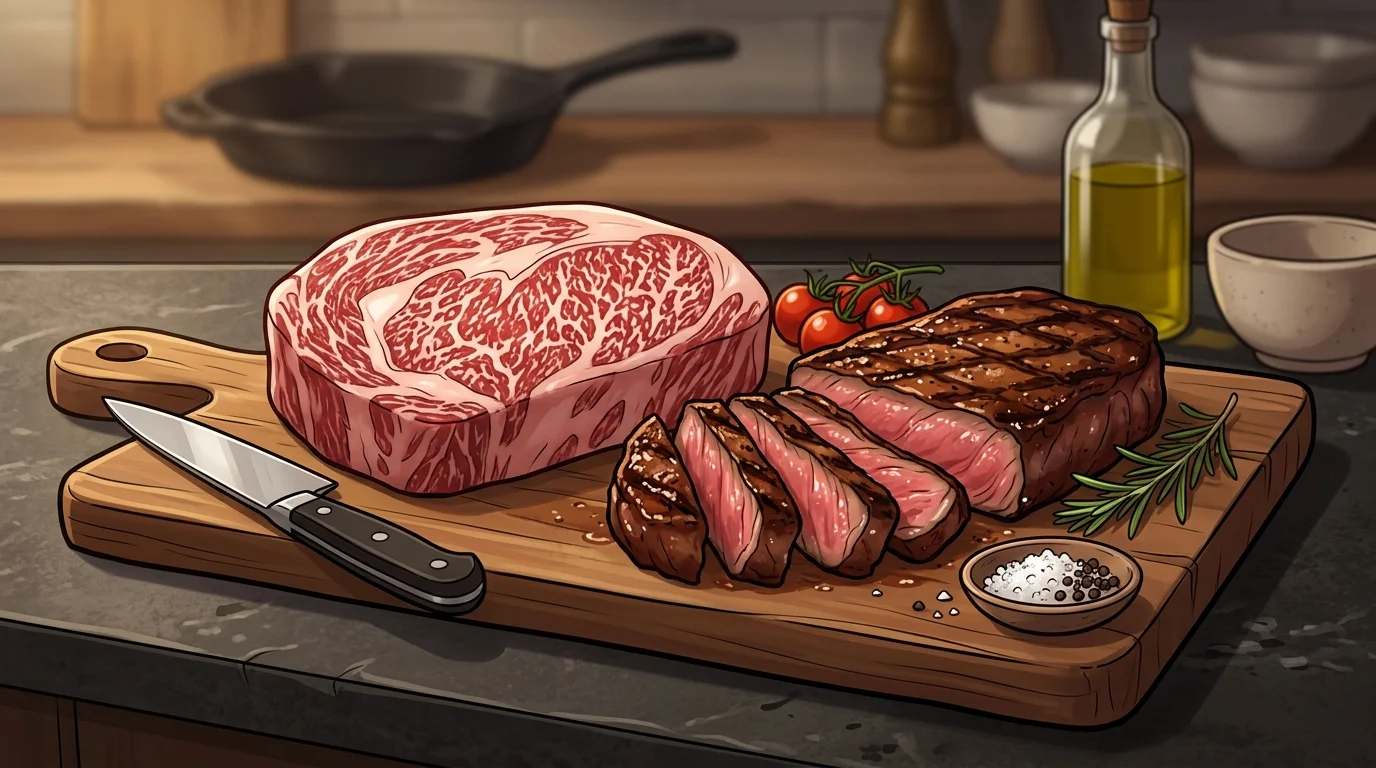
Kobe beef is one of the world’s most exclusive beef products. It comes specifically from Tajima-gyu cattle, a strain of Japanese Black cattle, raised in Japan’s Hyōgo Prefecture and certified under strict production standards.
To be labeled as Kobe beef, the meat must meet rigorous requirements related to:
- Breed
- Birthplace
- Raising location
- Processing location
- Meat quality
- Marbling
- Yield grade
Only beef that satisfies all certification criteria can legally be marketed as Kobe beef.
Characteristics
Kobe beef offers:
- Extremely fine marbling
- Rich, buttery flavor
- Exceptional tenderness
- Melt-in-your-mouth texture
- Strict authenticity standards
Real Examples
Example 1
“The steakhouse imports certified Kobe beef from Japan.”
Example 2
“Kobe beef is often served in smaller portions because of its richness.”
Example 3
“The restaurant displayed its Kobe certification.”
Key Insights
- Kobe is a premium subset of Wagyu.
- It is produced only under strict regional standards.
- It is one of the rarest commercial beef products in the world.
Kobe or Wagyu: What’s the Difference?
Major Differences
- Wagyu is a category of cattle.
- Kobe is a certified type of Wagyu.
- Kobe comes only from Hyōgo Prefecture, Japan.
- Wagyu may come from Japan, the United States, Australia, or other countries.
- Kobe has stricter certification requirements.
- Kobe is significantly rarer.
- Wagyu quality varies by breed and grade.
- Kobe consistently represents premium-grade beef.
Comparison Table
| Feature | Kobe | Wagyu |
|---|---|---|
| Meaning | Certified Japanese beef | Category of Japanese cattle |
| Origin | Hyōgo Prefecture, Japan | Japan and other countries |
| Breed | Tajima strain of Japanese Black | Four Japanese Wagyu breeds |
| Certification | Strict official certification | Varies by country |
| Availability | Very limited | Widely available |
| Marbling | Extremely high | Moderate to extremely high |
| Price | Usually higher | Varies widely |
| Authenticity Standards | Very strict | Depends on producer |
Taste Comparison
Kobe Beef
Most people describe Kobe beef as:
- Rich
- Buttery
- Silky
- Delicate
- Intensely marbled
The fat melts quickly, creating a luxurious mouthfeel.
Wagyu Beef
Wagyu generally offers:
- Tender texture
- Rich beef flavor
- Excellent marbling
- Juicy bite
Because Wagyu includes many grades and origins, the flavor can vary more than Kobe.
Marbling Comparison
Marbling refers to the fine streaks of intramuscular fat throughout the meat.
Kobe
- Exceptionally dense marbling
- Highly uniform distribution
- Signature buttery texture
Wagyu
Marbling depends on:
- Breed
- Genetics
- Feeding
- Country of origin
- Beef grade
Top-grade Japanese Wagyu can rival Kobe in appearance, but not every Wagyu reaches that level.
Price Comparison
Kobe beef is generally more expensive because:
- Production is tightly controlled.
- Supply is extremely limited.
- Certification standards are strict.
- Export quantities are relatively small.
Wagyu prices vary considerably based on:
- Country of origin
- Breed purity
- Marbling score
- Cut of meat
- Farm and producer
As a result, Wagyu can range from premium to ultra-premium pricing.
Which One Is Better?
The answer depends on what you’re looking for.
Choose Kobe if you want:
- Certified Japanese luxury beef
- Maximum exclusivity
- Exceptional marbling
- A premium dining experience
Choose Wagyu if you want:
- More purchasing options
- A wider range of prices
- Excellent marbling
- Greater availability
Neither is objectively “better” for every situation—Kobe is simply a more exclusive subset within the broader Wagyu category.
Can You Substitute One for the Other?
Yes, but with some caveats.
If a recipe calls for Wagyu, Kobe can certainly be used because it is a type of Wagyu.
If a menu advertises Kobe but serves another type of Wagyu instead, the experience may still be excellent, but it should not be marketed as Kobe unless it meets the official certification requirements.
Always verify the source when authenticity matters.
Real-World Usage Scenarios
Scenario 1
Diner: “Is Kobe better than Wagyu?”
Chef: “Kobe is actually a specific, certified type of Wagyu.”
🎯 Lesson: Kobe is a subset of Wagyu, not a separate category.
Scenario 2
Shopper: “This package says American Wagyu.”
Butcher: “It’s Wagyu genetics, but it isn’t Kobe beef.”
🎯 Lesson: Country of origin affects classification.
Scenario 3
Traveler: “The restaurant claims to serve Kobe beef.”
Friend: “Ask whether it’s officially certified.”
🎯 Lesson: Authentic Kobe beef comes with strict certification.
Scenario 4
Home Cook: “Which should I buy?”
Butcher: “If you want luxury and authenticity, choose certified Kobe. For outstanding quality at more price points, Wagyu offers more flexibility.”
🎯 Lesson: Budget and availability are important considerations.
Common Mistakes
Thinking Kobe and Wagyu Are Synonyms
They are closely related but not identical.
Why it happens: Restaurants and marketing materials sometimes use the terms interchangeably.
Assuming All Wagyu Is Japanese
Wagyu cattle are now raised in several countries.
Why it happens: The name “Wagyu” is strongly associated with Japan.
Believing Every Expensive Steak Is Kobe
Only certified beef meeting strict standards can legally be called Kobe.
Why it happens: Kobe has become a popular marketing term.
Ignoring Beef Grades
Not every Wagyu steak has the same level of marbling or quality.
Why it happens: Consumers often focus only on the name rather than the grading.
Memory Tricks
Remember Wagyu
Think:
“W = Whole Category.”
Wagyu refers to the broader family of premium Japanese cattle.
Remember Kobe
Think:
“K = Kingdom of Premium Wagyu.”
Kobe is one of the most exclusive and highly regulated forms of Wagyu.
Easy Shortcut
- Every Kobe is Wagyu.
- Not every Wagyu is Kobe.
This simple rule answers the question in seconds.
Expert Insight
One of the biggest misconceptions in the beef industry is treating Kobe and Wagyu as interchangeable terms. From a culinary and regulatory standpoint, they are not equivalent. Wagyu describes a group of cattle breeds renowned for superior marbling, whereas Kobe is a legally protected designation with stringent production and certification standards. While high-grade Wagyu from Japan or other countries can offer exceptional eating experiences, authentic Kobe beef remains one of the rarest and most tightly controlled premium meats in the world. Understanding this distinction helps consumers evaluate labels more accurately and avoid paying premium prices for products that do not meet Kobe certification requirements. kobe or wagyu.