
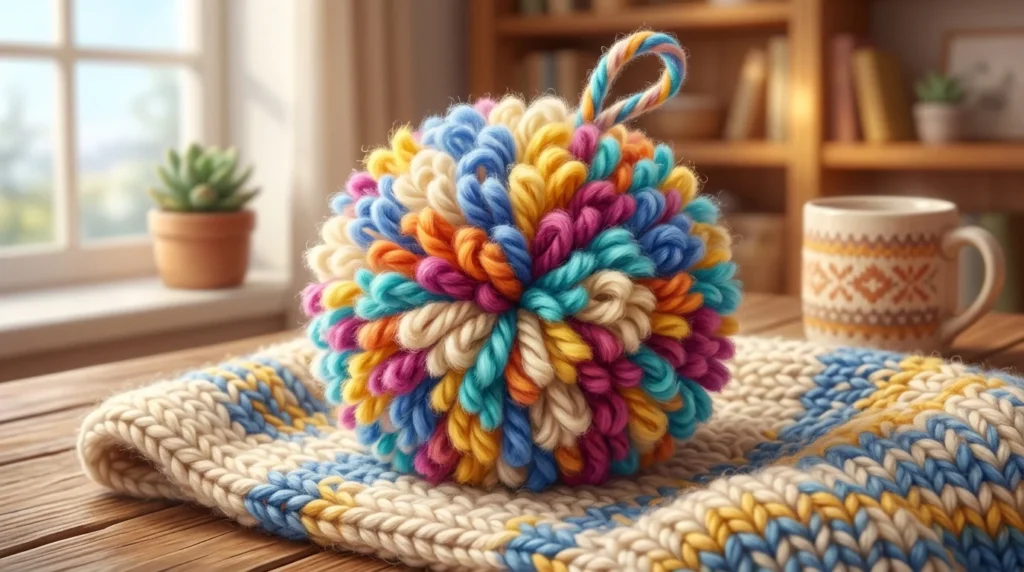
Quick Answer
Both pompom and pompon are correct English spellings.
- Pompom is the more common spelling in modern everyday English, especially when referring to the fluffy decorative balls used by cheerleaders, on hats, or in crafts.
- Pompon is the original French-derived spelling and is still used in some dictionaries, military terminology, fashion, and botanical names.
Neither spelling is wrong—the best choice depends on your audience and context.
What Is Pompom?
Definition
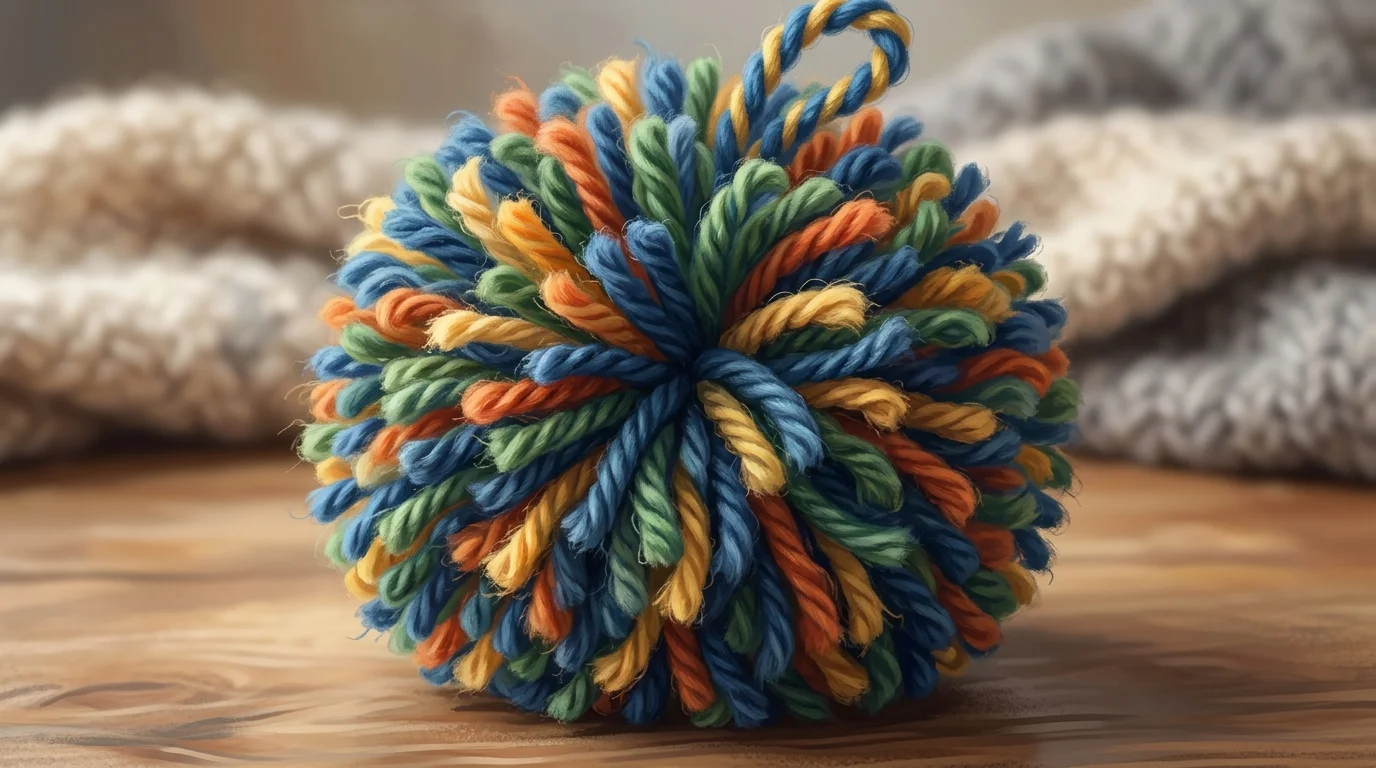
A pompom is a small, fluffy ball made from yarn, fabric, plastic strips, or similar materials. It is commonly used for decoration, clothing, accessories, crafts, and cheerleading.
Common Uses
You’ll often see pompom used for:
- Cheerleading pom-poms
- Knitted hats
- Scarves
- Children’s crafts
- Home décor
- Party decorations
Real Examples
Example 1
“She knitted a colorful pompom onto the top of the winter hat.”
Example 2
“The children made pompoms for their art project.”
Example 3
“The cheerleaders waved bright blue pompoms during the game.”
Key Insights
- Most common modern spelling
- Widely used in retail and craft websites
- Popular in American and British English
- Easy for general audiences to recognize
What Is Pompon?
Definition
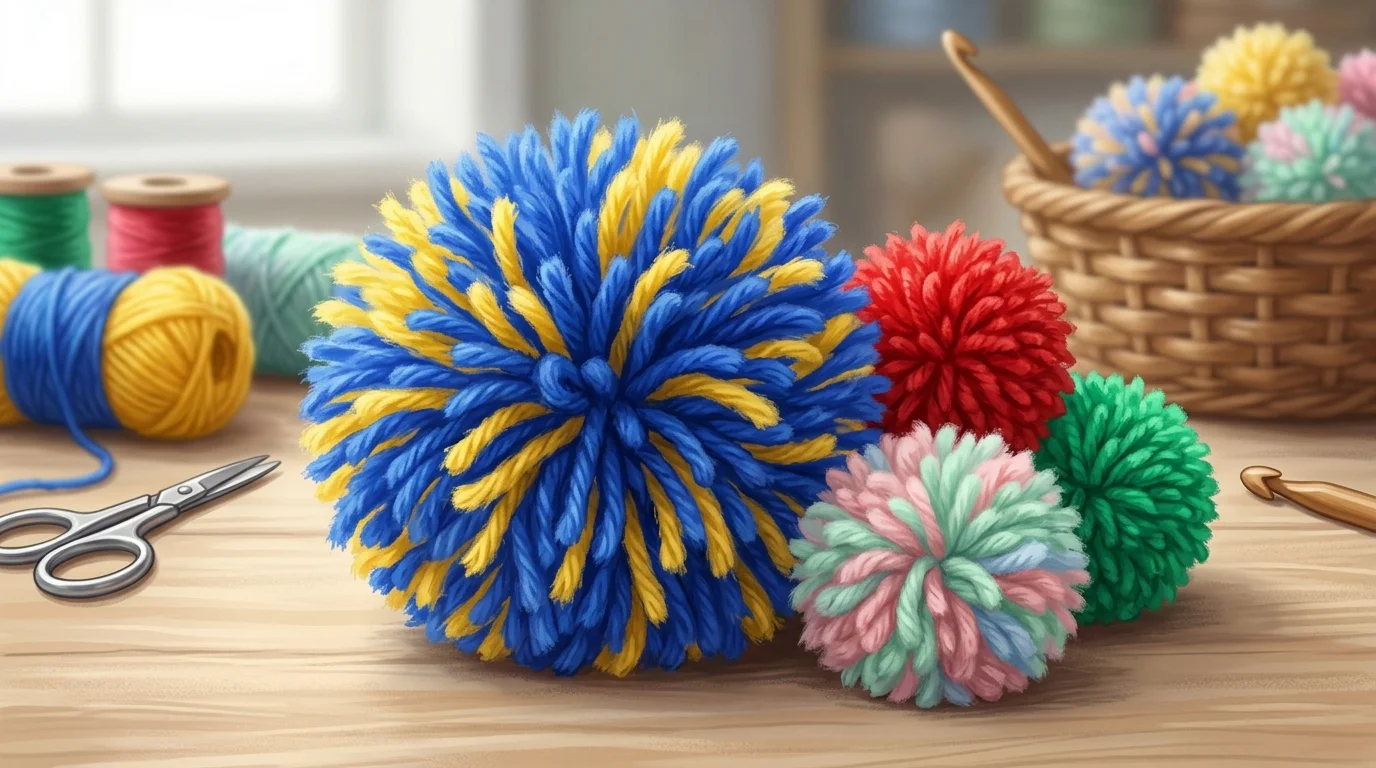
Pompon is an alternative spelling of pompom that comes directly from the original French word pompon.
Although less common in everyday writing, it remains the preferred spelling in certain specialized contexts.
Common Uses
Pompon appears in:
- Historical military uniforms
- Fashion history
- Botanical names
- Some dictionaries
- Traditional European publications
Real Examples
Example 1
“The ceremonial hat featured a red pompon.”
Example 2
“The military cap included a decorative pompon.”
Example 3
“Some botanical varieties include ‘pompon’ in their common names.”
Key Insights
- Original French spelling
- Less common in everyday English
- Often preferred in historical or technical contexts
- Still recognized by major dictionaries
Pompom or Pompon: What’s the Difference?
Major Differences
- Both spellings are correct.
- Pompom is more common in modern English.
- Pompon reflects the original French spelling.
- Pompom dominates craft and retail industries.
- Pompon appears more often in historical, military, and botanical writing.
Comparison Table
| Feature | Pompom | Pompon |
|---|---|---|
| Correct Spelling | Yes | Yes |
| Everyday Usage | Very common | Less common |
| Origin | Anglicized form | Original French form |
| Crafts | Common | Rare |
| Cheerleading | Common | Rare |
| Military History | Occasionally | More common |
| Fashion History | Common | Common |
| Modern Retail | Preferred | Uncommon |
Which Spelling Is More Common?
Today, pompom is generally the preferred spelling in:
- Online shopping
- Craft blogs
- Knitting patterns
- DIY tutorials
- Parenting websites
- Fashion retailers
If you’re writing for a broad audience, pompom is usually the safer and more recognizable choice.
When Should You Use “Pompon”?
Choose pompon when discussing:
- Historical military uniforms
- French-language sources
- Botanical names that officially use the term
- Historical fashion
- Publications following a style guide that prefers the original French spelling
In these contexts, pompon preserves historical and linguistic accuracy.
Real-World Usage Scenarios
Scenario 1
Parent: “Can we buy pompoms for the school craft project?”
Teacher: “Yes, they’re available at most craft stores.”
🎯 Lesson: Pompom is the standard everyday spelling.
Scenario 2
Historian: “The officer’s cap featured a blue pompon.”
Editor: “That’s the correct historical spelling.”
🎯 Lesson: Historical writing often retains the French-derived form.
Scenario 3
Knitter: “I added a pompom to my winter hat.”
Friend: “It gives the hat a classic look.”
🎯 Lesson: Modern knitting patterns almost always use pompom.
Scenario 4
Student: “Are pompom and pompon different objects?”
Teacher: “No, they’re different spellings of the same decorative item in most contexts.”
🎯 Lesson: Context determines which spelling is more appropriate.
Common Mistakes
Assuming One Spelling Is Wrong
Both spellings are accepted.
Why it happens: Many people only encounter one version.
Mixing Spellings Within One Article
Choose one spelling and use it consistently unless discussing both forms.
Why it happens: Writers switch between dictionary entries and everyday usage.
Using “Pompon” in General Consumer Content
Most readers expect pompom.
Why it happens: The French spelling can seem more formal or unfamiliar.
Assuming Regional Differences Explain Everything
While style preferences vary, the distinction is more about context than geography.
Why it happens: Both spellings are recognized in English.
Memory Tricks
Remember Pompom
Think:
“PomPOM for Popular.”
The extra “m” helps you remember it’s the spelling most people see in crafts and fashion.
Remember Pompon
Think:
“PomPON from Paris.”
The -pon ending reflects its French origin.
Easy Shortcut
- Crafts, hats, cheerleading? → Pompom
- History, military, French references? → Pompon
This simple rule works in most situations.
Expert Insight
The coexistence of pompom and pompon illustrates how English often adopts foreign words and gradually develops Anglicized spellings alongside the originals. Over time, pompom became the dominant form in consumer products, crafting, and everyday communication because it better matched English spelling patterns. Meanwhile, pompon retained its place in historical, military, and specialized terminology due to its French heritage. For most modern writing, pompom offers greater familiarity and readability, while pompon remains appropriate where historical or linguistic precision is important. pompom or pompon.